




Kaikki viestit
Can HBADA smart chairs (like the X7) be comfortably used in high-temperature summer rooms?
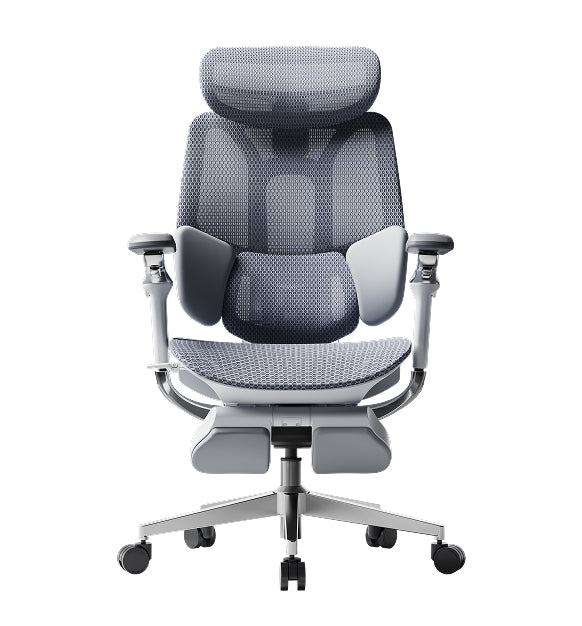
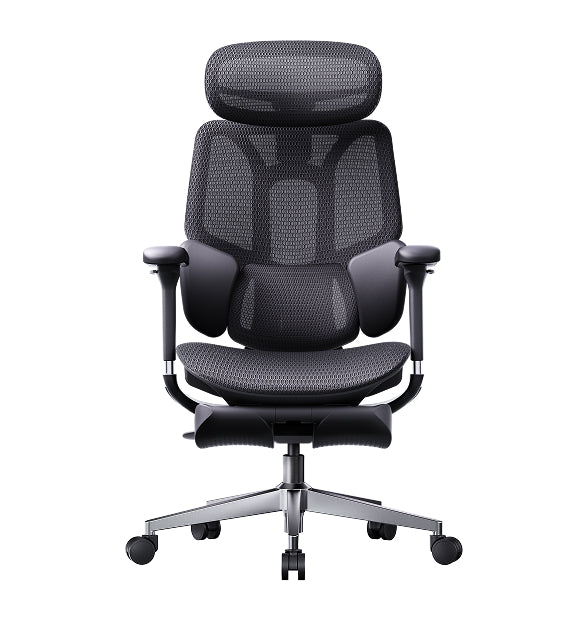
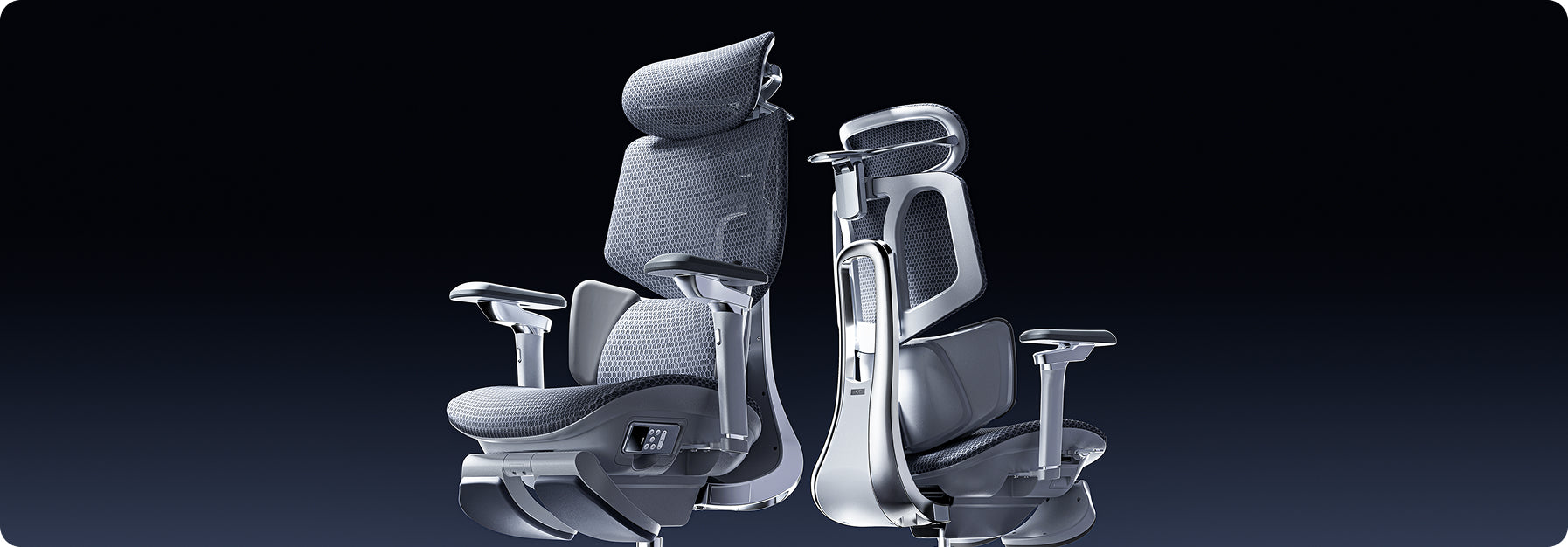
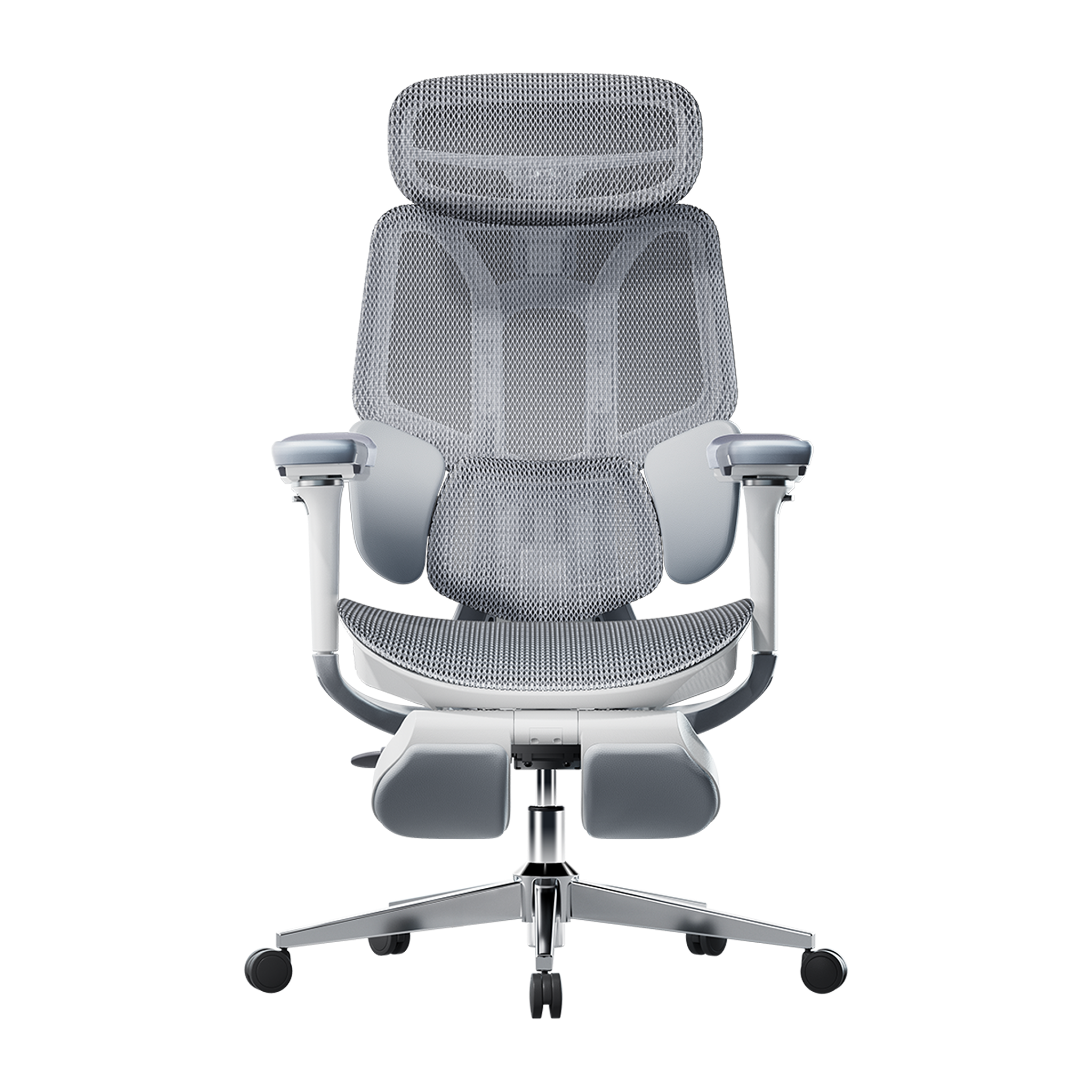
Absolutely. The HBADA X7 Smart Ergonomic Chair is explicitly engineered to handle seasonal temperature fluctuations. Alongside its smart auto-tracking lumbar mechanics, the X7 features an active built-in cooling ventilation system. When room temperatures rise, you can activate the seat-back cooling zones at the touch of a button to promote active airflow dispersion. This premium thermodynamic design ensures that even during peak heatwaves, your core seating temperature remains perfectly regulated and sweat-free.
Jun 12, 2026
Which HBADA chair is best recommended for hot weather or high-temperature environments?
or hot weather and warm climates, we highly recommend our full-mesh ergonomic series, such as the HBADA E3 Pro. These chairs are engineered with our advanced CloudMesh Technology, featuring a highly elastic, open-weave structure. Unlike traditional leather or thick foam chairs that trap body heat, our breathable mesh allows continuous multi-directional airflow. This significantly accelerates sweat evaporation and keeps your back and thighs perfectly cool during extended summer working hours.
Jun 12, 2026
How do I adjust the backrest?
Hello,
Thank you for sharing your thoughts.
Generally, when the backrest is pulled up, it will lock at different gear heights. When pulled to the highest position, it will automatically return to the lowest gear height. You should notice a click each time it locks into place.
As a guideline:
You can lift the backrest up to 4 times, and after reaching the 5th lift, it will return to its original position.
For your reference, please find the attached video demonstrating this mechanism:Backrest.mp4.
Please try this and let us know if you notice any difference in the backrest’s movement.
Thank you for your patience and cooperation.
Best regards,
Customer Service Team
Jun 12, 2026
Is an HBADA chair suitable for petite users or extra tall individuals?
Yes. HBADA chairs are engineered with high-amplitude adjustability to support a diverse range of body types. To find the best affordable fit for your workspace layout near me, refer to our biometric sizing matrix below:
User Profile
Height Range
Recommended HBADA Model
Key Engineering Feature
Petite Seating
4'11" – 5'4" (150–163 cm)
HBADA P5WMA / E3 Air
Low minimum seat height & space-saving flip-up arms to prevent shoulder elevation.
Universal Seating
5'5" – 5'11" (165–180 cm)
HBADA E3 Pro
The ultimate "sweet spot" with 4D fully customizable orthopedic support zones.
Tall & Heavy Seating
6'0" – 6'5" (183–195 cm)
HBADA E3 Ultra / X7
Deep adjustable seat depth, extended heavy-duty gas lift, and an independent extra-high headrest.
Jun 08, 2026
What materials are used in HBADA chairs? Are there any differences between the models?
HBADA are committed to an "aerospace-grade" philosophy, pairing structural rigidity with high-performance composite materials. While both the X7 and E3 series share our hallmark durability, we’ve implemented tiered material configurations to ensure every model provides best-in-class reliability and safety for its respective price point.
1. The Foundation: Shared Quality Standards
Across both the E3 and X7 series, we refuse to compromise on core safety or tactile comfort. The following features are standard-issue:
• The Safety Core: Every chair is equipped with an SGS-certified Class-4 gas lift, providing smooth, reliable height adjustment and industry-leading explosion-proof protection. The entire build has passed rigorous BIFMA international standards, ensuring a decade of worry-free use.
• Tactile Comfort: Armrest surfaces are wrapped in high-grade PU leather, striking a balance between softness and long-term wear resistance. Lumbar contact areas utilize premium protein leather, offering a skin-friendly, supple feel.
• Silent Mobility: Our casters use a hybrid PU + PA construction, designed for high load-bearing capacity while remaining whisper-quiet, ensuring your floors stay protected against scratches.
2. Tiered Evolution: Structural Precision
We have carefully tiered our structural frameworks and skeletal materials to match varying performance demands:
Core Component
E3 Air / Pro
E3 Ultra
X7
Backrest Spine
High-Strength Glass Fiber Reinforced Nylon
Aerospace-Grade Aluminum Alloy
Aerospace-Grade Aluminum Alloy
Five-Star Base
Reinforced Steel
Reinforced Steel
Aerospace-Grade Aluminum Alloy
3. Material Science: The Engineering Behind the Comfort
We believe that durability begins at the molecular level. We utilize an "aerospace-grade" selection logic to ensure every component provides lasting performance.
Aerospace-Grade Aluminum Alloy: Featured in the backrest spine of both the X7 and E3 Ultra, this material offers a superior strength-to-weight ratio compared to traditional alloys. It provides exceptional load-bearing capacity and wear resistance, ensuring the structural core of your chair remains rock-solid for years to come.
PA + 30% GF (Glass Fiber Reinforced Nylon): Our back frames, seat frames, and armrest brackets are reinforced with a 30% glass-fiber nylon composite. This material is engineered for extreme structural rigidity and toughness. It effectively resists deformation, ensuring that even under years of high-frequency use, the chair remains as stable as the day you first sat in it.
The Bottom Line: Choosing Your Fit
E3 Air/Pro: The ideal choice if you prioritize exceptional value and balanced support.
E3 Ultra: The upgrade for users who demand enhanced structural rigidity and the premium aesthetic of an aluminum backrest spine.
X7 (The Flagship): The pinnacle of our lineup. By pairing an aluminum backrest spine with an aerospace-grade aluminum alloy base, the X7 achieves the perfect fusion of material aesthetics and intelligent technology.
May 27, 2026
What is the "Active Spinal Tracking" system, and how does it differ from traditional static support?
What is the "Active Spinal Tracking System"?It is an integrated, mechanical dynamic lumbar solution that moves in real-time to support your spine. Instead of relying on electronics, we’ve engineered a sophisticated "mechanical intelligence" that reacts instantly to your body’s pressure.The system is built on three core pillars:• 3-Zone Floating Wings: The lumbar support is divided into three distinct segments. The side wings pivot independently up to 40°, providing a continuous, hugging embrace that follows your torso as you move.• Multi-Dimensional Adaptive Module:◦ 5° Spring-Loaded Follow: Responds to your angle shifts (tilting back or leaning forward), ensuring the lumbar support is always perfectly flush against your back.◦ 30mm Active Gliding: As you recline, the support intuitively slides downward to fill the gap between your lower lumbar and sacrum, preventing that common feeling of "lower back hollow."• 8-Way Precision Base: Beyond its adaptive capabilities, you remain in total control. Adjust the height (60mm) and depth (32mm) to find your personal "sweet spot," or lock it into place for a more stable, unwavering foundation.Why "Active Tracking"?We call it "Active Tracking" because the chair does the thinking for you. It requires no buttons, no batteries, and no sensors. Through a precision-engineered network of springs, tracks, and pivots, the chair senses your movement and translates it into an immediate, linear, and fluid response. It doesn’t just support your posture—it adapts to your every move.
The Difference: Static Support vs. Active Spinal Tracking
The core difference between traditional chairs and our system is simple: Traditional chairs demand you conform to them; our chair adapts to you.
Feature
Traditional Static Support
Active Spinal Tracking System
Philosophy
Passive resistance (You adjust to the chair)
Active engagement (The chair adapts to you)
Reclining
Lower back gap; pressure shifts to the sacrum
Auto-gliding & pivoting; continuous lumbar contact
Side Twisting
Edges dig into side muscles
Wings pivot independently to prevent pressure
Body Fit
Limited; requires constant manual fiddling
Adaptive + wide-range manual tuning; fits all sizes
Freedom
Forces a rigid "standard" posture
Encourages natural movement; follows your flow
Fatigue
Muscle strain from forcing static posture
Muscle relaxation; support never "drops off"
May 27, 2026