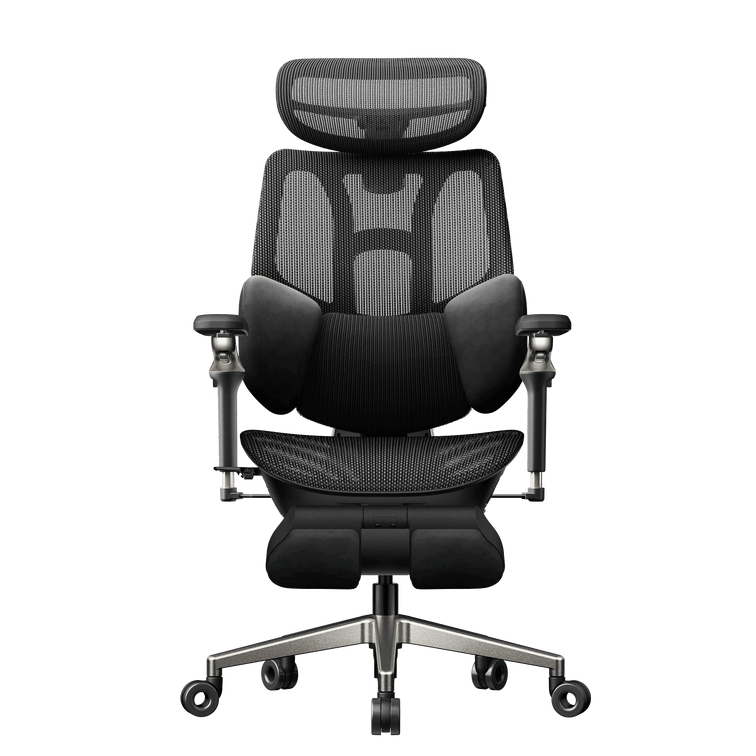
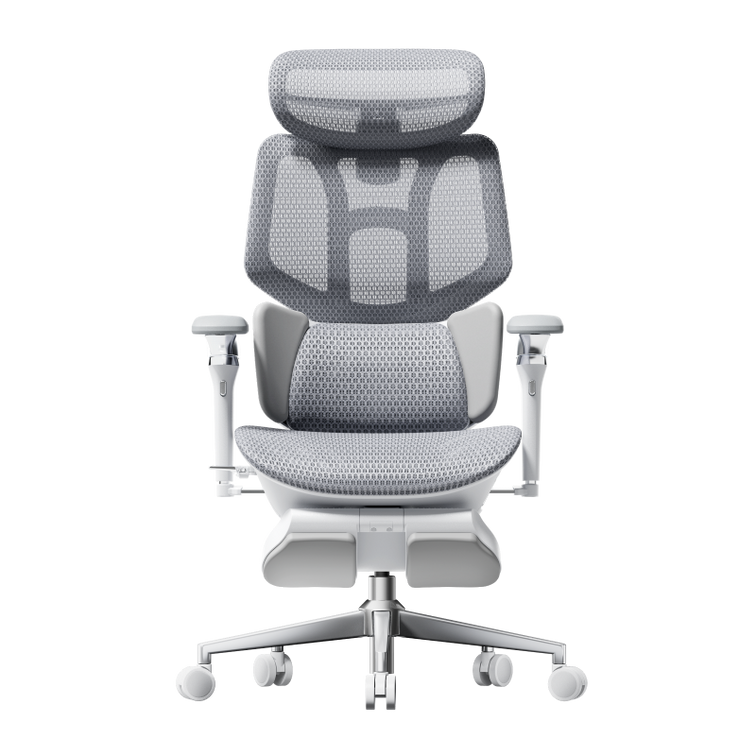

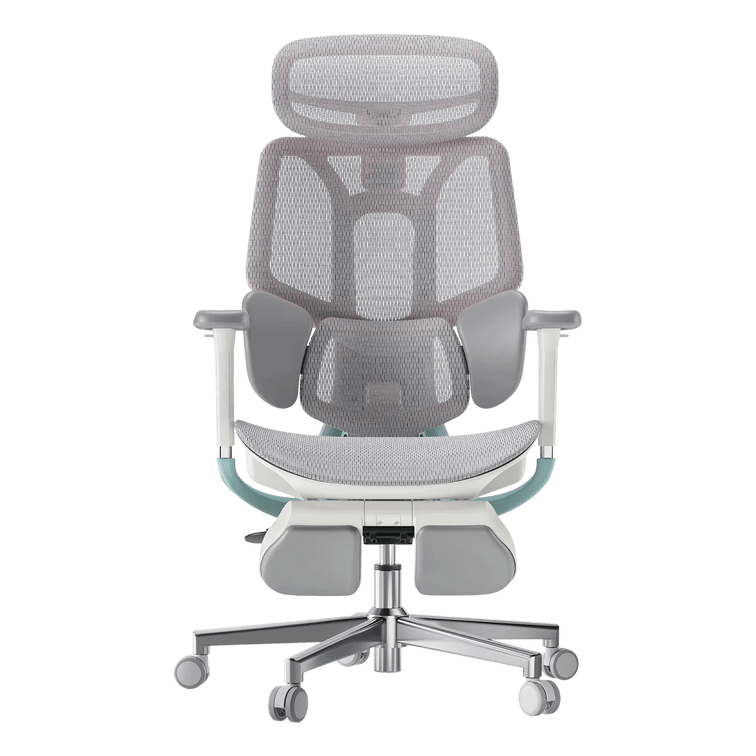
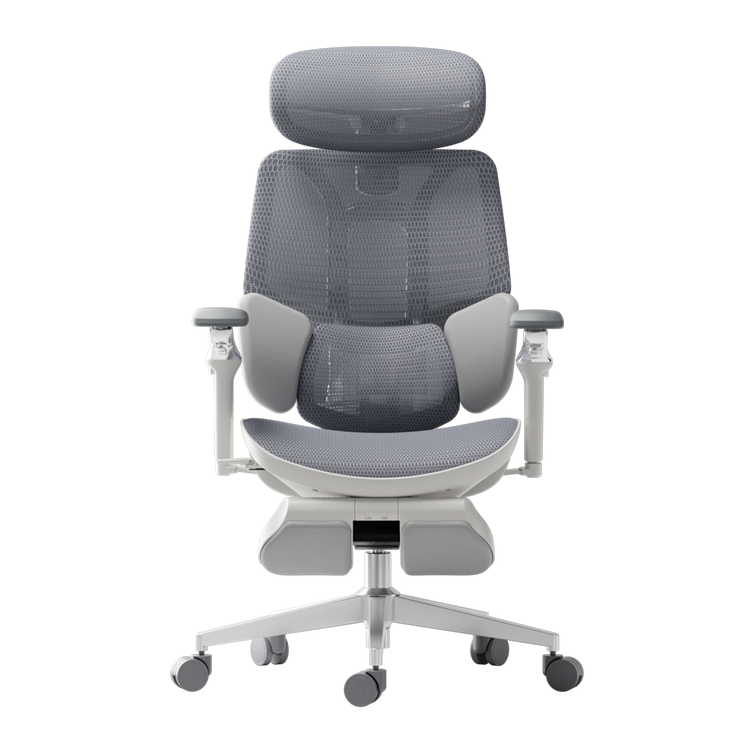
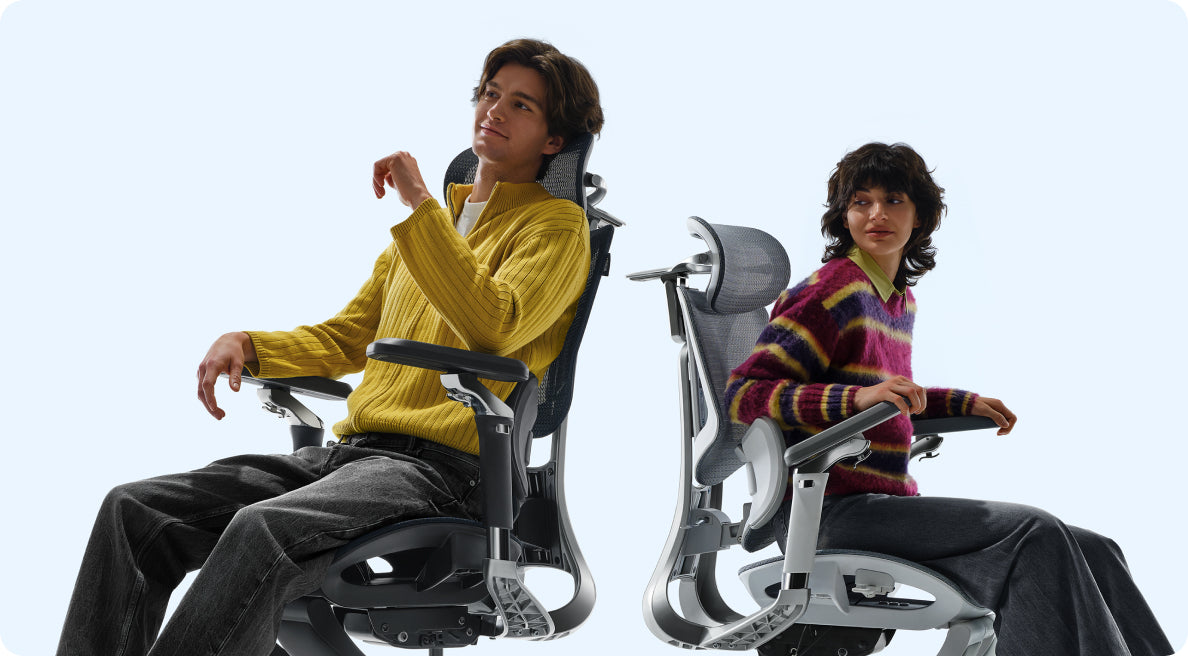

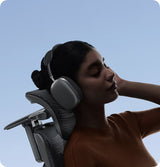
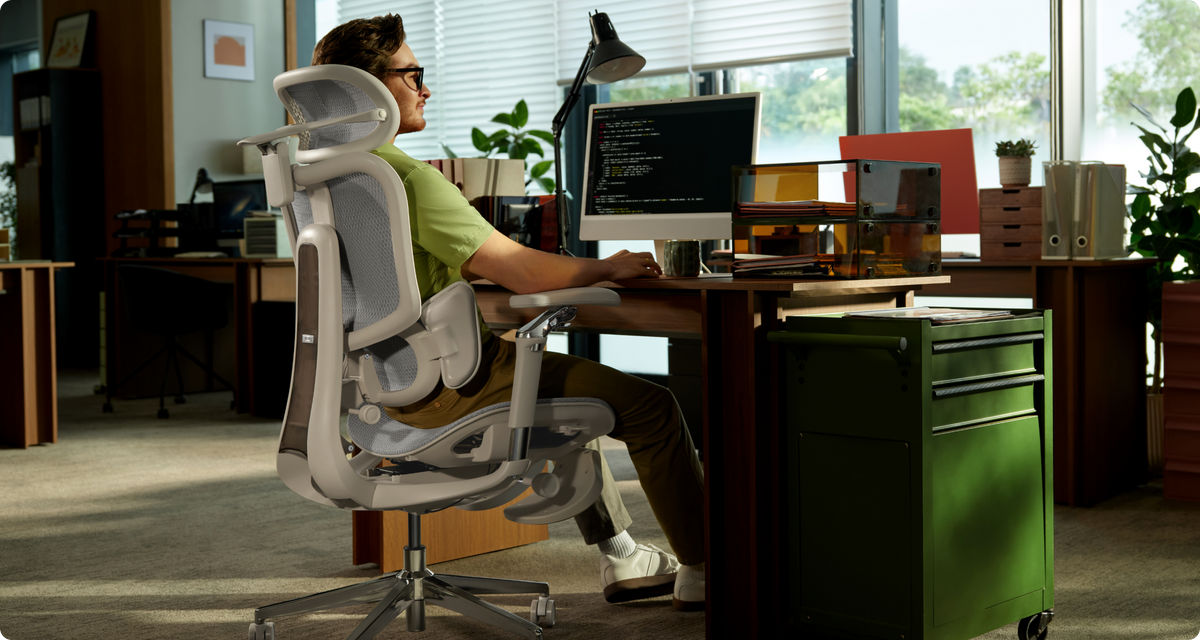
Chair buying guide · Support that suits your day
One supports your break. The other supports your desk setup.
Quick answer: A built-in retractable chair footrest is usually intended to support your legs during reclined breaks. A separate under-desk footrest provides a platform for your feet while you sit upright, particularly when they cannot comfortably reach the floor at your working seat height.
Neither is automatically better. Choose according to the support you need, the chair you already own, and the space available. Some workspaces can benefit from both, used at different times.
Resting your feet during a break sounds simple—until you start comparing chair features and desk accessories. Both may be called a “footrest”, but an attached leg rest and an under-desk platform often solve different problems. Understanding that distinction makes the choice much easier.
Why This Comparison Matters
Foot and leg support is not just about putting your feet up. During upright desk work, you may need a stable surface beneath your feet. During a reclined break, you may want support further forward beneath your lower legs.
Those are different positions with different requirements. Choosing by the word “footrest” alone can leave you with a useful feature that does not solve your original problem.
Built-in leg support
An attached support that extends from the chair and retracts when it is not needed.
Under-desk foot support
A separate platform that helps support your feet at your working seat height.
This guide uses “separate footrest” to mean an under-desk foot platform. A separate ottoman or reclining leg rest is another category and should be assessed differently.
What a Built-In Footrest Actually Offers
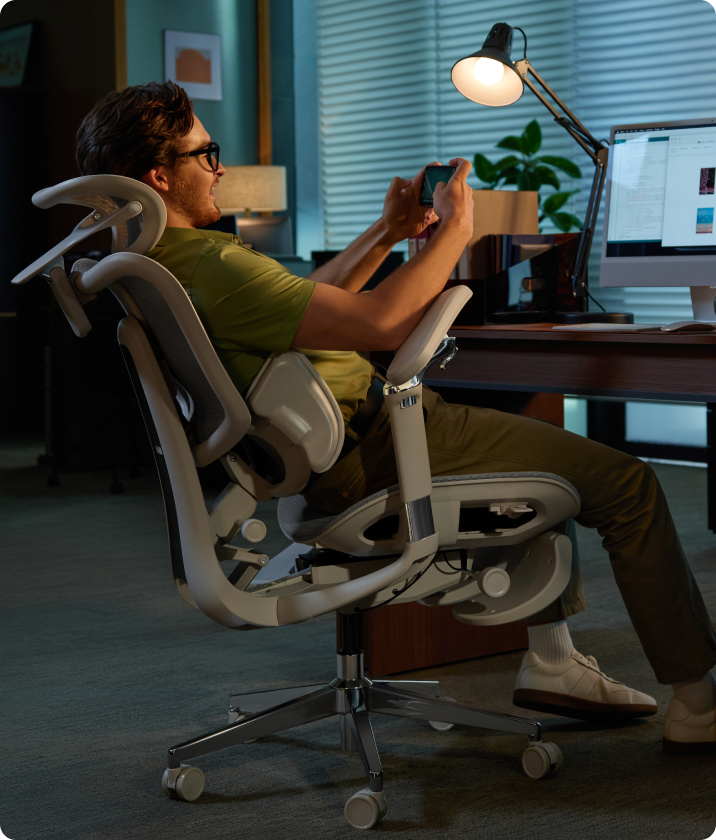
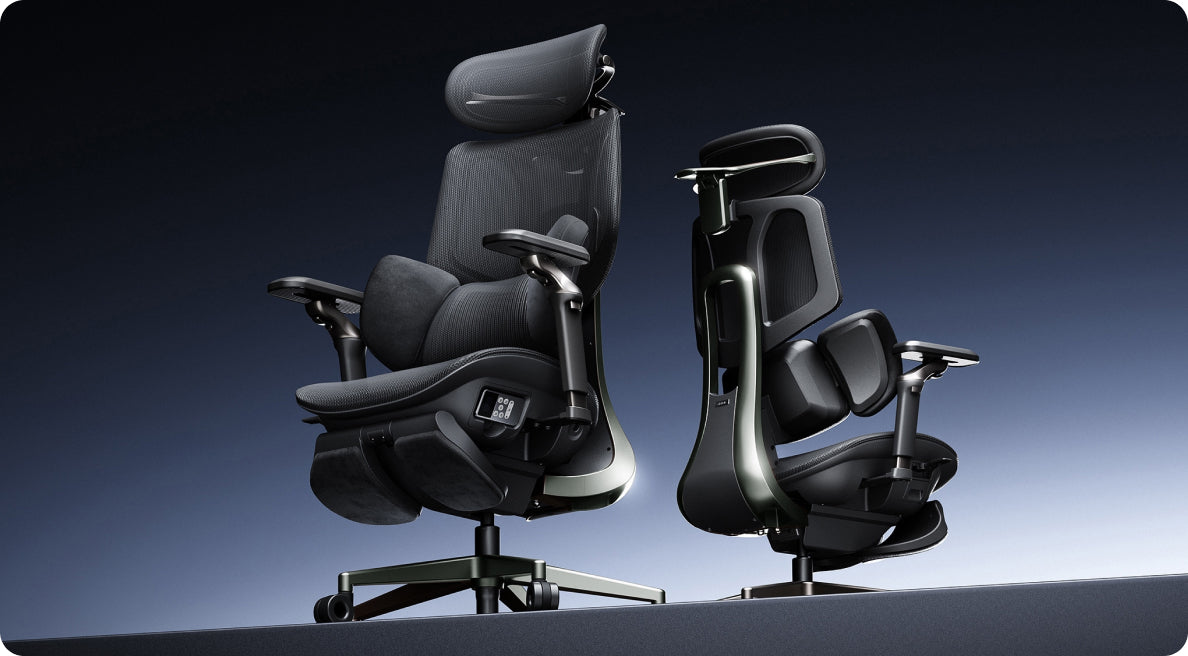
A built-in chair footrest is an attached support that usually extends from beneath the seat. Depending on the design, it supports the lower legs or feet while you lean back. When retracted, it stays with the chair rather than remaining as a separate object under the desk.
The main appeal is integration. If you take seated reading or resting breaks, the support is already part of the chair. You do not need to find somewhere to store a separate leg rest.
However, operation varies. Some supports pull out manually; others use different controls. Being built into the chair does not mean that the footrest automatically extends, changes angle, or synchronises with the backrest.
Check the actual mechanism. Look at the instructions or demonstration for the exact model. Confirm how it extends, where it supports your legs, and how much clear space it needs.
What a Separate Footrest Offers
A separate under-desk footrest is a platform placed on the floor in front of your chair. Depending on the product, it may offer a fixed surface, adjustable height, an adjustable angle, or a rocking movement.
Its main advantage is independent positioning. You can place it where your feet naturally rest while keeping the chair at a suitable height for the desk.
This can be useful when lowering the seat enough to reach the floor would leave you too low relative to the keyboard. It can also be a straightforward addition to a chair that already fits you well.
Separate footrests work with many chair setups, but not automatically with every one. Check platform height, stability, surface grip, legroom, and whether the chair base leaves enough space.
Office Chair Footrest Benefits, Either Way
Both options can make a suitable sitting position more comfortable, but their benefits are not interchangeable. The result depends on the design and how you use it.
- For upright work: a correctly positioned under-desk platform can provide a stable place for your feet when the floor is out of reach.
- For reclined breaks: an attached leg rest can provide a place to support your lower legs rather than leaving them unsupported.
- For everyday convenience: a retractable support stays with the chair, while a separate platform can be repositioned independently.
- For fit: either option should feel comfortable without forcing your legs into an awkward position or creating a concentrated pressure point.
Support is not a treatment. Neither type should be presented as a guaranteed way to reduce swelling, improve circulation, or treat back pain. A comfortable seated break also does not replace standing up and moving.
Quick Comparison Table
| Factor | Built-in chair footrest | Separate under-desk footrest |
|---|---|---|
| Main purpose | Usually intended for leg support during reclined breaks. | Usually intended for foot support during upright desk work. |
| Operation | Extends from the chair; controls and adjustment vary. | Positioned independently; height and angle depend on the model. |
| Recline linkage | Not necessarily synchronised with the backrest. | Not mechanically linked to the chair. |
| Cost | May be included or offered as a paid configuration. | Often costs less than replacing an otherwise suitable chair. |
| Compatibility | Designed for a particular chair or configuration. | Works with many setups if height and clearance are suitable. |
| Space | Stores with the chair but needs space when extended. | Occupies floor space beneath the desk. |
| Best starting point | You want integrated support for seated recline breaks. | Your feet need support at your normal working seat height. |
When a Reclining Office Chair With Footrest Makes Sense

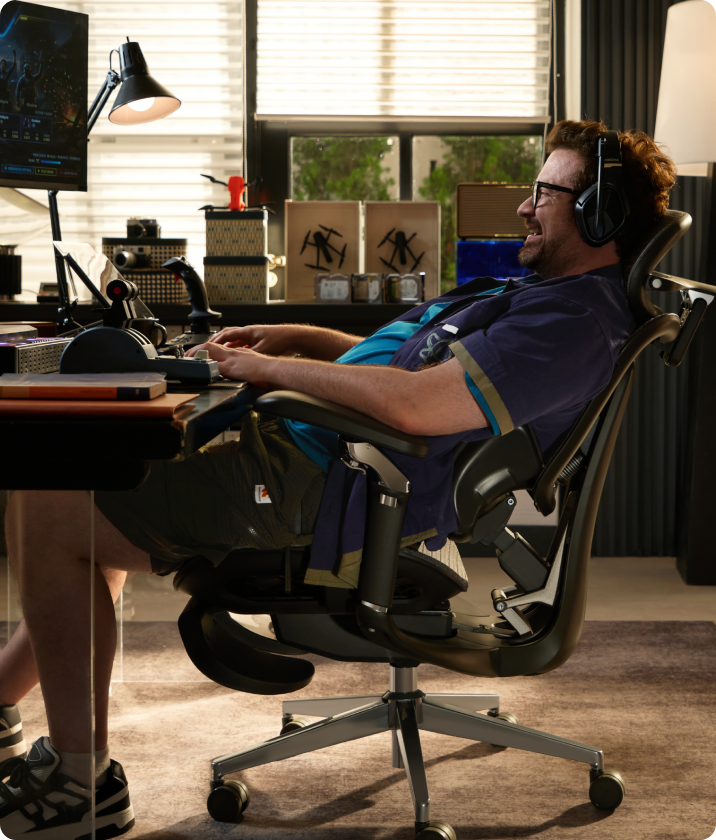
If your day includes seated reading breaks or moments when you lean back to rest, a built-in footrest can be a convenient option—particularly if you are already choosing a new chair.
It may also suit a workspace where you prefer an integrated design instead of a separate leg rest that needs its own storage space.
Before deciding, check where the support meets your legs. Its length, shape, and position should suit your body. Also allow room in front for extension and behind for the backrest to recline.
Follow the model’s instructions and load limits. Do not assume that the footrest can be stood on or used as an extra seat.
When a Separate Footrest Makes More Sense
If your current chair fits well but your feet do not reach the floor at a suitable desk-working height, a separate under-desk footrest may be the more relevant option.
It lets you support your feet without buying a different chair purely to add that function. Look for a stable platform with enough usable area for both feet and a height or angle that suits your position.
Check that it does not push your knees too high, crowd the desk opening, or force your chair further away from the keyboard. A platform that slides around on the floor may also be difficult to use comfortably.
For a full setup check, see the HBADA ergonomic adjustment and setup FAQ . Seat height, seat depth, desk height, and foot support should be considered together.
How HBADA Handles Built-In Footrests

Footrest availability depends on the model, market, and configuration. Check the selected option rather than assuming that every chair in a series includes the same features.
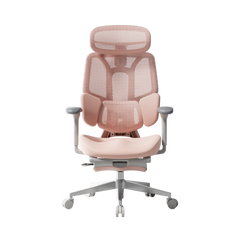
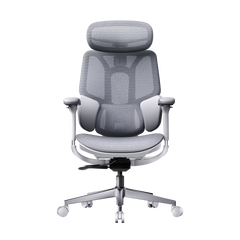
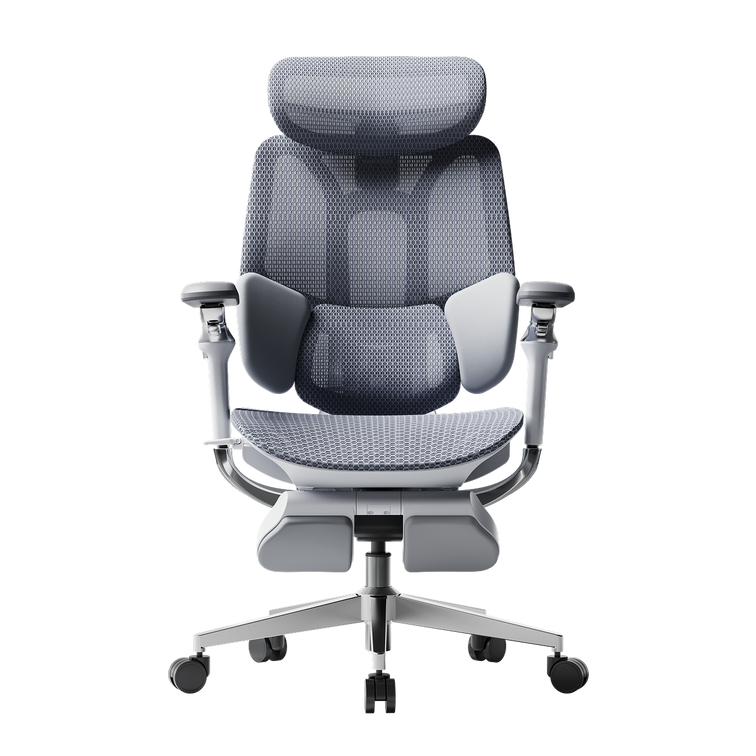
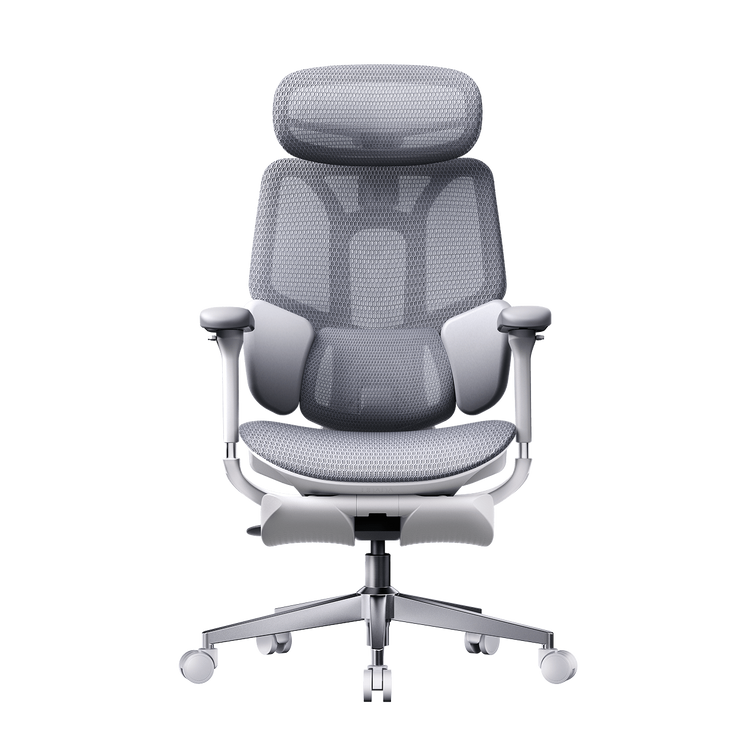
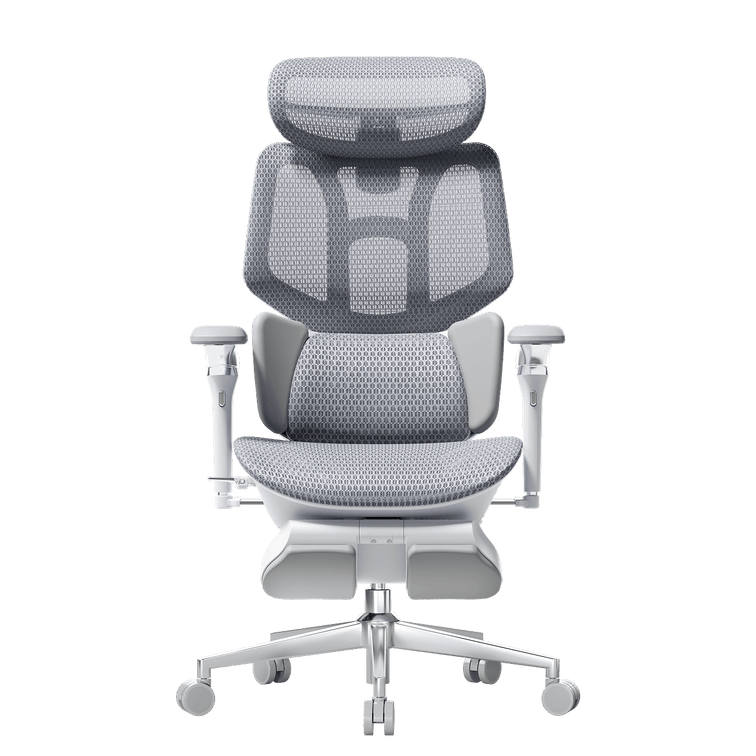
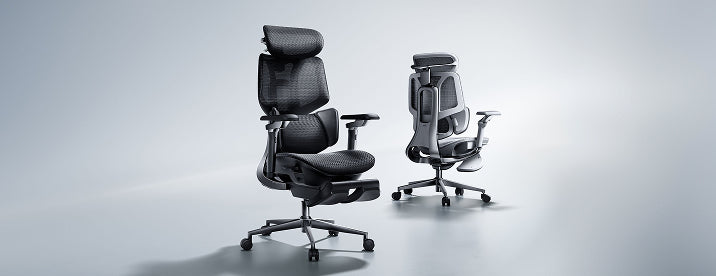
The HBADA E3 Pro EU product page lists “With Footrest” and “Without Footrest” options. Confirm your chosen variant and its availability before checkout.
| Option | What to consider |
|---|---|
| E3 Pro with footrest | Consider it if you want attached leg support for reclined breaks. Check extension space and the operating instructions. |
| E3 Pro without footrest | Consider it if you do not need attached leg support. You can separately assess whether your feet need an under-desk platform while working. |
| Other HBADA models | Verify the exact product listing and selected variant. Do not carry specifications over from another model, market, or version. |
Choose the chair first. Choose the footrest for your routine.
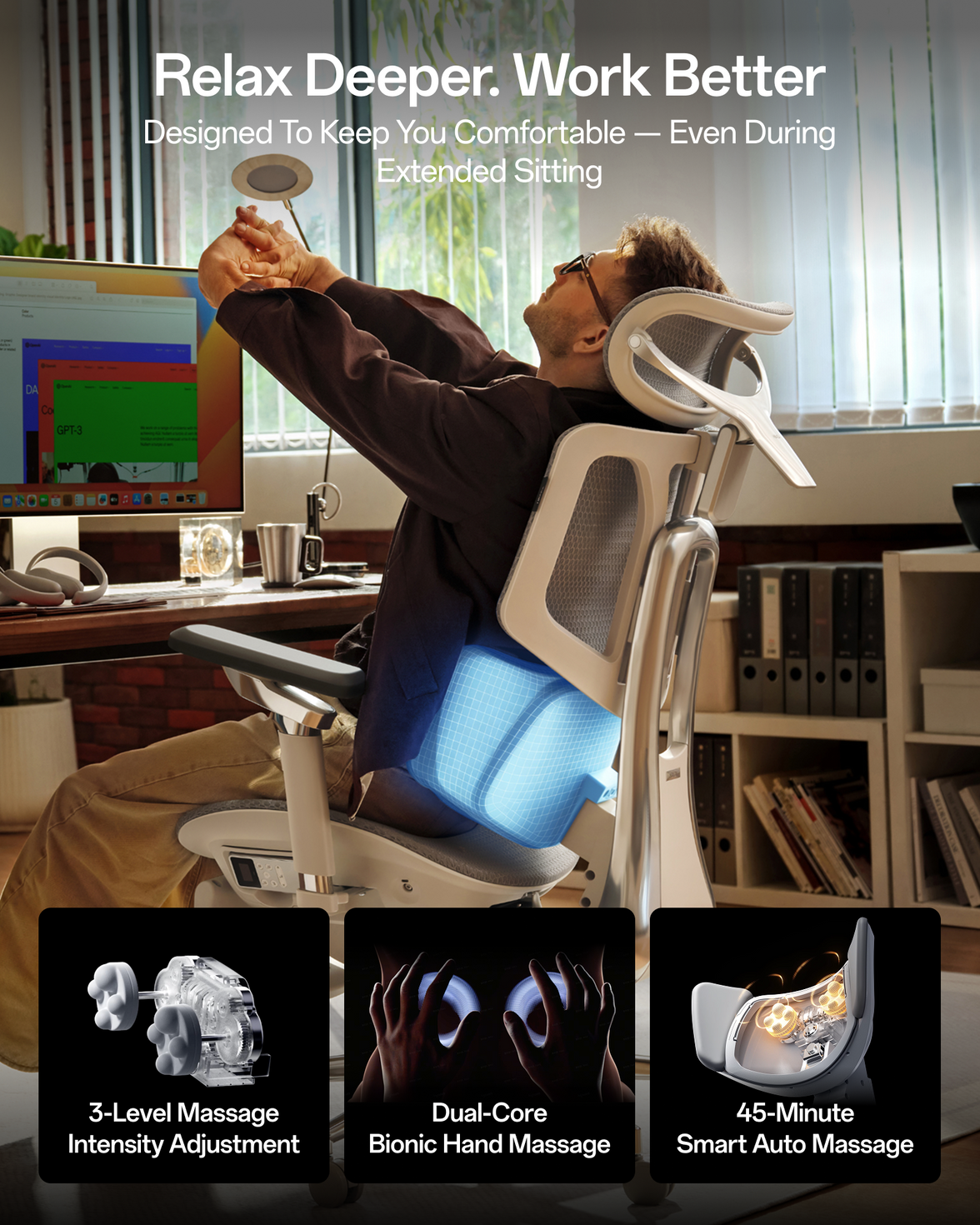
Seat fit, lumbar support, and armrest positioning remain important whether or not you choose a built-in footrest. Start with a chair that suits your desk work, then decide whether attached leg support adds value to your breaks.
Explore HBADA E3 Pro options →How to Decide
Ask what you want the support to do before comparing accessories or chair upgrades.
- Do your feet need support while typing? Check your seat and desk setup first. If your feet cannot reach the floor at a suitable working height, consider an appropriately sized under-desk footrest.
- Do you want leg support when reclining? A chair with a built-in footrest may suit that use. Check the extension mechanism, fit, and available space.
- Are you keeping your current chair? If it already suits you, a separate platform may solve an upright foot-support problem without replacing it.
- Are you buying a new chair anyway? Compare the price and features of the exact variants. Do not assume that an included footrest adds little or no cost.
- Do you have room for the support? Measure the under-desk space for a platform and the extended footprint for a built-in leg rest.
It does not always have to be either/or. You might use an under-desk platform for upright work and a retractable leg rest during breaks. Check that the two do not obstruct each other, and move the separate platform when necessary.
Frequently Asked Questions
Is an office chair with a footrest better than a separate footrest?
Not universally. An attached retractable footrest usually suits reclined breaks. A separate under-desk footrest is often more relevant when you need support beneath your feet during upright work.
What comfort benefits can either option offer?
A suitable platform can support your feet at your working seat height, while a built-in leg rest can make a reclined position more comfortable. Neither provides a guaranteed treatment for pain, swelling, or circulation problems.
Is a built-in chair footrest worth paying extra for?
It can be if you expect to use it for seated recline breaks and the design fits your body and workspace. Compare the actual variant prices and operation rather than assuming it moves automatically with the backrest.
Can I add a separate footrest to any office chair?
It can work with many chairs, but check the complete setup. The platform should be stable, provide comfortable foot support, and fit beneath your desk without crowding your knees or chair base.
Can I choose a HBADA E3 Pro with a footrest?
The EU E3 Pro listing offers with-footrest and without-footrest options. Check the selected variant, current availability, and product details before ordering.
Does a retractable footrest work for short breaks?
Yes, when used as intended and adjusted appropriately. Return it to its storage position before getting up if the instructions require this, and keep standing and movement breaks in your routine.
Final Thoughts
There is no single winner in the built-in versus separate footrest comparison, because the two often serve different purposes.
Choose a built-in option when you want integrated leg support for reclined breaks. Consider a separate under-desk platform when your feet need support at your working seat height and you want to keep your existing chair.
Whichever option you choose, check the fit, available space, and intended use. A useful footrest should support the way you sit—not encourage you to stay in one position all day.