



Cart
Your shopping cart is empty
Continue Shopping
Every Order, Backed by HBADA
30-day in-home Trial
Free Delivery in 3–5 Business Days
5-Year Hassle-Free Warranty
24/7 Customer Support
Remove this item from your cart?
Cart
 2D vs 3D vs 4D Armrests: How Do 6D Armrests Compare?
Dark reading mode
More ways to move.Support that fits your day.
A practical guide to 2D, 3D, 4D and 6D armrests for your home office or shared workspace.
Quick answer: The main difference between 2D, 3D, 4D and 6D armrests is the range of adjustments offered. A common 4D setup includes height, depth, width and pivot. Other labels vary by manufacturer. Choose the movements that support your forearms comfortably and fit your desk, rather than assuming a higher number is always better.
Contents
What Does the “D” Mean?
2D Armrests Explained
3D Armrests Explained
4D Armrests Explained
6D Armrests Explained
Comparing All Four Types
Why Numbering Varies
Choosing by Use Case
Our Recommendation: HBADA X7
Frequently Asked Questions
Final Thoughts
Armrest labels are one of the most confusing parts of chair shopping. 2D. 3D. 4D. 6D. They sound technical, but they describe something practical: how you can reposition the arm supports.
This guide walks through the common configurations, then helps you figure out which movements are worth paying for.
What Does the “D” in Armrests Actually Mean?
The “D” usually stands for dimensions and is used to describe adjustment functions. Moving up and down normally counts as one adjustment, not two.
In practice, the labels do not give you a reliable cross-brand checklist. Manufacturers may count sliding, rotation, tilt and linked movement differently. Two chairs sold with the same D-number may offer different controls and ranges.
Someone who mostly types may value inward adjustment and pivot. Someone who often reclines may prefer armrests that remain useful as the backrest moves. Look at the actual movements before deciding what you need.
2D Armrests Explained
A 2D armrest generally offers two adjustment functions. Depending on the chair, that might mean:
Height: raising or lowering the support.
A second movement: width, depth or rotation.
Height and width are one possible combination, but not the only one. Check the product description rather than assuming every 2D armrest works the same way.
A simpler setup can be enough if it puts the pads in the right place. Its limitation is fewer options when your desk, shoulder width or working position requires extra adjustment.
3D Armrests Explained
A 3D design adds another adjustment function. One common combination is:
Height adjustment.
Depth adjustment, moving the pad forwards and backwards.
Pivot, angling the pad inwards or outwards.
Other designs may include width instead of pivot. Rotation helps the pad follow your forearm angle, while depth adjustment helps position support without pushing you away from the desk.
For regular desk work, a well-fitting 3D design can be useful. The question is whether its particular movements cover your needs.
4D Armrests Explained
A common 4D configuration combines height, depth, width and pivot. Independent width adjustment lets you bring the supports closer to your body or move them further apart.
This is particularly useful when fixed armrests feel too wide or too narrow. It gives you more flexibility to support your forearms without reaching outwards or drawing your shoulders up.
For everyday typing and mouse work, this can be a practical balance of function and cost. However, “4D” is not an eight-hour comfort certification. Pad spacing, height range, firmness and desk clearance still matter.
6D Armrests Explained
Products described as 6D generally add functions beyond basic sliding and pivoting. Depending on the design, these may include:
Pad tilt: changing the angle of the support surface.
Additional rotation: repositioning the pad or supporting arm.
Recline-linked movement: moving with the chair as you lean back.
Fold-away movement: moving the support out of the way.
These are features to look for, not a definition that every 6D product must follow. In particular, recline-linked movement is not exclusive to chairs marketed as 6D.
Extra movement can be useful if you switch between typing, calls and reclined breaks. It is worth paying for when it solves a positioning problem you actually have.
Comparing All Four Office Chair Armrest Types
Common examples, not universal definitions. Confirm the controls and ranges on each product.
Label
Typical description
What to check
2D
Height plus one other adjustment.
Whether the second movement is width, depth or pivot.
3D
Three functions, such as height, depth and pivot.
Whether the pads can also reach your preferred spacing.
4D
Often height, depth, width and pivot.
Actual travel, pad stability and desk clearance.
6D
A manufacturer-defined combination of additional movements.
Which functions are included and whether you will use them.
Why the Numbering Isn't Standardized
Treat D-labels as product descriptions rather than a universal ranking. A manufacturer may describe separate rotation points individually, while another may group them into one function.
The same caution applies to degree-based terms such as “720°”. An angular description is not directly comparable with a count of adjustment functions.
The better question: Can you place the pads where your forearms naturally rest—and keep them there while typing, using a mouse and changing position?
Best Armrests for Office Chair by Use Case
Choosing between these designs comes down to your workspace and tasks, not just the highest number available.
Typing and mouse work
Prioritise usable height, width and depth ranges. Pivot can help match the angle of your forearms.
A shared home office
Check that the pads can reach comfortable positions for both users and that the adjustments are easy to reset.
Calls and reclined breaks
Check how the armrests behave during recline. Linked movement or pad tilt may help maintain useful support.
A compact desk setup
Measure clearance beneath the desktop, including drawers. Check minimum armrest height and whether the pads move back.
A desk advertised as 75 cm high may have less space underneath because of its top, frame or drawers. Measure that clear space and compare it with the armrests at your working seat height.
A quick fit check: Keep your shoulders relaxed, elbows near your sides and keyboard within easy reach. The pads should support your forearms without forcing your shoulders upwards or preventing you from moving close to the desk.
For general workstation guidance, see OSHA's chair and armrest guidance. This is practical setup guidance, not a statement of EU legal requirements.
Our Recommendation: HBADA X7
If you want flexible arm positioning alongside powered comfort features, the HBADA X7 is worth considering. Its European listing describes a 720° armrest system alongside powered lumbar tracking, massage, heating and seat ventilation.
Consider it as a complete chair rather than treating “720°” as proof that it will suit every arm position. Check pad reach, desk clearance and the controls on your selected configuration.
Not an exclusive feature: The E3 Pro 2026 also offers 720° armrests. The X7 recommendation here is based on its overall feature combination, not a claim that it has the most adjustable armrests in every situation.
HBADA E3 Pro 2026
The E3 Pro 2026 is worth comparing if you prefer a mechanically adjustable chair without the X7's powered comfort features.
Its EU specification lists 360° pad rotation and 360° arm-body swivel, plus 7 cm of height adjustment and 6 cm of forward-backward travel.
HBADA E3 Air 2026
Include the E3 Air 2026 in your comparison if you want everyday adjustability without choosing the X7's electronic features.
Check the selected version's armrest controls and travel rather than assigning it a D-number from another listing.
Before ordering, confirm the generation, configuration and armrest specifications on the European product page. Similar model names do not always mean identical fittings.
Frequently Asked Questions
What is the difference between 2D, 3D and 4D armrests?
They describe different adjustment combinations. A common 4D setup includes height, depth, width and pivot. The movements counted as 2D or 3D vary, so check the actual feature list.
Are 6D armrests worth it?
They can be if the additional movements help with your tasks or body proportions. Check what “6D” includes and whether those functions solve a problem that simpler arms do not.
Why do armrest D-numbers differ between brands?
Brands may count or group sliding, rotation, tilt and linked movement differently. Matching D-numbers do not guarantee matching movement ranges.
Which armrests are best for a full workday?
Choose arms that support your forearms with relaxed shoulders and allow you to reach the desk. Height, depth, width and pivot are useful options, but no D-number alone guarantees all-day comfort.
Is the X7 the only HBADA chair with 720° armrests?
No. The E3 Pro 2026 also offers 720° armrests. Compare the specific ranges and the rest of the chair's features, not just the shared label.
Do I need 6D armrests for occasional use?
Not necessarily. A simpler design can be sufficient if it reaches the right position and does not interfere with your desk.
Final Thoughts
The 2D vs 3D vs 4D armrests comparison comes down to how you work and where your forearms need support. Additional movement is useful when it improves your actual fit.
A familiar 4D combination is a good starting point for comparison. More elaborate designs may add useful options for changing tasks and reclining, but a bigger number is not automatically a better choice.
Choose the movements you need, check their ranges and match the chair to your desk.
Oct 10, 2026
 BIFMA X5.1 Certification: Office Chair Guide | HBADA
Dark reading mode
Look past the logo.Understand the testing.
A clearer guide to BIFMA, EN 1335, SGS and TÜV for office chair buyers in Europe.
Quick answer: ANSI/BIFMA X5.1 is a safety, strength and durability testing standard for general-purpose office chairs. It is not, by itself, a product certification. European buyers may also see EN 1335 on listings. Check the exact model, standard edition, testing organisation and supporting documentation rather than relying on a badge alone.
Table of Contents
What Is BIFMA X5.1 Certification?
Why BIFMA X5.1 Certification Matters
What the Testing Actually Covers
What Is BIFMA Certification, in Plain Terms?
SGS vs BIFMA: What's the Difference?
TÜV Office Chair Certification Explained
Office Chair Safety Standards Beyond BIFMA
How to Spot a Genuinely BIFMA Certified Office Chair
How HBADA Chairs Measure Up
Red Flags to Watch For
Frequently Asked Questions
Final Thoughts
Certification badges are everywhere on office chair listings. BIFMA. SGS. TÜV. EN 1335. It's easy to scroll past them without really knowing what they mean or whether they matter.
Some names identify standards. Others identify testing organisations or certification programmes. Understanding that difference is the first step towards judging the evidence behind a product.
This guide breaks down what BIFMA X5.1 covers, how it relates to other common names, and what to look for so you're not just trusting a logo.
What Is BIFMA X5.1 Certification?
BIFMA stands for the Business and Institutional Furniture Manufacturers Association. ANSI/BIFMA X5.1 sets out tests for general-purpose office chairs, providing a common basis for evaluating mechanical safety and durability.
“BIFMA X5.1 certification” is common shopping language, but a listing should explain whether it means a test report, a statement of conformance, or participation in a named verification or certification programme.
The BIFMA Compliant programme is a separate verification programme with laboratory requirements, a public product registry and report auditing. It should not be assumed from a generic BIFMA logo.
Why BIFMA X5.1 Certification Matters
Think about how much a chair actually goes through over a few years: thousands of sit-downs, constant leaning back, repeated adjustments and rolling across the floor. A chair that looks fine on day one still needs to withstand repeated use.
Documented testing gives you more to evaluate than phrases such as “commercial grade” or “built to last”. It helps you ask specific questions about the product rather than judging durability from photographs alone.
Testing and personal fit are different: A documented test result does not tell you whether the seat fits your legs, the armrests suit your desk, or the chair will feel comfortable to you.
What the Testing Actually Covers
X5.1 is a collection of tests, not one universal stress-cycle check. Applicable tests depend on the chair's design and the edition used.
Examples of testing areas—not a complete compliance checklist.
Testing area
What it examines
Backrest and arm strength
Resistance to specified applied forces.
Seat impact and durability
Structural response to defined impacts and repeated loading.
Stability
Resistance to tipping in prescribed test positions.
Swivel and tilt mechanisms
Performance during repeated movement under defined conditions.
Castors and base
Durability of the supporting and rolling assembly.
See BIFMA's X5.1 overview and Intertek's explanation of testing updates for examples of the methods involved.
Read cycle counts in context: “100,000 cycles” only becomes useful when you know the test, load, method and result. Counts from different tests are not directly comparable and do not translate into a guaranteed number of years.
What Is BIFMA Certification, in Plain Terms?
Start with three separate questions: what requirements were used, who performed the tests, and what claim the resulting documentation supports.
01
The standard
Defines the test methods and acceptance requirements.
02
The evidence
Identifies the tested product, scope, laboratory and results.
BIFMA develops standards; it is not the laboratory behind every chair test. Its Compliant programme allows testing by an in-house or third-party ISO/IEC 17025-accredited laboratory with the relevant standard in its accreditation scope.
That means “tested to X5.1” does not automatically mean “independently certified by BIFMA”.
SGS vs BIFMA: What's the Difference?
BIFMA and SGS aren't competing standards. They serve different roles.
BIFMA: Develops furniture standards, including X5.1.
SGS: Provides testing, inspection and certification services, including furniture testing.
A manufacturer may commission an SGS laboratory to test a chair against a BIFMA standard. However, you still need to check the specific laboratory, report, model and test scope.
An SGS report for a gas lift does not establish that the complete chair passed all applicable X5.1 tests. Seeing both names on a listing is not a substitute for reading what was tested.
Source: SGS furniture testing services.
TÜV Office Chair Certification Explained
TÜV names also appear on office chair listings. Organisations such as TÜV Rheinland and TÜV SÜD provide testing and certification services, but the name alone does not identify the standard or product covered.
Check the issuing organisation, certificate number, model and scope. The evidence may concern a complete chair, a component or a specific characteristic.
For TÜV Rheinland claims, its furniture testing information explains how certificate identification numbers can be checked through Certipedia.
More logos do not necessarily mean more testing. Different names can refer to the same testing activity. Match each claim to its documentation before treating it as additional evidence.
Office Chair Safety Standards Beyond BIFMA
European buyers will often encounter EN 1335 alongside ANSI/BIFMA X5.1. These references address office seating, but they are not interchangeable.
Check the precise standard part and edition named in the supporting documentation.
Reference
Main focus
What to check
ANSI/BIFMA X5.1
Mechanical safety, strength and durability of general-purpose office chairs.
The tested model, edition and applicable test results.
EN 1335-1
Office work chair dimensions and their measurement.
The dimensional classification and adjustment requirements.
EN 1335-2
Safety requirements for office work chairs.
Whether the report covers this part, not just dimensional measurements.
Types Ax, A, B and C are dimensional classifications, not a ranking of daily sitting hours. Type Ax was introduced to accommodate a wider range of users; it is not an automatic “8+ hours” guarantee.
When comparing chairs, check which requirements were actually evaluated. A reference to one standard should not be presented as proof that the product meets another.
Sources: SATRA's standards explanation and European seating testing guidance.
How to Spot a Genuinely BIFMA Certified Office Chair
Certification claims aren't all equally clear. Use these checks to understand what a listing actually supports.
Match the model. Check the model number and configuration. Evidence for another chair in the same product family may not cover your selection.
Find the exact standard. Look for the standard number and edition, not just “BIFMA tested” or “EN 1335”.
Check the scope. Establish whether the documentation covers the whole chair, selected tests or a component such as the gas lift.
Identify the laboratory and report. Ask for the report reference, results and relevant accreditation details.
Verify a named programme. If the seller claims BIFMA Compliant status, check the product registry linked from the official programme page.
Read the limits. Keep test results separate from the manufacturer's weight rating, warranty and instructions for use.
A useful question to send the seller: “Could you share the test report reference or certificate for this exact model, including the standard edition, testing organisation and whether it covers the complete chair or selected components?”
How HBADA Chairs Measure Up
Testing information should be checked model by model. Start with the European product page, then request supporting documentation for the exact version you're considering.
HBADA E3 Pro 2026
Review the E3 Pro 2026 product page for published specifications and testing information. If you are comparing a cycle-count claim, ask which test and conditions the number refers to.
HBADA X7
Review the X7 product page for your selected configuration. Request the applicable documentation rather than assuming every X7-series version has identical coverage.
Certification specifics can vary by version, region and configuration. Product-page badges are a starting point, not a replacement for the underlying report or certificate.
For an EU purchase, confirm that the documentation applies to the model sold through the European store. Do not assume a report linked to another market covers the same configuration.
If the documentation is not shown, contact HBADA EU support with the product link and model you're considering.
Red Flags to Watch For
Unexplained badges: Logos appear without a standard, report reference or scope.
A model mismatch: The certificate names a different model or configuration with no explanation of coverage.
Component evidence presented as whole-chair proof: A gas-lift report is used to imply complete chair compliance.
Cycle counts without context: A large number appears without the test method, load or result.
Standards treated as interchangeable: One test result is used to suggest compliance with several unrelated requirements.
Unsupported guarantees: A test claim is presented as proof of unlimited service life or comfort for everyone.
A low price alone does not prove a certification claim is false. Likewise, a high price does not prove it is valid. Judge the documentation, not the price tag.
About “Class 4” gas lifts: Treat this as a component specification that needs its own context. It is not a universal safety score for the complete chair, and it does not replace model-specific testing evidence.
Frequently Asked Questions
What does BIFMA X5.1 testing cover?
It evaluates defined aspects of chair strength, stability and durability. Applicable checks can include the seat, backrest, arms, swivel, tilt mechanism, castors and base.
Is BIFMA X5.1 a certification?
It is a testing standard. A seller using “certified” should identify the report, certification scheme or verification programme that supports that wording.
Is SGS the same as BIFMA?
No. BIFMA develops standards; SGS provides testing and other assurance services. Check the individual report to see what an SGS laboratory tested.
What does a TÜV office chair certificate tell me?
Its meaning depends on the issuer and scope. Verify the certificate number and covered model rather than assuming every TÜV-related claim covers the complete chair.
Is BIFMA X5.1 the same as EN 1335?
No. They have different requirements and methods. EN 1335-1 concerns dimensions, while EN 1335-2 concerns safety requirements. Check the exact standards covered by the product's documentation.
Does EN 1335 Type Ax mean a chair is certified for eight-hour days?
No. The chair types in EN 1335-1 concern dimensions and adjustment requirements. They are not daily sitting-hour ratings.
Do more test cycles mean a chair will last longer?
Only comparable test conditions make cycle counts useful for comparison. A cycle count does not guarantee a specific lifespan. Use, maintenance, loading and environment also affect performance over time.
What is the most useful evidence to request?
Ask for the model-specific report or certificate reference, standard edition, testing organisation, scope and results. If a public verification programme is claimed, check its registry too.
Final Thoughts
BIFMA X5.1 is more useful when you understand the evidence behind the claim. For European buyers, knowing how it differs from EN 1335 makes product comparisons clearer.
The goal isn't to chase every logo you can find. It's to understand what each one verifies and keep that separate from personal fit, warranty coverage and expected service life.
Whether you're comparing HBADA models or shopping elsewhere, the same principle applies: look past the logo, check the model and ask what was tested.
Oct 10, 2026
 Office Chair Size Calculator: Find Your Ideal Seat Dimensions
Dark reading mode
Find your numbers first. Then find a chair that fits.
Quick answer: The right chair size starts with two numbers: your seat height and your seat depth. Seat height should let your feet rest flat with your knees near 90 degrees. Seat depth should leave a small gap behind your knees when your back touches the backrest. This office chair size calculator walks you through both using reference tables and a simple manual measurement method.
Table of Contents
Why Chair Size Actually Matters
How This Office Chair Size Calculator Works
Office Chair Seat Height Calculator
Seat Depth Calculator
Full Office Chair Dimensions Guide
Height-to-Size Quick Reference Table
Matching Your Numbers to a HBADA Chair
How to Measure Yourself at Home
Frequently Asked Questions
Final Thoughts
Buying a chair based on looks alone is a common mistake. Two people can buy the exact same model and have completely different experiences, simply because their bodies are different sizes. That's why checking chair dimensions matters alongside star ratings and photos.
This guide gives you a simple, practical way to find your numbers, then match them to a chair that actually fits.
Why Chair Size Actually Matters
A chair that's the wrong size can limit the usefulness of its ergonomic features, no matter how good they look on a spec sheet. If the seat sits too high, your feet may dangle and the seat edge may press against your thighs. If it's too deep, you may end up perched at the front to avoid pressure behind your knees, losing contact with the backrest and lumbar support.
This is really what an ergonomic chair size guide is trying to solve. It's not about finding the "best" chair in general. It's about finding the right dimensions for your specific body.
How This Office Chair Size Calculator Works
Think of this less like a single magic number and more like a simple two-step process.
01
Seat height
Start with your lower-leg measurement, from the floor to the underside of your knee while seated in your usual work shoes.
02
Seat depth
Measure from the back of your buttocks to the back of your knee, then subtract space for clearance behind the knee.
Once you know these two measurements, you can compare them against a chair's adjustable range. The tables below provide rough starting points; your own measurements and a seated fit check should take priority.
Manual calculation: Start seat height near your seated lower-leg measurement. For seat depth, subtract approximately 3–5 cm from your buttock-to-knee measurement, then check that the seat supports your thighs without touching the backs of your knees.
For example, a 48 cm buttock-to-knee measurement gives an initial seat-depth range of approximately 43–45 cm. This is a starting point, not a guaranteed fit.
Office Chair Seat Height Calculator
Seat height is usually the easiest place to start. The goal is simple: your feet should rest flat on the floor, and your knees should sit at roughly a 90-degree angle, level with or slightly below your hips.
The following standing-height table offers rough starting ranges. People of the same height can have different leg proportions, so it should not replace measuring yourself.
Illustrative starting ranges, not a validated height-to-seat formula. Centimetre conversions are rounded.
Standing height
Seat height starting range
152 cm / 5'0"
40.6–43.2 cm / 16–17"
157 cm / 5'2"
41.9–44.5 cm / 16.5–17.5"
163 cm / 5'4"
43.2–45.7 cm / 17–18"
168 cm / 5'6"
44.5–47.0 cm / 17.5–18.5"
173 cm / 5'8"
45.7–48.3 cm / 18–19"
178 cm / 5'10"
47.0–49.5 cm / 18.5–19.5"
183 cm / 6'0"
48.3–50.8 cm / 19–20"
188 cm / 6'2"
49.5–52.1 cm / 19.5–20.5"
193 cm / 6'4"
50.8–53.3 cm / 20–21"
If you fall between two rows, check both nearby ranges against your lower-leg measurement rather than automatically choosing the higher setting.
Check the desk, too: If you need to raise the chair to reach a fixed-height desk comfortably, use a stable floor footrest if your feet no longer reach the floor. A retractable leg rest intended for reclining is not the same as a floor footrest for upright desk work.
Seat Depth Calculator
Seat depth is easy to overlook, but it matters just as much. If the seat is too deep, the backrest may sit too far away to support your lower back without pressure behind your knees. If it's too shallow, your thighs may not have enough support.
The goal is a small gap, about two to three finger-widths, between the front edge of the seat and the back of your knees when you're sitting fully back. Use the table as a rough starting point, then check your actual buttock-to-knee measurement.
Illustrative starting ranges. Thigh length, backrest shape and knee clearance determine your final setting.
Standing height
Seat depth starting range
152 cm / 5'0"
38.1–40.6 cm / 15–16"
157 cm / 5'2"
39.4–41.9 cm / 15.5–16.5"
163 cm / 5'4"
40.6–43.2 cm / 16–17"
168 cm / 5'6"
41.9–44.5 cm / 16.5–17.5"
173 cm / 5'8"
43.2–45.7 cm / 17–18"
178 cm / 5'10"
44.5–47.0 cm / 17.5–18.5"
183 cm / 6'0"
45.7–48.3 cm / 18–19"
188 cm / 6'2"
47.0–49.5 cm / 18.5–19.5"
193 cm / 6'4"
48.3–50.8 cm / 19–20"
Seat depth is where an adjustable chair really earns its keep. A fixed-depth seat suits a narrower range of body proportions. An adjustable seat gives you more room to find a setting that supports your thighs while keeping your back against the backrest.
Full Office Chair Dimensions Guide
Seat height and seat depth are two key numbers, but a complete office chair dimensions guide looks at a few more measurements too.
Seat width: Allow comfortable clearance on both sides of your hips. Around 2.5 cm, or an inch, per side can be a starting point, but also check the usable space between the armrests.
Armrest height: Your forearms should be supported with your shoulders relaxed, not raised. The armrests should not prevent you from moving close to the desk.
Backrest height: Check that the lumbar support reaches your lower back. Taller backrests and headrests should suit your torso and seated head position.
Weight capacity: Stay within the manufacturer's stated maximum load for your exact model. Weight capacity alone does not establish comfort or fit.
Checking all of these together gives you a much clearer picture than seat height or depth alone.
Height-to-Size Quick Reference Table
For a fast, at-a-glance version, here's a combined summary of the starting ranges above.
Rough screening ranges only. Use your seated measurements before choosing a chair.
Standing height
Seat height
Seat depth
152–163 cm5'0"–5'4"
40.6–45.7 cm16–18"
38.1–43.2 cm15–17"
165–175 cm5'5"–5'9"
44.5–49.5 cm17.5–19.5"
41.9–45.7 cm16.5–18"
178–188 cm5'10"–6'2"
47.0–52.1 cm18.5–20.5"
44.5–49.5 cm17.5–19.5"
191–193 cm6'3"–6'4"
50.8–53.3 cm20–21"
48.3–50.8 cm19–20"
For heights outside this table, use direct measurements rather than extending the ranges by assumption.
Matching Your Numbers to a HBADA Chair
Once you have your numbers, the next step is checking them against a chair's actual adjustable range. Here's how three HBADA models compare using their European product specifications.
Manufacturer-listed EU dimensions. Inch values are rounded; check the linked product page for your selected version.
Chair
Seat height range
Seat depth range
Recommended user height
HBADA X7
44.5–53 cm17.5–20.9"
40.5–45.5 cm15.9–17.9"
150–195 cm
HBADA E3 Pro (2026)
46–54.5 cm18.1–21.5"
45–50 cm17.7–19.7"
155–195 cm
HBADA E3 Air (2026)
46.5–55 cm18.3–21.7"
43–48 cm16.9–18.9"
155–195 cm
Notice how each model's range overlaps differently with the estimates above. The X7 has a lower minimum seat height and a shorter minimum seat depth than the two E3 models listed here. The E3 Pro offers the deepest maximum seat setting of these three.
Those differences help narrow your options, but a recommended user-height range does not guarantee that every person within it will fit. Check both your required seat height and your required seat depth, then consider armrest and backrest position.
Compare both numbers together: If you need a 43 cm seat height, a chair with a 46 cm minimum will not reach that setting. A broad recommended user-height range does not override that dimensional limit.
How to Measure Yourself at Home
If you want more useful numbers than the general estimates above, a quick self-measurement only takes a few minutes.
Set up your seated position. Sit on a firm, flat surface with your feet supported and knees bent at roughly 90 degrees. Wear the shoes you normally use at your desk.
Measure for seat height. Measure vertically from the floor to the underside of your knee. Use this as a starting seat height, then check foot support once seated on the actual chair.
Calculate seat depth. Measure horizontally from the back of your buttocks to the back of your knee. Subtract approximately 3–5 cm to leave knee clearance. Do not use the full thigh measurement as the seat depth.
Check seated hip width. Measure across the widest part of your hips while seated. Allow comfortable room on both sides and check the space between the armrests.
Compare and test. Compare your numbers against the chair's listed adjustable ranges before buying. When trying the chair, check that your back is supported, your feet are supported and the seat edge does not press behind your knees.
For additional guidance on seat height, seat depth and foot support, see OSHA's workstation chair guidance. The standing-height tables above are illustrative, not tables published by OSHA.
Frequently Asked Questions
1. What is an office chair size calculator, exactly?
It's a way to estimate seat height and seat depth from your body measurements, then compare those numbers with a chair's adjustable range. This guide uses manual measurements and reference tables rather than an automated input tool.
2. How accurate is a height-based seat height calculator?
Standing height provides only a rough starting point because individual leg proportions vary. Measuring your seated lower-leg length and checking your foot support on the actual chair gives a more individual result.
3. Why does seat depth matter as much as seat height?
Seat depth affects whether you can sit against the backrest while leaving space behind your knees. A seat that's too deep may push you forward, reducing contact with the lumbar support. A seat that's too shallow may leave too much of your thighs unsupported.
4. Can one chair fit both short and tall users?
It can, if its adjustment ranges suit both users' measurements. The HBADA X7, E3 Pro 2026 and E3 Air 2026 all offer seat-height and seat-depth adjustment, but no single range guarantees a fit for everyone.
5. What if my measurements fall between two chairs' ranges?
Choose a chair whose height and depth ranges both include your required settings. If two chairs meet those requirements, a range that leaves room for fine adjustment may be useful. If neither does, look for another size rather than relying on the closest advertised range.
6. Does seat width matter as much as height and depth?
Seat width also matters. You should have enough room to sit and move without pressure at your hips, while still being able to use the armrests comfortably. Around 2.5 cm of clearance per side is a starting point, not a universal requirement.
Final Thoughts
Chair shopping gets a lot easier once you stop guessing and start measuring. This office chair size calculator helps you establish two key numbers, seat height and seat depth, then compare them with a chair's actual adjustable range.
Whether you land on the HBADA X7, E3 Pro, E3 Air or another model entirely, the process stays the same. Know your numbers first. Then find the chair that fits them.
Oct 08, 2026
 How Often Should You Replace an Ergonomic Office Chair? Seven Warning Signs
Dark reading mode
Still supportive?Or time for a change?
Before replacing your office chair, check what has actually changed. A worn component may be repairable; a damaged structure needs a different response.
Condition mattersmore than the calendar.
Keep what can be safely maintained. Replace what can no longer provide reliable support.
When should you replace an ergonomic office chair? Replace it when damage or wear cannot be safely and reasonably repaired. Check for sagging support, sinking height adjustment, cracks and unreliable mechanisms. An isolated fault may only need a compatible replacement part. Stop using an unstable or structurally damaged chair until it has been assessed.
In this guide
How long does a chair last?
Seven warning signs
Repair or replace?
Make your chair last longer
HBADA models and durability
When to get help
The takeaway
Frequently asked questions
Sources
How long does an ergonomic office chair last?
There is no universal lifespan for every ergonomic office chair. Materials, daily sitting time, user load, maintenance and environmental conditions all affect how quickly individual components wear.
Judge your chair by its condition rather than replacing it automatically after a particular number of years. A chair used occasionally at home faces different demands from one shared across long working shifts.
Ask whether the seat still supports you, the frame is stable and the controls work as intended. Those checks are more useful than relying on age alone.
Warranty is not an expiry date. Warranty coverage, laboratory testing and useful service life describe different things. A test-cycle figure cannot be directly converted into years, and the end of warranty coverage does not automatically mean the chair needs replacing.
What are the seven warning signs?
Look for changes in support and function. Some faults can be corrected with maintenance or a replacement assembly; others require you to stop using the chair.
Seven signs that deserve attention
Warning sign
What it may indicate
What to do
1. Sagging padding or stretched mesh
The support surface no longer holds you evenly.
Ask whether the seat assembly can be replaced. Replace the chair if support cannot be restored.
2. A seat that keeps sinking
A worn cylinder or a problem with the height-control mechanism.
Have the cause checked and request a compatible part.
3. A cracked base or structural instability
A damaged load-bearing part or connection.
Stop using the chair. Seek an approved repair or replace it if safe restoration is not possible.
4. Broken lumbar support or backrest
Support or attachment has failed.
Request service or a compatible assembly. Do not use a loose or damaged backrest.
5. An unreliable recline lock
The mechanism releases unexpectedly or cannot hold its position.
Stop using the chair until assessed; repair or replace as advised.
6. Broken castors or armrests
A worn part or damaged mounting point.
Replace compatible parts if the remaining structure is sound.
7. Persistent noise, wobbling or discomfort
Loose fixings, wear, poor fit or another workstation issue.
Investigate the cause. Noise alone does not prove the chair needs replacing.
Lost support does not always mean a new chair
A replacement seat or backrest assembly may restore comfort if the rest of the chair is in good condition. Ask about repair options before assuming that stretched mesh means the entire chair must be discarded.
Instability needs a prompt response
Cosmetic marks and structural cracks are not the same. Stop using a chair that shifts unexpectedly or has damaged load-bearing parts.
EU-OSHA’s office ergonomics guide includes chair stability among its workstation checks. Read the office ergonomics guide.
Should you repair or replace?
Repair can be a practical choice when one component fails on an otherwise sound chair. Replacement is more appropriate when multiple major faults remain or a safe repair is not available.
Repair when…
The fault has been identified.
The remaining structure is sound.
A suitable part is available.
The repair restores reliable function at a reasonable cost.
Replace when…
Structural damage cannot be safely resolved.
Several major components have failed.
Compatible parts cannot be sourced.
The repair cannot restore suitable support.
Do not assume castors, cylinders and bases share universal dimensions. Check the part number, fittings, load rating and manufacturer’s compatibility guidance. Include delivery and labour when comparing repair costs with a replacement chair.
Contact support before dismantling. Keep your order details and model information ready, and provide clear photos of the fault. Check the HBADA EU warranty and service information before paying for a replacement part.
Never open, drill, heat or attempt to refill a gas lift cylinder. It is a sealed pressure component. Replacement must follow the model’s instructions; seek qualified help if the process is unclear.
How do you make a chair last longer?
Care is about both cleaning and noticing changes. Use the maintenance schedule and methods supplied for your model.
Stay within the load limit: do not stand on the chair or use its footrest as a step.
Check fixings: inspect for looseness as instructed and avoid overtightening.
Clean mesh gently: use suitable tools and approved cleaners, without soaking electrical components.
Keep castors clear: remove accessible hair and debris according to the care instructions.
Protect materials: avoid prolonged direct sunlight, excessive heat and damp storage.
Act on new faults: investigate sinking, unusual movement or visible damage rather than waiting for failure.
Routine inspection does not mean dismantling the chair. Check accessible areas and ask support before attempting an unfamiliar repair.
Which HBADA chairs should you consider for long-term use?
If replacement is the right decision, look at fit, adjustment, product testing and support for the components you are buying.
X7 and E3 Pro 2026: ownership considerations
Consideration
HBADA X7
E3 Pro 2026
Support approach
Powered automatic lumbar tracking
Mechanical three-zone adaptive support
Comfort functions
Massage, heating and fan-assisted ventilation
Mechanical adjustments and breathable mesh
What to ask about
Support for structural parts, powered components and the battery
Support for the mesh seat, lumbar assembly and adjustment mechanisms
Warranty and parts
Confirm terms and parts availability for your exact purchase.
Confirm terms and parts availability for your exact purchase.
The E3 Pro 2026 EU listing reports 120,000 cycles for recline, gas lift and rotation testing. These manufacturer-published test figures provide information about testing, not a guaranteed number of years of use.
HBADA X7
Consider X7 if powered lumbar tracking and additional comfort functions suit your routine.
Explore X7 →
HBADA E3 Pro 2026
Consider E3 Pro 2026 if you prefer adaptive mechanical support and hands-on adjustment.
Explore E3 Pro 2026 →
Check the selected model, purchase terms and applicable component coverage. Do not assume every part carries the same warranty period.
Limitations and when to get help
A visual inspection cannot identify every internal fault.
Follow instructions for your exact model, not a similar-looking chair.
Do not force jammed controls or improvise repairs to load-bearing parts.
Discomfort can involve workstation fit, movement habits or health as well as chair wear.
Seek qualified healthcare advice for persistent, severe or radiating pain.
The takeaway: repair what is sound, replace what is not
An ergonomic office chair does not need replacing simply because it is old. Check the support surface, height adjustment, base and mechanisms, then find out whether suitable parts can restore reliable use.
Maintain the chair while it remains sound, stop using it when structural safety is in doubt, and replace it when a safe, practical repair is no longer possible.
Frequently asked questions
How often should you replace an office chair?
There is no fixed interval for every chair. Inspect its stability, support and mechanisms. Replace it when damage or wear cannot be safely and reasonably repaired.
Is it worth repairing an office chair?
It can be, particularly when a single replaceable part has failed. Confirm compatibility, the condition of the remaining chair and the total cost before choosing a repair.
How do you know whether mesh is worn out?
Look for tearing, detached edges or persistent sagging that changes how the seat supports you. Ask whether the mesh or seat assembly is replaceable before discarding the whole chair.
Does a sinking chair always need replacing?
No. The fault may be in the cylinder or height-control mechanism. Have it diagnosed and check for a compatible replacement part. Never attempt to open or refill the cylinder.
Does an old chair cause back pain?
Worn support or poor fit may contribute to discomfort, but chair age does not establish the cause of pain. Review your workstation and seek medical advice for persistent or severe symptoms.
How long is an office chair warranty?
It varies by model, component and purchase terms. Check your order documentation and the relevant warranty policy. Warranty duration is not the same as the chair’s expected usable lifespan.
Sources
EU-OSHA — Office Ergonomics
HBADA EU — Warranty and Service
HBADA EU — X7
HBADA EU — E3 Pro 2026
Sep 30, 2026
 HBADA Ergonomic Office Chairs With Footrests: Models and Fit Compared
Dark reading mode
Room to focus.Space to lean back.
From focused home-office work to a quiet reclined break, an ergonomic office chair with a footrest adds flexibility to your setup. Start with fit, then choose the support and comfort features that suit your day.
Fit first.Footrest second.
Check seat height, seat depth and lumbar support before deciding which reclining features matter to you.
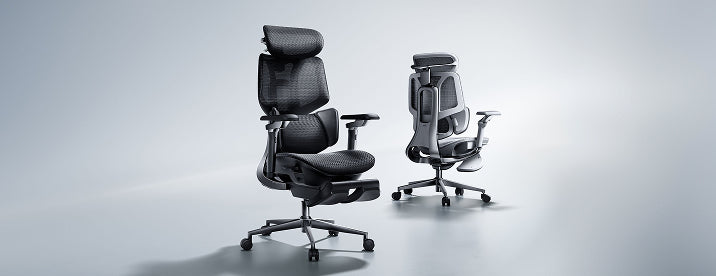
Which HBADA ergonomic office chair with a footrest should you choose? Consider X7 for a pull-out footrest alongside powered lumbar tracking, massage, heating and ventilation. Choose E3 Pro 2026 with footrest for adaptive mechanical support and hands-on adjustment. Always confirm the exact configuration on the EU product page.
In this guide
Do you need a footrest?
HBADA model options
Chair comparison
Finding the right fit
Setup routine
Which should you choose?
Limitations
The takeaway
Frequently asked questions
Sources
Do you need an ergonomic office chair with a footrest?
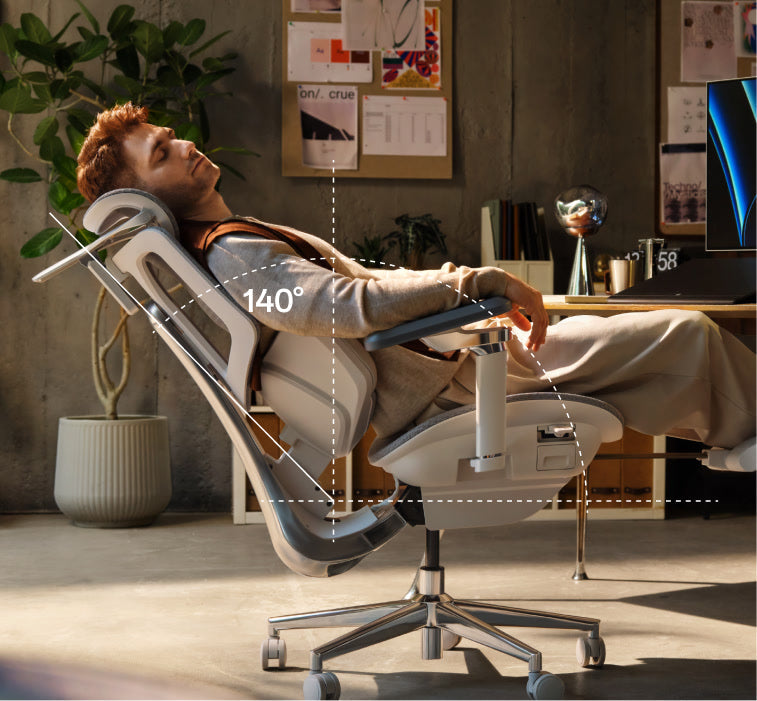
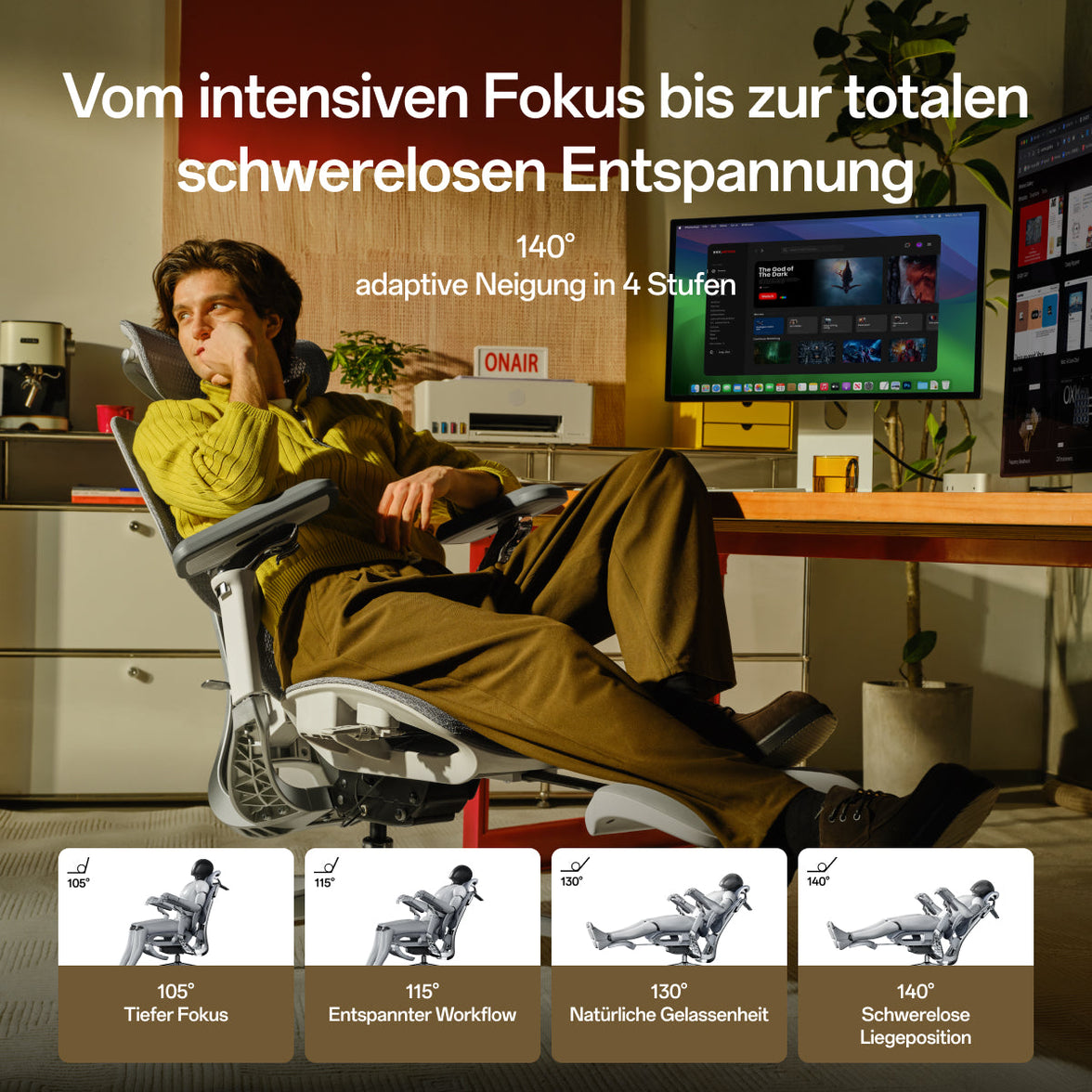
A footrest is useful when it supports the position you actually use. Before choosing a chair, separate two different needs: resting your legs while reclining and keeping your feet supported during upright work.
For reclined breaks
A retractable chair footrest
This extends from beneath the seat to support your legs as you lean back. It stores away when you return to a more upright working position.
For upright work
A separate floor footrest
This provides a stable surface for your feet when your seat needs to be raised to match a fixed-height desk.
EU-OSHA’s office ergonomics guidance includes checking whether the feet can rest on the floor or a footrest without excessive pressure behind the legs. A chair’s pull-out leg support should not automatically be treated as a substitute for an under-desk footrest. Read the EU-OSHA office ergonomics guide .
Who benefits most from a built-in footrest?
People who use their chair for desk work and reclined rest breaks.
Users who want leg support that stores neatly beneath the seat.
People who prefer an integrated solution rather than a separate ottoman.
If your feet hang above the floor while typing, first assess seat height, desk height and whether you need a separate floor footrest.
Which HBADA models offer a footrest?
HBADA X7: powered support
The HBADA X7 combines reclining leg support with automatic lumbar tracking, massage, heating and fan-assisted ventilation. Check the selected model and included configuration before ordering, particularly when comparing different chairs in the X7 family.
HBADA E3 Pro 2026: mechanical adjustment
The E3 Pro 2026 combines three-zone adaptive lumbar support with a CloudMesh seat, adjustable headrest and multi-directional armrests. Choose the With Footrest configuration to include the retractable footrest.
Compare like with like. E3 Pro 2026 is not the same model as every older E3 Pro listing. Check the generation and configuration before comparing dimensions, controls or accessories.
HBADA footrest chair comparison
The main difference is the approach to support: powered functions on X7 versus mechanical adjustment on E3 Pro 2026. Their seat dimensions also differ.
X7 vs E3 Pro 2026: EU model comparison
Feature
HBADA X7
E3 Pro 2026
Footrest
Pull-out leg support; confirm selected configuration
Select With Footrest
Lumbar support
Powered automatic tracking
Mechanical three-zone adaptive support
Seat height
44.5–53 cm
46–54.5 cm
Seat depth
40.5–45.5 cm
45–50 cm
Seat width
52 cm
51.5 cm
Additional functions
Massage, heating and fan-assisted ventilation
Mechanical adjustments without powered comfort functions
Main choice
Powered comfort features
Hands-on mechanical adjustment
Dimensions refer to the linked EU product listings. Confirm the latest specifications and included features before purchase. The chair’s overall weight capacity is not a separate load rating for the extended footrest.
How should a footrest chair fit?
Start with your seated position, not the footrest. Compare seat height and depth with your proportions, then check lumbar contact and armrest placement.
A deeper seat is not automatically better. You should be able to sit against the backrest with comfortable clearance behind your knees. Your shoulders should remain relaxed when you reach the keyboard.
Match the adjustment to the problem
If you notice
Check this
Aim for
Feet do not reach the floor
Seat and desk height; a floor footrest if needed
Supported feet during upright work
The seat edge presses behind your knees
Seat depth and height
Comfortable clearance without sliding forwards
Your lower back loses contact
Seat depth, lumbar position and sitting position
Comfortable support while sitting back
Your shoulders rise while typing
Desk, keyboard and armrest height
Relaxed shoulders with easy reach
The extended footrest feels uncomfortable
Recline, extension and your leg proportions
Leg support without concentrated pressure
Recommended user-height ranges are only a starting point. Two people of the same height can have different leg lengths and need different seat settings.
How to set up your chair and footrest correctly
Set up for upright work first. Adjust the seat and work surface so your shoulders stay relaxed. Support your feet on the floor or a separate floor footrest.
Adjust seat depth. Sit back fully and leave comfortable space between the seat edge and the backs of your knees.
Position the lumbar support and armrests. Aim for supportive contact without pushing your torso forwards or lifting your shoulders.
Arrange your screen and keyboard. Keep the screen in front of you and avoid reaching forwards to use the keyboard or mouse.
Test a reclined break. Leave space around the chair, extend the footrest according to the instructions and recline gradually. Do not use the footrest as a step or additional seat.
Include movement. Retract the footrest when returning to your desk setup as appropriate. Alternate seated work with opportunities to stand and walk.
Which HBADA chair should you choose?
Powered comfort
Choose X7
Choose X7 if you want automatic lumbar tracking and additional comfort functions such as massage, heating and cooling airflow alongside reclining leg support.
Explore X7 →
Mechanical support
Choose E3 Pro 2026
Choose the With Footrest version if you prefer adaptive mechanical lumbar support, breathable mesh and adjustment without powered comfort functions.
Explore E3 Pro 2026 →
Before ordering, check the selected variant, delivery availability for your country and the applicable return and warranty terms. Do not choose on the basis of feature count alone.
Limitations and when this advice may not apply
A chair and footrest support comfort; they do not treat medical conditions.
A retractable leg support does not automatically solve an upright desk-height mismatch.
A height-adjustable desk helps only if its range and the chair’s dimensions suit you.
Footrest instructions and load limits must be checked for the exact model.
Seek professional advice for severe, persistent or radiating pain.
The takeaway: match the chair to your day
The best ergonomic office chair with a footrest for you is one that supports comfortable upright work and gives you a useful option for reclined breaks.
Compare the X7’s powered features with the E3 Pro 2026’s mechanical support, check your seat dimensions and confirm the footrest configuration. Keep regular movement in your routine whichever model you choose.
Frequently asked questions
Are office chairs with footrests good for your back?
A built-in footrest can make a reclined break more comfortable by supporting your legs. Back comfort also depends on chair fit, lumbar support and movement. A footrest is not a medical treatment.
Do all HBADA chairs include a footrest?
No. Availability depends on the model and configuration. Select With Footrest for E3 Pro 2026 and check the included features of the exact X7 model before ordering.
Is a built-in footrest better than a separate one?
A built-in footrest is convenient for reclining and stores under the seat. A separate floor footrest supports the feet during upright work when the floor is out of reach. Choose by purpose rather than treating them as interchangeable.
Which HBADA chair should I choose for long workdays?
Start with dimensions and fit. X7 adds powered lumbar tracking, massage, heating and ventilation. E3 Pro 2026 offers adaptive mechanical support and a footrest configuration. Both still need to be adjusted to your body.
Can a footrest help with short legs or a tall desk?
A separate floor footrest may help when you need a higher seat position to reach a fixed desk. Check the chair’s minimum height and seat depth as well. Do not rely on an extended reclining footrest to correct every fit issue.
How much space does a footrest chair need?
Allow space in front for the extended footrest and behind for recline. Measure your available area and compare it with the model’s dimensions, including its reclined position where supplied. Keep walkways clear.
Sources
EU-OSHA — Office Ergonomics
EU-OSHA OSHwiki — Prolonged Static Sitting
HBADA EU — X7 Smart Ergonomic Chair
HBADA EU — E3 Pro 2026
Sep 29, 2026
 How to Adjust a Shared Ergonomic Office Chair for Hot Desking
Dark reading mode
A shared desk.A setup that is yours.
Someone else’s chair settings do not have to become your working posture. A simple reset helps you make a shared ergonomic office chair fit your body before the day begins.
One routine.Five adjustments.
Seat height
Seat depth
Lumbar support
Armrests
Recline
How do you adjust a shared ergonomic office chair? Start with seat height, then seat depth, lumbar support, armrests and recline. Check the desk and screen afterwards. Once you know the controls, aim for a quick one-minute check, taking longer whenever you need to fine-tune the fit.
In this guide
Why reset a shared chair?
The adjustment order
The 60-second reset
What to look for
Shared-chair hygiene
HBADA chair comparison
Limitations
The takeaway
Frequently asked questions
Sources
Why must you reset a shared chair?
A hot-desk chair usually arrives set for whoever used it last. Their legs, back and arms may differ from yours, so the seat, lumbar support and armrests may not be in the right position for you.
A seat that feels slightly too high or armrests that keep you away from the desk can become distracting over a full day. Resetting the chair gives you a better starting point than adapting your posture to someone else’s settings.
EU-OSHA’s guidance on office ergonomics specifically discusses hot desking: shared workstations should be easy to adjust, and users need clear information about making those adjustments. Read the office ergonomics guidance.
What order should you adjust the chair in?
Start with the settings that establish your overall position. Seat height sets your relationship to the desk; seat depth determines how far back you can sit. You can then position the lumbar support and armrests around that foundation.
Your reset sequence:Seat height → seat depth → lumbar support → armrests → recline → desk and screen check.
At a height-adjustable desk, set the chair for supported feet and then bring the work surface to a comfortable working height. At a fixed-height desk, you may need to raise the chair to reach the keyboard comfortably and add a separate floor footrest.
Use the sequence as a starting point, not a rigid rule. Recheck earlier settings if a later adjustment changes how you sit.
The 60-second hot-desking reset
Learn the controls first, then use these five steps as a quick daily routine. The aim is a repeatable setup—not finishing before a timer runs out.
Set the seat height
Sit back and position yourself so you can use the keyboard with relaxed shoulders. Keep your feet supported on the floor or a stable floor footrest. Avoid pressure from the seat edge under your thighs.
Slide the seat to fit your legs
Adjust the depth while keeping your back against the backrest. Leave roughly two to three fingers of clearance behind your knees as a starting point, then check comfort.
Position the lumbar support
Move the support towards the curve of your lower back. It should feel supportive rather than push you forwards. If the chair has automatic tracking, check the initial position and available settings.
Bring the armrests to you
Adjust the available height, width or rotation so your forearms can rest without lifting your shoulders. Make sure the armrests do not stop you moving close enough to the desk.
Check the recline
Lean back gently and familiarise yourself with the tilt lock. Adjust resistance if the chair offers a manual tension control; on an automatic mechanism, check that the movement feels controlled and supportive.
Your final fit check
Adjustment
Aim for
Quick check
Seat height
Comfortable access to the work surface
Feet supported; shoulders relaxed
Seat depth
Thigh support with knee clearance
You can sit against the backrest without pressure behind the knees
Lumbar support
Contact with the lower-back curve
Support feels comfortable, not forceful
Armrests
Supported forearms and relaxed shoulders
You can move close to the keyboard
Recline
Controlled, supported movement
You understand the lock and resistance controls
Floor footrest
Foot support when the floor is out of reach
Both feet rest securely without stretching down
What makes a chair good for hot desking?
A shared chair earns its place when different users can adjust it easily and understand how its controls work. Look beyond the number of features to how practical they are in daily use.
A useful adjustment range: compare seat height, depth and width with the people using the space. One chair may not fit everyone.
Clear, accessible controls: levers and buttons should be easy to identify and reach.
Suitable build and service support: check intended use, maintenance needs, replacement parts and warranty coverage for the shared workspace.
Practical materials: breathable mesh can help with airflow, but cleaning suitability depends on the material and manufacturer’s instructions.
Appropriate capacity and dimensions: check both the weight limit and physical fit.
A useful office addition: keep a simple adjustment card or a link to the chair’s instructions at each desk. Users should not have to guess which lever changes which setting.
How do you keep a shared chair hygienic?
Armrests, adjustment controls and headrests are frequent touch points. A consistent cleaning routine helps keep the chair pleasant for the next person.
Follow the chair’s care instructions and your workplace cleaning procedure.
Use a suitable cloth and a cleaner approved for the relevant surface. Do not assume every disinfectant is compatible with mesh, padding or finishes.
Avoid soaking the seat or spraying liquid directly into controls, ventilation openings or electrical components.
Allow cleaned surfaces to dry before the next use.
Report spills, loose parts or damaged controls promptly. Remove an unsafe chair from use.
Breathability and hygiene are different considerations: mesh allows airflow, but it still needs appropriate care.
Which HBADA chair suits shared desks?
The X7 and E3 Pro 2026 offer different approaches to lumbar support. Compare their adjustment ranges with your users, then decide whether powered tracking or mechanical adjustment better suits the workspace.
HBADA X7 vs E3 Pro 2026: EU specifications
Feature
HBADA X7
E3 Pro 2026
Seat height
44.5–53 cm
46–54.5 cm
Seat depth
40.5–45.5 cm
45–50 cm
Seat width
52 cm
51.5 cm
Lumbar support
Powered automatic tracking
3-zone adaptive support; 60 mm height adjustment across six levels
Seat material
Breathable mesh
CloudMesh
Maximum weight capacity
150 kg
150 kg
Recommended user height
150–195 cm
155–195 cm
X7: powered lumbar tracking
Consider the X7 if you want lumbar support that responds automatically to posture changes. Each user should still check seat fit, armrests and their preferred support settings.
Explore HBADA X7 →
E3 Pro 2026: mechanical adjustment
Consider the E3 Pro 2026 if you prefer hands-on adjustment with adaptive lumbar support and a breathable mesh seat.
Explore E3 Pro 2026 →
Specifications refer to the linked EU listings. User-height ranges are a guide, not a substitute for checking fit. For office-wide purchasing, confirm shared or intensive use requirements and warranty terms before ordering.
Limitations and when to get help
A chair reset is one part of setting up a shared workstation. It cannot compensate for every desk, screen or individual fit issue.
Check screen position, keyboard reach and available leg space after adjusting the chair.
If the chair’s adjustment range does not fit you, ask for a suitable alternative rather than forcing a position.
Change posture and take movement breaks throughout the day.
Seek a workstation assessment if you cannot find a comfortable setup.
For severe, persistent or radiating pain, consult a qualified healthcare professional.
The takeaway: reset the chair, not your expectations
Hot desking works better when you take a moment to make the workstation yours. Start with seat height, then work through depth, lumbar support, armrests and recline. Finish by checking the desk and screen.
Choose powered lumbar tracking if that suits your workspace, or mechanical adjustment if you prefer a hands-on setup. Either way, learning the controls once makes every future reset more straightforward.
Frequently asked questions
How do you adjust an office chair for your body?
Begin with seat height and depth, then position the lumbar support and armrests. Check the recline controls and finish by reviewing the desk and screen. Your feet should be supported, your shoulders relaxed and the seat clear of the backs of your knees.
Is hot desking bad for your back?
Hot desking does not automatically mean an uncomfortable setup. Problems can arise when the chair or workstation does not fit the user or is difficult to adjust. Familiarise yourself with the controls, review your fit and keep movement in your day.
What should you look for in a shared office chair?
Look for an appropriate adjustment range, clear controls, suitable seat dimensions and materials you can maintain according to the care instructions. Check intended use, weight capacity and after-sales support. Do not assume a single model will suit every colleague.
How do you know a chair fits after resetting it?
Check that your feet are supported, your thighs rest comfortably, there is clearance behind your knees and the lumbar support meets your lower back. You should also be able to reach the keyboard with relaxed shoulders. These are useful starting checks; reassess comfort as you work.
Should a shared chair have a footrest?
Some users need a separate floor footrest when a fixed desk requires a higher seat position. A retractable chair footrest is intended for supporting the legs while reclining and serves a different purpose. Choose support according to the user’s working position.
Does automatic lumbar tracking adjust the whole chair?
No. Automatic lumbar tracking responds to posture changes, but it does not replace checking seat height, seat depth, armrests or workstation fit. A new user should still run through the adjustment routine.
Can you really reset a chair in 60 seconds?
A familiar chair can be quick to check, but a minute is a practical target rather than a guarantee. Allow more time when using a new model, learning its controls or adjusting an unfamiliar desk.
Sources
EU-OSHA OSHwiki — Ergonomics in office work
HBADA EU — X7 Smart Ergonomic Chair
HBADA EU — E3 Pro Ergonomic Office Chair 2026 Edition
Sep 24, 2026


