


Cart
Your shopping cart is empty
Continue Shopping
Every Order, Backed by HBADA
30-day in-home Trial
Free Delivery in 3–5 Business Days
5-Year Hassle-Free Warranty
24/7 Customer Support
Remove this item from your cart?
Cart
 How to Set Up an Ergonomic Office Chair for Better Spinal Support
Your chair. Your fit.
Better support starts with the setup.
A well-designed chair is only part of the picture. The way you adjust it determines how comfortably you can reach your desk, use the backrest and change position throughout the day.
Quick answer: A practical starting sequence is seat height, seat depth, lumbar support, backrest recline and finally armrests. Then recheck the complete setup at your desk. These adjustments work together, so treat the sequence as a useful guide rather than a rigid rule.
01Seat height
02Seat depth
03Lumbar support
04Backrest recline
05Armrests
Buying an adjustable chair does not finish the job. Without a comfortable starting position, you may still find yourself perching forwards, reaching for the keyboard or sitting away from the backrest by mid-afternoon.
This guide walks through the adjustments in a practical order so you can make better use of your chair's support. Before starting, identify the controls on your exact model and follow the instructions supplied with it. Available adjustments differ by model and generation.
In this guide
Why the adjustment order matters
Step 1: Seat height
Step 2: Seat depth
Step 3: Lumbar support
Step 4: Backrest recline
Step 5: Armrests
Quick adjustment checklist
Common setup mistakes
When to recheck your setup
Frequently asked questions
Put your setup into practice
Why the Order of Adjustment Actually Matters
It is easy to adjust a chair piecemeal: raising the seat here, nudging the lumbar support there, without checking how one change affects the next. Seat height changes your relationship to the floor and desk. Seat depth influences whether you can sit back comfortably. Both affect where your lower back meets the lumbar support.
Setting the seat first gives you a more consistent starting point for the rest of your ergonomic office chair setup. Once the other adjustments are in place, return to the seat and check the overall fit again.
Think beyond the chair: Desk height, keyboard position, screen placement and footwear also affect your setup. If one adjustment solves a problem but creates another, review the whole workstation.
Step 1: Seat Height
Start with your feet supported on the floor and your thighs resting comfortably on the seat. Your knees should be bent comfortably, around a right angle as a starting point, without pressure from the front edge of the seat.
If your feet dangle, the seat may be too high for unsupported sitting. If your knees are pushed noticeably upwards and your hips feel cramped, the seat may be too low. Adjust gradually rather than chasing an exact angle.
Next, check your desk. If lowering the seat makes the keyboard too high, you may need to adjust the desk or use a stable desk footrest while keeping the seat at a workable height. A reclining chair's built-in leg rest is not the same as a footrest used to support your feet during upright desk work.
Quick check: Feet supported, no pressure behind the knees, and no need to lift your shoulders to reach the keyboard.
Step 2: Seat Depth
Once the height is comfortable, sit back against the backrest. Check the space between the front edge of the seat and the back of your knees. Roughly two to three finger-widths is a useful starting check, not a universal measurement.
If the seat is too deep, its front edge may press behind your knees and encourage you to slide forwards, away from the backrest. If it is too shallow, it may provide less thigh support than you need.
If your chair has a sliding seat, adjust it until you can use the backrest comfortably while leaving clearance behind your knees. Follow the model's instructions for operating and securing the seat-depth mechanism.
Quick check: You can sit back without the seat edge pressing into your knees or needing to perch on the front of the chair.
Step 3: Lumbar Support Setup
With seat height and depth established, position the lumbar support around the natural inward curve of your lower back. Use the feel of the support rather than your belt line alone to find a comfortable position.
If your chair allows it, adjust lumbar height first, then depth or tension. Aim for gentle contact rather than a hard push that forces you into an exaggerated arch. More pressure is not automatically more support.
If the chair has adaptive lumbar support, check how it feels when you shift or lean back, not only while sitting still. An adaptive mechanism still needs an appropriate initial fit.
For a closer look at how support features work together, explore our E3 Ultra feature overview . Use the controls and instructions for your exact chair rather than assuming every lumbar system adjusts in the same way.
Quick check: The support meets your lower back comfortably, without making you slide forwards to escape the pressure.
Step 4: Backrest Recline
With lumbar support in place, explore a comfortable backrest position. A modest recline can be useful, but there is no single angle that suits every person, chair and task.
For keyboard work, choose a supported position that lets you reach the desk without stretching your arms or leaning your head forwards. A deeper recline may suit a seated break better than typing at a fixed desk.
If your chair has adjustable tilt tension, set it so you can lean back and return smoothly without feeling that the backrest is fighting you or dropping away unexpectedly. Use the chair's locking controls as instructed.
For example, our E3 Ultra Gen 5 offers several recline positions. The maximum recline is an available feature, not a target posture for desk work.
Quick check: Your back remains supported and your keyboard stays within easy reach. Change position during the day rather than holding one angle for hours.
Step 5: Armrests
Set the armrests after checking your seat and desk position. They should support your forearms lightly without pushing your shoulders upwards or forcing your elbows away from your body.
If the pads slide or rotate, position them to match your working posture. There is no need to turn them inwards if that makes your forearms or wrists uncomfortable.
Check that the armrests do not stop the chair from moving close enough to the desk. If they collide with the desk, adjust them within the model's permitted range and recheck your reach to the keyboard and mouse.
Quick check: Shoulders relaxed, elbows comfortably close to your sides, and no need to reach forwards around the armrests.
Quick Reference: Office Chair Adjustments Checklist
Use this checklist after the first setup and whenever your desk, footwear or main task changes.
Adjustment
Starting point
What to check
Seat height
Feet supported; legs comfortably positioned.
No dangling feet or pressure behind the knees.
Seat depth
A small gap behind the knees.
You can sit back while your thighs remain supported.
Lumbar support
Gentle contact with the lower-back curve.
No forced arch or need to move away from the support.
Backrest recline
A supported angle suited to your task.
You can reach the desk without leaning forwards.
Armrests
Light forearm support with relaxed shoulders.
The pads do not spread your elbows or block desk access.
Common Mistakes That Undermine Spinal Support
Adjusting lumbar support without rechecking the seat. Changes to seat height and depth can alter how your back meets the support.
Setting maximum lumbar tension. Aim for comfortable contact, not the strongest pressure the chair can produce.
Treating one upright position as mandatory. A useful setup allows supported changes in posture.
Ignoring seat depth. A backrest cannot do much for you if you are sitting too far forwards to use it.
Adjusting the chair but ignoring the desk. Keyboard reach and desk clearance can undo an otherwise comfortable seating position.
Setting everything once and never rechecking. A different task or pair of shoes may call for a small adjustment.
Signs Your Setup Needs Rechecking
Even a comfortable setup benefits from an occasional review. Look for these practical signs:
You repeatedly slide towards the front of the seat.
Your feet lose support when you move into a working position.
Your shoulders rise when you use the keyboard or armrests.
The lumbar support feels too high, too low or too firm.
You lean forwards to reach the screen, keyboard or mouse.
Recheck the five steps, then test the chair during your usual task. Change one setting at a time so you can tell what actually improves the fit.
Comfort is not a diagnosis. New or persistent pain should not automatically be blamed on chair settings. Seek professional advice for ongoing symptoms. Chair adjustment does not replace movement breaks or medical care.
Frequently Asked Questions
What's the correct order for an ergonomic office chair setup?
A practical sequence is seat height, seat depth, lumbar support, backrest recline and armrests. Then recheck the complete setup at your desk. You may need to revisit earlier settings as the overall fit improves.
How do I know if my lumbar support setup is correct?
It should make comfortable contact with the curve of your lower back without forcing an exaggerated arch. If you slide forwards to avoid the pressure, reduce the pressure or adjust its position.
What backrest angle is best for spinal support?
There is no universal best angle. Choose a supported position that suits your task and lets you reach your desk comfortably. Use the recline settings available on your chair and vary your position during the day.
Do office chair adjustments need to be redone regularly?
Recheck them when your task, desk arrangement, footwear or comfort changes, and whenever someone else has used the chair. You do not need a complete reset every day if the setup remains comfortable.
Can armrests really affect spinal support?
They can affect your overall working posture. Armrests that are too high may lift your shoulders, while pads that block the desk may make you reach forwards. Set them for relaxed shoulders and easy desk access.
What's a common mistake when setting up a spinal support chair?
Focusing on lumbar pressure while overlooking seat fit. Check that your feet are supported and that you can sit back comfortably before fine-tuning the lumbar support.
A Chair That Works With Your Spine, Not Against It
A useful ergonomic office chair setup is not about choosing the maximum setting on every control. It is about finding a comfortable relationship between the seat, your lower back, the armrests and your workspace.
Start with the five-step sequence, check the result during real desk work and make small changes when needed. At HBADA, we encourage you to use the adjustments your model provides rather than assume that an adjustable chair arrives already fitted to you.
Explore the support system
See how the E3 Ultra brings together dynamic support, adjustable seating and relaxation features.
Explore E3 Ultra features →
Check the details before choosing
Review the E3 Ultra's product information alongside your workspace and fit requirements. Check the applicable delivery and return terms for your country.
View E3 Ultra product details →
Further reading: For general chair-adjustment principles, see OSHA's workstation chair guidance . This US resource is included for general ergonomic information, not as a statement of European requirements or an endorsement of any particular chair.
Keep practical workspace advice close.
Want to see more from HBADA Europe? Open Google's preferred sources settings and look for our site.
Choose HBADA Europe on Google ↗
Opens Google in a new tab. If HBADA Europe is available, confirm your selection there.
Oct 22, 2026
How to Set Up an Ergonomic Office Chair for Better Spinal Support
Your chair. Your fit.
Better support starts with the setup.
A well-designed chair is only part of the picture. The way you adjust it determines how comfortably you can reach your desk, use the backrest and change position throughout the day.
Quick answer: A practical starting sequence is seat height, seat depth, lumbar support, backrest recline and finally armrests. Then recheck the complete setup at your desk. These adjustments work together, so treat the sequence as a useful guide rather than a rigid rule.
01Seat height
02Seat depth
03Lumbar support
04Backrest recline
05Armrests
Buying an adjustable chair does not finish the job. Without a comfortable starting position, you may still find yourself perching forwards, reaching for the keyboard or sitting away from the backrest by mid-afternoon.
This guide walks through the adjustments in a practical order so you can make better use of your chair's support. Before starting, identify the controls on your exact model and follow the instructions supplied with it. Available adjustments differ by model and generation.
In this guide
Why the adjustment order matters
Step 1: Seat height
Step 2: Seat depth
Step 3: Lumbar support
Step 4: Backrest recline
Step 5: Armrests
Quick adjustment checklist
Common setup mistakes
When to recheck your setup
Frequently asked questions
Put your setup into practice
Why the Order of Adjustment Actually Matters
It is easy to adjust a chair piecemeal: raising the seat here, nudging the lumbar support there, without checking how one change affects the next. Seat height changes your relationship to the floor and desk. Seat depth influences whether you can sit back comfortably. Both affect where your lower back meets the lumbar support.
Setting the seat first gives you a more consistent starting point for the rest of your ergonomic office chair setup. Once the other adjustments are in place, return to the seat and check the overall fit again.
Think beyond the chair: Desk height, keyboard position, screen placement and footwear also affect your setup. If one adjustment solves a problem but creates another, review the whole workstation.
Step 1: Seat Height
Start with your feet supported on the floor and your thighs resting comfortably on the seat. Your knees should be bent comfortably, around a right angle as a starting point, without pressure from the front edge of the seat.
If your feet dangle, the seat may be too high for unsupported sitting. If your knees are pushed noticeably upwards and your hips feel cramped, the seat may be too low. Adjust gradually rather than chasing an exact angle.
Next, check your desk. If lowering the seat makes the keyboard too high, you may need to adjust the desk or use a stable desk footrest while keeping the seat at a workable height. A reclining chair's built-in leg rest is not the same as a footrest used to support your feet during upright desk work.
Quick check: Feet supported, no pressure behind the knees, and no need to lift your shoulders to reach the keyboard.
Step 2: Seat Depth
Once the height is comfortable, sit back against the backrest. Check the space between the front edge of the seat and the back of your knees. Roughly two to three finger-widths is a useful starting check, not a universal measurement.
If the seat is too deep, its front edge may press behind your knees and encourage you to slide forwards, away from the backrest. If it is too shallow, it may provide less thigh support than you need.
If your chair has a sliding seat, adjust it until you can use the backrest comfortably while leaving clearance behind your knees. Follow the model's instructions for operating and securing the seat-depth mechanism.
Quick check: You can sit back without the seat edge pressing into your knees or needing to perch on the front of the chair.
Step 3: Lumbar Support Setup
With seat height and depth established, position the lumbar support around the natural inward curve of your lower back. Use the feel of the support rather than your belt line alone to find a comfortable position.
If your chair allows it, adjust lumbar height first, then depth or tension. Aim for gentle contact rather than a hard push that forces you into an exaggerated arch. More pressure is not automatically more support.
If the chair has adaptive lumbar support, check how it feels when you shift or lean back, not only while sitting still. An adaptive mechanism still needs an appropriate initial fit.
For a closer look at how support features work together, explore our E3 Ultra feature overview . Use the controls and instructions for your exact chair rather than assuming every lumbar system adjusts in the same way.
Quick check: The support meets your lower back comfortably, without making you slide forwards to escape the pressure.
Step 4: Backrest Recline
With lumbar support in place, explore a comfortable backrest position. A modest recline can be useful, but there is no single angle that suits every person, chair and task.
For keyboard work, choose a supported position that lets you reach the desk without stretching your arms or leaning your head forwards. A deeper recline may suit a seated break better than typing at a fixed desk.
If your chair has adjustable tilt tension, set it so you can lean back and return smoothly without feeling that the backrest is fighting you or dropping away unexpectedly. Use the chair's locking controls as instructed.
For example, our E3 Ultra Gen 5 offers several recline positions. The maximum recline is an available feature, not a target posture for desk work.
Quick check: Your back remains supported and your keyboard stays within easy reach. Change position during the day rather than holding one angle for hours.
Step 5: Armrests
Set the armrests after checking your seat and desk position. They should support your forearms lightly without pushing your shoulders upwards or forcing your elbows away from your body.
If the pads slide or rotate, position them to match your working posture. There is no need to turn them inwards if that makes your forearms or wrists uncomfortable.
Check that the armrests do not stop the chair from moving close enough to the desk. If they collide with the desk, adjust them within the model's permitted range and recheck your reach to the keyboard and mouse.
Quick check: Shoulders relaxed, elbows comfortably close to your sides, and no need to reach forwards around the armrests.
Quick Reference: Office Chair Adjustments Checklist
Use this checklist after the first setup and whenever your desk, footwear or main task changes.
Adjustment
Starting point
What to check
Seat height
Feet supported; legs comfortably positioned.
No dangling feet or pressure behind the knees.
Seat depth
A small gap behind the knees.
You can sit back while your thighs remain supported.
Lumbar support
Gentle contact with the lower-back curve.
No forced arch or need to move away from the support.
Backrest recline
A supported angle suited to your task.
You can reach the desk without leaning forwards.
Armrests
Light forearm support with relaxed shoulders.
The pads do not spread your elbows or block desk access.
Common Mistakes That Undermine Spinal Support
Adjusting lumbar support without rechecking the seat. Changes to seat height and depth can alter how your back meets the support.
Setting maximum lumbar tension. Aim for comfortable contact, not the strongest pressure the chair can produce.
Treating one upright position as mandatory. A useful setup allows supported changes in posture.
Ignoring seat depth. A backrest cannot do much for you if you are sitting too far forwards to use it.
Adjusting the chair but ignoring the desk. Keyboard reach and desk clearance can undo an otherwise comfortable seating position.
Setting everything once and never rechecking. A different task or pair of shoes may call for a small adjustment.
Signs Your Setup Needs Rechecking
Even a comfortable setup benefits from an occasional review. Look for these practical signs:
You repeatedly slide towards the front of the seat.
Your feet lose support when you move into a working position.
Your shoulders rise when you use the keyboard or armrests.
The lumbar support feels too high, too low or too firm.
You lean forwards to reach the screen, keyboard or mouse.
Recheck the five steps, then test the chair during your usual task. Change one setting at a time so you can tell what actually improves the fit.
Comfort is not a diagnosis. New or persistent pain should not automatically be blamed on chair settings. Seek professional advice for ongoing symptoms. Chair adjustment does not replace movement breaks or medical care.
Frequently Asked Questions
What's the correct order for an ergonomic office chair setup?
A practical sequence is seat height, seat depth, lumbar support, backrest recline and armrests. Then recheck the complete setup at your desk. You may need to revisit earlier settings as the overall fit improves.
How do I know if my lumbar support setup is correct?
It should make comfortable contact with the curve of your lower back without forcing an exaggerated arch. If you slide forwards to avoid the pressure, reduce the pressure or adjust its position.
What backrest angle is best for spinal support?
There is no universal best angle. Choose a supported position that suits your task and lets you reach your desk comfortably. Use the recline settings available on your chair and vary your position during the day.
Do office chair adjustments need to be redone regularly?
Recheck them when your task, desk arrangement, footwear or comfort changes, and whenever someone else has used the chair. You do not need a complete reset every day if the setup remains comfortable.
Can armrests really affect spinal support?
They can affect your overall working posture. Armrests that are too high may lift your shoulders, while pads that block the desk may make you reach forwards. Set them for relaxed shoulders and easy desk access.
What's a common mistake when setting up a spinal support chair?
Focusing on lumbar pressure while overlooking seat fit. Check that your feet are supported and that you can sit back comfortably before fine-tuning the lumbar support.
A Chair That Works With Your Spine, Not Against It
A useful ergonomic office chair setup is not about choosing the maximum setting on every control. It is about finding a comfortable relationship between the seat, your lower back, the armrests and your workspace.
Start with the five-step sequence, check the result during real desk work and make small changes when needed. At HBADA, we encourage you to use the adjustments your model provides rather than assume that an adjustable chair arrives already fitted to you.
Explore the support system
See how the E3 Ultra brings together dynamic support, adjustable seating and relaxation features.
Explore E3 Ultra features →
Check the details before choosing
Review the E3 Ultra's product information alongside your workspace and fit requirements. Check the applicable delivery and return terms for your country.
View E3 Ultra product details →
Further reading: For general chair-adjustment principles, see OSHA's workstation chair guidance . This US resource is included for general ergonomic information, not as a statement of European requirements or an endorsement of any particular chair.
Keep practical workspace advice close.
Want to see more from HBADA Europe? Open Google's preferred sources settings and look for our site.
Choose HBADA Europe on Google ↗
Opens Google in a new tab. If HBADA Europe is available, confirm your selection there.
Oct 22, 2026
 HBADA vs Steelcase: Which Fits the Way You Sit?
Compare the chair.Think about the workday.
Typing, leaning back and switching tasks ask different things of a chair. This HBADA vs Steelcase guide looks at the E3 Pro 2026, Leap and Gesture through those everyday moments.
Quick answer
Our E3 Pro 2026 combines three-zone adaptive lumbar support, a 4D dual-axis headrest, 720° omni-mechanical armrests and a four-position recline up to 140°. Steelcase Leap uses LiveBack technology, while Gesture uses 3D LiveBack and a different arm mechanism. These are design differences, not proof that one chair will feel better for every person. Start with fit, then consider how you work and change position.
In this comparison
01 · How we compared
02 · Typing
03 · Leaning back
04 · Side by side
05 · Your fit check
06 · FAQs
07 · The takeaway
01 / THE COMPARISON
How We Compared: Design Facts vs. Personal Comfort
This is an HBADA-authored comparison of our E3 Pro 2026 with Steelcase Leap and Gesture. It draws on published product information, not an independent, hands-on head-to-head test.
We focus on the named models rather than making claims about either brand’s entire range. Options, specifications and service terms can vary by configuration and country. For a European purchase, compare the offer available in your destination market.
What specifications can tell you
The type of back support, available controls, adjustment directions and whether a particular feature is included.
What you need to feel yourself
Pressure against your back, seat firmness, arm-pad comfort and how naturally the chair fits your desk routine.
Use the European E3 Pro 2026 specifications to check our current configuration. A longer feature list is useful only when those features help the chair fit you.
02 / FOCUSED WORK
Typing: Back Support and Arm Position
When comparing ergonomic office chairs for keyboard work, look at the relationship between your back, seat, armrests and desk. A comfortable reclined position does not automatically translate into a good typing setup.
Different approaches to back support
Our E3 Pro 2026 uses a central lumbar section with two side wings. The design provides contact across the centre and sides of the lower back, with adjustment and adaptive movement.
Leap uses a flexible LiveBack backrest; Gesture uses 3D LiveBack. Both take a different structural approach from the E3 Pro’s distinct three-zone lumbar assembly. This comparison does not treat those mechanisms as identical.
For any design, the practical check is where the support meets your back when the seat is correctly adjusted. Our guide to choosing lumbar support for your body type explains why fit and placement matter alongside the mechanism.
Armrests for keyboard work
The E3 Pro’s armrest system combines pad rotation and arm-body rotation with other position adjustments. Leap offers height, width, depth and pivot adjustment with its fully adjustable arm configuration. Gesture uses articulated arms designed for a range of positions.
Compare movement, not just labels. “4D,” “360” and “720°” are not interchangeable scores. Check what moves, where the pads can be positioned and whether the arms clear your desk.
Your keyboard and desk position matter too. Use our ergonomic chair adjustment guide to assess the chair as part of the whole workspace.
03 / TIME TO LEAN BACK
Leaning Back: Recline Mechanisms and Head Support
Reading, thinking and taking a call can involve different backrest positions from keyboard work. Recline controls should be considered alongside seat movement, available space and your preferred head position.
HBADA E3 Pro 2026
Four recline positions, with a maximum stated angle of 140°.
An auto-balance mechanism for reclining.
An included 4D dual-axis headrest.
Armrests that move with the recline.
Steelcase Leap and Gesture
Leap combines backrest recline with a moving seat and adjustable recline controls. Gesture also provides recline tension and back-stop adjustment. The controls and movement are not the same as the E3 Pro’s mechanism.
We do not assign a maximum recline angle to either competitor here or claim that the E3 Pro reclines further. A reliable angle comparison would require equivalent measurements for the exact configurations.
A headrest is a fit question. Check its position while sitting and reclining. It should not push your head forwards into an unwanted position. Availability on other models depends on the configuration selected.
To understand our controls before choosing a setup, visit the HBADA user manual and assembly guide hub . Select the E3 Pro 2026 instructions rather than those for an earlier edition.
04 / AT A GLANCE
HBADA E3 Pro vs. Steelcase Leap vs. Gesture
The table below compares design approaches rather than awarding a comfort score. It leaves out mixed-market dimensions, temporary prices and unsupported performance rankings.
Published design features, not a hands-on ranking
Feature
HBADA E3 Pro 2026
Steelcase Leap
Steelcase Gesture
Back-support approach
Three-zone adaptive lumbar assembly.
LiveBack flexible backrest.
3D LiveBack backrest.
Armrest approach
720° omni-mechanical system.
Height, width, depth and pivot with fully adjustable arms.
Articulated 360 arms.
Recline
Four positions, up to 140°.
Recline controls with seat movement.
Recline tension and back-stop controls.
Head support
Included 4D dual-axis headrest.
Confirm availability in the selected configuration.
Headrest options depend on configuration and market.
What to check personally
Lumbar contact, mesh feel and control positions.
Backrest contact, seat feel and arm positioning.
Backrest contact, arm movement and control access.
Before comparing dimensions, distinguish a total dimension from an adjustment range. Seat depth, overall chair depth and seat-depth travel are different measurements. Use the same units throughout your comparison.
Our guide to measuring office chair fit explains how to assess height, depth, width and lumbar position.
05 / THE PERSONAL CHECK
What Only a Hands-On Fit Check Can Tell You
Specifications describe a chair’s available movement. They cannot establish how that movement will feel for you. When assessing a chair, use your normal tasks rather than judging it only from a brief recline.
Type at your desk
Check whether the chair gets close enough to the desk and whether your arms can rest without lifting your shoulders.
Lean back to read
Notice the recline resistance, where your back makes contact and whether the headrest position suits you.
Switch tasks
Move between keyboard work, a call and reading. Check whether the controls are easy to reach and use.
Check the seat
Assess the available depth and width, foot support and contact near the back of your knees.
Change one setting at a time. Do not keep using an uncomfortable setting simply to complete a test session. If you are evaluating a purchase during a return period, check the deadline and conditions early.
Our chair owner’s hub provides additional setup guidance. For practical questions about installation or unexpected movement, visit our assembly and maintenance FAQ .
06 / COMMON QUESTIONS
HBADA vs. Steelcase: Frequently Asked Questions
Which has better lumbar support: HBADA or Steelcase?
This comparison does not establish a universal winner. Our E3 Pro 2026 uses a three-zone lumbar assembly; Leap and Gesture use different LiveBack designs. The relevant question is how the selected chair fits your lower back once the seat is adjusted.
Does the E3 Pro recline further than Leap or Gesture?
The E3 Pro 2026 has a stated maximum recline of 140°. We have not established equivalent maximum-angle measurements for the competitor configurations in this comparison, so we do not claim a wider range.
Are 720° armrests automatically better than 4D arms?
No. These labels describe different aspects of movement. Compare the actual directions, usable positions and relationship to your desk rather than ranking the labels.
Does the HBADA E3 Pro 2026 include a headrest?
Yes. Our current E3 Pro 2026 includes a 4D dual-axis headrest. Review the European product specifications and check how its adjustment range fits your needs.
Is this an independent comparison test?
No. This is an HBADA-authored guide based on published product information. It does not report an independent head-to-head comfort, durability or medical test.
What should I compare besides the adjustment features?
Check dimensions, weight capacity, configuration, final purchase price, delivery arrangements and the applicable warranty and return conditions. Compare like-for-like offers for the same destination country.
Can I use US prices or warranty details for a European purchase?
Use the regional offer that applies to your order. Currency conversion alone does not account for different configurations, taxes, delivery charges or service terms. For our products, consult the European listing and HBADA EU warranty and customer service information .
07 / THE TAKEAWAY
Choose Around Your Workday, Not Just the Specification Sheet
The HBADA vs Steelcase question becomes more useful when you break it down into the way you sit: typing at your desk, leaning back and moving between tasks.
Our E3 Pro 2026 brings together adaptive lumbar support, a headrest, adjustable arms and recline in a mesh-chair design. If those are the features you are looking for, the next step is to compare its dimensions with your own workspace and preferred setup.
Take a closer look at your next setup.
Explore the E3 Pro 2026’s European specifications, configuration options and adjustment guides.
Explore the HBADA E3 Pro 2026 →
Product names and trademarks belong to their respective owners. Their use identifies the products discussed and does not imply affiliation or endorsement.
More guidance for a better-informed chair choice.
Choose HBADA Europe as a preferred source on Google to stay connected with our chair comparisons, setup guides and workspace ideas.
Add HBADA Europe as a preferred source ↗
Opens Google in a new tab. Confirm your selection there if HBADA is available for your account and region.
Oct 21, 2026
HBADA vs Steelcase: Which Fits the Way You Sit?
Compare the chair.Think about the workday.
Typing, leaning back and switching tasks ask different things of a chair. This HBADA vs Steelcase guide looks at the E3 Pro 2026, Leap and Gesture through those everyday moments.
Quick answer
Our E3 Pro 2026 combines three-zone adaptive lumbar support, a 4D dual-axis headrest, 720° omni-mechanical armrests and a four-position recline up to 140°. Steelcase Leap uses LiveBack technology, while Gesture uses 3D LiveBack and a different arm mechanism. These are design differences, not proof that one chair will feel better for every person. Start with fit, then consider how you work and change position.
In this comparison
01 · How we compared
02 · Typing
03 · Leaning back
04 · Side by side
05 · Your fit check
06 · FAQs
07 · The takeaway
01 / THE COMPARISON
How We Compared: Design Facts vs. Personal Comfort
This is an HBADA-authored comparison of our E3 Pro 2026 with Steelcase Leap and Gesture. It draws on published product information, not an independent, hands-on head-to-head test.
We focus on the named models rather than making claims about either brand’s entire range. Options, specifications and service terms can vary by configuration and country. For a European purchase, compare the offer available in your destination market.
What specifications can tell you
The type of back support, available controls, adjustment directions and whether a particular feature is included.
What you need to feel yourself
Pressure against your back, seat firmness, arm-pad comfort and how naturally the chair fits your desk routine.
Use the European E3 Pro 2026 specifications to check our current configuration. A longer feature list is useful only when those features help the chair fit you.
02 / FOCUSED WORK
Typing: Back Support and Arm Position
When comparing ergonomic office chairs for keyboard work, look at the relationship between your back, seat, armrests and desk. A comfortable reclined position does not automatically translate into a good typing setup.
Different approaches to back support
Our E3 Pro 2026 uses a central lumbar section with two side wings. The design provides contact across the centre and sides of the lower back, with adjustment and adaptive movement.
Leap uses a flexible LiveBack backrest; Gesture uses 3D LiveBack. Both take a different structural approach from the E3 Pro’s distinct three-zone lumbar assembly. This comparison does not treat those mechanisms as identical.
For any design, the practical check is where the support meets your back when the seat is correctly adjusted. Our guide to choosing lumbar support for your body type explains why fit and placement matter alongside the mechanism.
Armrests for keyboard work
The E3 Pro’s armrest system combines pad rotation and arm-body rotation with other position adjustments. Leap offers height, width, depth and pivot adjustment with its fully adjustable arm configuration. Gesture uses articulated arms designed for a range of positions.
Compare movement, not just labels. “4D,” “360” and “720°” are not interchangeable scores. Check what moves, where the pads can be positioned and whether the arms clear your desk.
Your keyboard and desk position matter too. Use our ergonomic chair adjustment guide to assess the chair as part of the whole workspace.
03 / TIME TO LEAN BACK
Leaning Back: Recline Mechanisms and Head Support
Reading, thinking and taking a call can involve different backrest positions from keyboard work. Recline controls should be considered alongside seat movement, available space and your preferred head position.
HBADA E3 Pro 2026
Four recline positions, with a maximum stated angle of 140°.
An auto-balance mechanism for reclining.
An included 4D dual-axis headrest.
Armrests that move with the recline.
Steelcase Leap and Gesture
Leap combines backrest recline with a moving seat and adjustable recline controls. Gesture also provides recline tension and back-stop adjustment. The controls and movement are not the same as the E3 Pro’s mechanism.
We do not assign a maximum recline angle to either competitor here or claim that the E3 Pro reclines further. A reliable angle comparison would require equivalent measurements for the exact configurations.
A headrest is a fit question. Check its position while sitting and reclining. It should not push your head forwards into an unwanted position. Availability on other models depends on the configuration selected.
To understand our controls before choosing a setup, visit the HBADA user manual and assembly guide hub . Select the E3 Pro 2026 instructions rather than those for an earlier edition.
04 / AT A GLANCE
HBADA E3 Pro vs. Steelcase Leap vs. Gesture
The table below compares design approaches rather than awarding a comfort score. It leaves out mixed-market dimensions, temporary prices and unsupported performance rankings.
Published design features, not a hands-on ranking
Feature
HBADA E3 Pro 2026
Steelcase Leap
Steelcase Gesture
Back-support approach
Three-zone adaptive lumbar assembly.
LiveBack flexible backrest.
3D LiveBack backrest.
Armrest approach
720° omni-mechanical system.
Height, width, depth and pivot with fully adjustable arms.
Articulated 360 arms.
Recline
Four positions, up to 140°.
Recline controls with seat movement.
Recline tension and back-stop controls.
Head support
Included 4D dual-axis headrest.
Confirm availability in the selected configuration.
Headrest options depend on configuration and market.
What to check personally
Lumbar contact, mesh feel and control positions.
Backrest contact, seat feel and arm positioning.
Backrest contact, arm movement and control access.
Before comparing dimensions, distinguish a total dimension from an adjustment range. Seat depth, overall chair depth and seat-depth travel are different measurements. Use the same units throughout your comparison.
Our guide to measuring office chair fit explains how to assess height, depth, width and lumbar position.
05 / THE PERSONAL CHECK
What Only a Hands-On Fit Check Can Tell You
Specifications describe a chair’s available movement. They cannot establish how that movement will feel for you. When assessing a chair, use your normal tasks rather than judging it only from a brief recline.
Type at your desk
Check whether the chair gets close enough to the desk and whether your arms can rest without lifting your shoulders.
Lean back to read
Notice the recline resistance, where your back makes contact and whether the headrest position suits you.
Switch tasks
Move between keyboard work, a call and reading. Check whether the controls are easy to reach and use.
Check the seat
Assess the available depth and width, foot support and contact near the back of your knees.
Change one setting at a time. Do not keep using an uncomfortable setting simply to complete a test session. If you are evaluating a purchase during a return period, check the deadline and conditions early.
Our chair owner’s hub provides additional setup guidance. For practical questions about installation or unexpected movement, visit our assembly and maintenance FAQ .
06 / COMMON QUESTIONS
HBADA vs. Steelcase: Frequently Asked Questions
Which has better lumbar support: HBADA or Steelcase?
This comparison does not establish a universal winner. Our E3 Pro 2026 uses a three-zone lumbar assembly; Leap and Gesture use different LiveBack designs. The relevant question is how the selected chair fits your lower back once the seat is adjusted.
Does the E3 Pro recline further than Leap or Gesture?
The E3 Pro 2026 has a stated maximum recline of 140°. We have not established equivalent maximum-angle measurements for the competitor configurations in this comparison, so we do not claim a wider range.
Are 720° armrests automatically better than 4D arms?
No. These labels describe different aspects of movement. Compare the actual directions, usable positions and relationship to your desk rather than ranking the labels.
Does the HBADA E3 Pro 2026 include a headrest?
Yes. Our current E3 Pro 2026 includes a 4D dual-axis headrest. Review the European product specifications and check how its adjustment range fits your needs.
Is this an independent comparison test?
No. This is an HBADA-authored guide based on published product information. It does not report an independent head-to-head comfort, durability or medical test.
What should I compare besides the adjustment features?
Check dimensions, weight capacity, configuration, final purchase price, delivery arrangements and the applicable warranty and return conditions. Compare like-for-like offers for the same destination country.
Can I use US prices or warranty details for a European purchase?
Use the regional offer that applies to your order. Currency conversion alone does not account for different configurations, taxes, delivery charges or service terms. For our products, consult the European listing and HBADA EU warranty and customer service information .
07 / THE TAKEAWAY
Choose Around Your Workday, Not Just the Specification Sheet
The HBADA vs Steelcase question becomes more useful when you break it down into the way you sit: typing at your desk, leaning back and moving between tasks.
Our E3 Pro 2026 brings together adaptive lumbar support, a headrest, adjustable arms and recline in a mesh-chair design. If those are the features you are looking for, the next step is to compare its dimensions with your own workspace and preferred setup.
Take a closer look at your next setup.
Explore the E3 Pro 2026’s European specifications, configuration options and adjustment guides.
Explore the HBADA E3 Pro 2026 →
Product names and trademarks belong to their respective owners. Their use identifies the products discussed and does not imply affiliation or endorsement.
More guidance for a better-informed chair choice.
Choose HBADA Europe as a preferred source on Google to stay connected with our chair comparisons, setup guides and workspace ideas.
Add HBADA Europe as a preferred source ↗
Opens Google in a new tab. Confirm your selection there if HBADA is available for your account and region.
Oct 21, 2026
 HBADA E3 Pro Review: Unboxing, Assembly & 90-Day Check-In Guide
From the first unboxing to your everyday setup.
A chair becomes part of your workday one adjustment at a time. Here is how to approach the E3 Pro’s assembly, explore its support and keep track of what works for you over the first 90 days.
Quick answer
Start by identifying your E3 Pro edition and using its matching assembly guide. Once assembled, focus on seat fit, lumbar contact, armrest position and recline before judging everyday comfort. This guide combines published assembly experiences with our practical setup advice. The 90-day section is an owner check-in plan, not a completed test or a promise of a 90-day return window.
In this guide
01 · Unboxing
02 · Assembly
03 · Setup instructions
04 · Everyday comfort
05 · 90-day check-ins
06 · Value & fit
07 · FAQs
08 · Final checklist
01 / THE FIRST LOOK
HBADA E3 Pro Unboxing: Start with Your Edition
Before opening the packaging, check the model details on your order and carton. The E3 Pro name spans different editions, so an older review or assembly video may not describe the exact chair you have purchased.
If you are researching the current model, begin with the E3 Pro 2026 specifications and European configuration options . Match the selected configuration to your order rather than assuming every version includes the same accessories.
Check before building
Lay out the components on a protected surface. Match them to the parts list and inspect the frame, mesh and fittings before starting assembly.
Keep the essentials
Keep your order details, manual and supplied tools together. Retain the packaging while you check the delivery and review the applicable return instructions.
Find the correct instructions in our user manual and assembly guide hub . Choose the entry matching the edition on your order.
02 / PUTTING IT TOGETHER
HBADA E3 Pro Assembly: What Published Reviews Report
Assembly experiences provide useful context, but they are not a guaranteed completion time. The edition, your experience and the space available all affect the process.
Two published experiences, with model context
Source
Observation
How to use it
The Gadgeteer
Reported approximately 25–30 minutes for a one-person E3 Pro 2026 assembly.
Treat this as one reviewer’s experience, not a time limit.
TechRadar
Described clear instructions and manageable solo assembly for the E3 Pro unit reviewed.
This earlier review should not be treated as a test of the current 2026 edition.
These reviews describe the units supplied to their authors. Check our European product listing and your order for the configuration available to you.
Allow enough time to check your work and ask for help with any component that feels awkward or heavy. Our assembly and troubleshooting guide covers common installation questions.
03 / A SMOOTHER START
HBADA E3 Pro Instructions: Build Carefully, Then Adjust
Follow the manual supplied for your exact model. These general checks support that process; they do not replace its assembly sequence.
Match the edition. Open the corresponding manual and video before beginning.
Check orientation. Compare components with the diagrams before joining them.
Align the fasteners. Start related screws by hand before tightening as instructed. Do not force a screw that does not turn correctly.
Check the completed chair. Confirm that the base, castors and attached components are secure before use.
Optional footrest: Follow the instructions for your selected configuration. Do not use a pull-out footrest as a step or seat. If a component is missing, damaged or does not fit, contact our support team before continuing.
Keep our European warranty and customer service information handy if you need help after delivery. Use the terms applying to your order rather than service details quoted in an overseas review.
04 / MAKE IT YOURS
Comfort and Adjustability in Daily Use
Our E3 Pro 2026 combines three-zone adaptive lumbar support, a 4D dual-axis headrest, 720° omni-mechanical armrests and breathable mesh. The useful question is how those features fit your body and your desk—not simply how many adjustments the chair offers.
Start with seat fit
Check height and depth before fine-tuning the backrest. Our guide to measuring office chair fit explains how seat dimensions and body proportions work together.
Find the lumbar contact
Explore the controls gradually rather than assuming maximum pressure is the best setting. Read our guide to choosing lumbar support for your body type for a closer look at fit and placement.
Bring the desk into the picture
Armrest position matters alongside keyboard and desk placement. Follow our ergonomic chair adjustment guide to review the setup as a whole.
Learn the controls
Change one setting at a time so you can notice the difference. Our chair owner’s hub brings together setup resources and adjustment guidance.
Breathable mesh allows airflow; it is not active cooling. Comfort also changes with room temperature, clothing, task and time spent in one position. Leave room in your routine for movement instead of relying on one fixed setup all day.
05 / BEYOND FIRST IMPRESSIONS
A 90-Day Check-In Plan for Your E3 Pro
First impressions and long-term ownership answer different questions. Use these check-ins to record your own experience, rather than treating a short review as proof of durability.
Day 1
Record the baseline
Note the edition and configuration, check assembly and take a photo of your starting setup.
Week 1
Refine your everyday settings
Try the chair during your usual tasks. Note which adjustments help and which contact points need attention.
Day 30
Review fit and function
Check whether controls remain easy to use and whether your preferred setup still works with your desk. Do not wait for this milestone if there is a problem.
Day 90
Compare with your baseline
Inspect the mesh and accessible fittings, note any unexpected movement or noise and follow the maintenance guidance for your model.
Check your return deadline separately. This 90-day plan does not extend any trial or return period. Review the terms that apply to your order early, and contact us promptly if something is not right.
Mesh colour and visibility of underlying components are appearance considerations, not evidence that one colourway is more durable than another. Assess function and condition separately from visual preference.
06 / THE BUYING DECISION
Is the HBADA E3 Pro Worth It for Your Setup?
The E3 Pro is worth considering if you want an adjustable mesh chair and prefer to set your own support and seating position. Its value depends on whether the dimensions and controls work for you—not on a feature count alone.
Check fit: compare the seat dimensions and adjustment ranges with your workspace and proportions. Use the same measurement units when comparing figures.
Check configuration: confirm the edition, colour and footrest selection.
Check the complete purchase: review the current price, delivery information and service terms for your destination.
Use the current European E3 Pro 2026 listing for purchase details rather than converting an older review’s US sale price into euros.
07 / USEFUL ANSWERS
Frequently Asked Questions
How long does HBADA E3 Pro assembly take?
The Gadgeteer reported approximately 25–30 minutes for its E3 Pro 2026 assembly. Your time may differ with the model, experience and available help. Follow the manual rather than rushing to match a reviewer’s time.
Where can I find HBADA E3 Pro instructions?
Visit our user manual and assembly guide hub . Select the instructions matching the edition on your order and check the corresponding assembly video.
Does every E3 Pro include a footrest?
Check the configuration selected on your order. Do not assume an accessory shown in a review is included with every edition or option.
Is this a completed 90-day durability test?
No. The 90-day section is a suggested owner check-in plan. It does not represent a controlled test, a lifespan guarantee or an extension of the return period.
What should I do if my chair starts squeaking?
Follow our maintenance and troubleshooting guidance . A noise alone does not identify the cause. If the chair feels unstable or a structural part is damaged, stop using it and contact support. Never open or modify the gas lift.
How should I judge comfort after assembly?
Start with a careful fit check and adjust one setting at a time during your usual tasks. Do not force yourself to tolerate sharp or worsening discomfort. Review your purchase terms while deciding whether the chair fits your needs.
Do overseas reviews describe the same European offer?
Not necessarily. A review may cover another edition, configuration or regional offer. Check our European product page for your chosen configuration and our EU warranty and service information for the relevant support details.
08 / BRING IT TOGETHER
The Final Check: Fit Before Feature Count
A useful E3 Pro review should help you make a better decision: choose the correct edition, understand assembly, explore the adjustments and evaluate your own day-to-day experience.
Start with the right documentation, give each adjustment a purpose and keep track of how your setup works over time. That is more useful than assuming any chair will feel the same for every person.
Build a setup that works for you.
Explore the E3 Pro 2026’s European specifications and configurations, then use our setup resources to get started.
Explore the HBADA E3 Pro 2026 →
More practical guidance for your everyday workspace.
Choose HBADA Europe as a preferred source on Google to stay connected with our chair guides, setup advice and workspace ideas.
Add HBADA Europe as a preferred source ↗
Opens Google in a new tab. Confirm your selection there if HBADA is available for your account and region.
Oct 21, 2026
HBADA E3 Pro Review: Unboxing, Assembly & 90-Day Check-In Guide
From the first unboxing to your everyday setup.
A chair becomes part of your workday one adjustment at a time. Here is how to approach the E3 Pro’s assembly, explore its support and keep track of what works for you over the first 90 days.
Quick answer
Start by identifying your E3 Pro edition and using its matching assembly guide. Once assembled, focus on seat fit, lumbar contact, armrest position and recline before judging everyday comfort. This guide combines published assembly experiences with our practical setup advice. The 90-day section is an owner check-in plan, not a completed test or a promise of a 90-day return window.
In this guide
01 · Unboxing
02 · Assembly
03 · Setup instructions
04 · Everyday comfort
05 · 90-day check-ins
06 · Value & fit
07 · FAQs
08 · Final checklist
01 / THE FIRST LOOK
HBADA E3 Pro Unboxing: Start with Your Edition
Before opening the packaging, check the model details on your order and carton. The E3 Pro name spans different editions, so an older review or assembly video may not describe the exact chair you have purchased.
If you are researching the current model, begin with the E3 Pro 2026 specifications and European configuration options . Match the selected configuration to your order rather than assuming every version includes the same accessories.
Check before building
Lay out the components on a protected surface. Match them to the parts list and inspect the frame, mesh and fittings before starting assembly.
Keep the essentials
Keep your order details, manual and supplied tools together. Retain the packaging while you check the delivery and review the applicable return instructions.
Find the correct instructions in our user manual and assembly guide hub . Choose the entry matching the edition on your order.
02 / PUTTING IT TOGETHER
HBADA E3 Pro Assembly: What Published Reviews Report
Assembly experiences provide useful context, but they are not a guaranteed completion time. The edition, your experience and the space available all affect the process.
Two published experiences, with model context
Source
Observation
How to use it
The Gadgeteer
Reported approximately 25–30 minutes for a one-person E3 Pro 2026 assembly.
Treat this as one reviewer’s experience, not a time limit.
TechRadar
Described clear instructions and manageable solo assembly for the E3 Pro unit reviewed.
This earlier review should not be treated as a test of the current 2026 edition.
These reviews describe the units supplied to their authors. Check our European product listing and your order for the configuration available to you.
Allow enough time to check your work and ask for help with any component that feels awkward or heavy. Our assembly and troubleshooting guide covers common installation questions.
03 / A SMOOTHER START
HBADA E3 Pro Instructions: Build Carefully, Then Adjust
Follow the manual supplied for your exact model. These general checks support that process; they do not replace its assembly sequence.
Match the edition. Open the corresponding manual and video before beginning.
Check orientation. Compare components with the diagrams before joining them.
Align the fasteners. Start related screws by hand before tightening as instructed. Do not force a screw that does not turn correctly.
Check the completed chair. Confirm that the base, castors and attached components are secure before use.
Optional footrest: Follow the instructions for your selected configuration. Do not use a pull-out footrest as a step or seat. If a component is missing, damaged or does not fit, contact our support team before continuing.
Keep our European warranty and customer service information handy if you need help after delivery. Use the terms applying to your order rather than service details quoted in an overseas review.
04 / MAKE IT YOURS
Comfort and Adjustability in Daily Use
Our E3 Pro 2026 combines three-zone adaptive lumbar support, a 4D dual-axis headrest, 720° omni-mechanical armrests and breathable mesh. The useful question is how those features fit your body and your desk—not simply how many adjustments the chair offers.
Start with seat fit
Check height and depth before fine-tuning the backrest. Our guide to measuring office chair fit explains how seat dimensions and body proportions work together.
Find the lumbar contact
Explore the controls gradually rather than assuming maximum pressure is the best setting. Read our guide to choosing lumbar support for your body type for a closer look at fit and placement.
Bring the desk into the picture
Armrest position matters alongside keyboard and desk placement. Follow our ergonomic chair adjustment guide to review the setup as a whole.
Learn the controls
Change one setting at a time so you can notice the difference. Our chair owner’s hub brings together setup resources and adjustment guidance.
Breathable mesh allows airflow; it is not active cooling. Comfort also changes with room temperature, clothing, task and time spent in one position. Leave room in your routine for movement instead of relying on one fixed setup all day.
05 / BEYOND FIRST IMPRESSIONS
A 90-Day Check-In Plan for Your E3 Pro
First impressions and long-term ownership answer different questions. Use these check-ins to record your own experience, rather than treating a short review as proof of durability.
Day 1
Record the baseline
Note the edition and configuration, check assembly and take a photo of your starting setup.
Week 1
Refine your everyday settings
Try the chair during your usual tasks. Note which adjustments help and which contact points need attention.
Day 30
Review fit and function
Check whether controls remain easy to use and whether your preferred setup still works with your desk. Do not wait for this milestone if there is a problem.
Day 90
Compare with your baseline
Inspect the mesh and accessible fittings, note any unexpected movement or noise and follow the maintenance guidance for your model.
Check your return deadline separately. This 90-day plan does not extend any trial or return period. Review the terms that apply to your order early, and contact us promptly if something is not right.
Mesh colour and visibility of underlying components are appearance considerations, not evidence that one colourway is more durable than another. Assess function and condition separately from visual preference.
06 / THE BUYING DECISION
Is the HBADA E3 Pro Worth It for Your Setup?
The E3 Pro is worth considering if you want an adjustable mesh chair and prefer to set your own support and seating position. Its value depends on whether the dimensions and controls work for you—not on a feature count alone.
Check fit: compare the seat dimensions and adjustment ranges with your workspace and proportions. Use the same measurement units when comparing figures.
Check configuration: confirm the edition, colour and footrest selection.
Check the complete purchase: review the current price, delivery information and service terms for your destination.
Use the current European E3 Pro 2026 listing for purchase details rather than converting an older review’s US sale price into euros.
07 / USEFUL ANSWERS
Frequently Asked Questions
How long does HBADA E3 Pro assembly take?
The Gadgeteer reported approximately 25–30 minutes for its E3 Pro 2026 assembly. Your time may differ with the model, experience and available help. Follow the manual rather than rushing to match a reviewer’s time.
Where can I find HBADA E3 Pro instructions?
Visit our user manual and assembly guide hub . Select the instructions matching the edition on your order and check the corresponding assembly video.
Does every E3 Pro include a footrest?
Check the configuration selected on your order. Do not assume an accessory shown in a review is included with every edition or option.
Is this a completed 90-day durability test?
No. The 90-day section is a suggested owner check-in plan. It does not represent a controlled test, a lifespan guarantee or an extension of the return period.
What should I do if my chair starts squeaking?
Follow our maintenance and troubleshooting guidance . A noise alone does not identify the cause. If the chair feels unstable or a structural part is damaged, stop using it and contact support. Never open or modify the gas lift.
How should I judge comfort after assembly?
Start with a careful fit check and adjust one setting at a time during your usual tasks. Do not force yourself to tolerate sharp or worsening discomfort. Review your purchase terms while deciding whether the chair fits your needs.
Do overseas reviews describe the same European offer?
Not necessarily. A review may cover another edition, configuration or regional offer. Check our European product page for your chosen configuration and our EU warranty and service information for the relevant support details.
08 / BRING IT TOGETHER
The Final Check: Fit Before Feature Count
A useful E3 Pro review should help you make a better decision: choose the correct edition, understand assembly, explore the adjustments and evaluate your own day-to-day experience.
Start with the right documentation, give each adjustment a purpose and keep track of how your setup works over time. That is more useful than assuming any chair will feel the same for every person.
Build a setup that works for you.
Explore the E3 Pro 2026’s European specifications and configurations, then use our setup resources to get started.
Explore the HBADA E3 Pro 2026 →
More practical guidance for your everyday workspace.
Choose HBADA Europe as a preferred source on Google to stay connected with our chair guides, setup advice and workspace ideas.
Add HBADA Europe as a preferred source ↗
Opens Google in a new tab. Confirm your selection there if HBADA is available for your account and region.
Oct 21, 2026
 World Spine Day 2026: How to Build a More Spine-Friendly Home Office
World Spine Day 2026 · EU Home Office Guide
Your chair supports your spine.But only if the whole setup does.
October 16 is World Spine Day. The 2026 theme, “Spine Health for Life,” is a reminder that spinal health is built through daily habits, not fixed after pain appears. For desk workers across Europe, that starts with a home office where the chair, desk, monitor, and movement patterns work as one system.
Quick answer
A spine-friendly home office is not a single purchase. It is a sequence: set the chair to your body first, build the desk and screen around that fit, and break up sitting with regular movement. World Spine Day 2026 is observed on October 16 under the theme “Spine Health for Life,” emphasizing prevention across every stage of life. Use the steps below to check your setup against that standard instead of assuming it is already fine.
Transparency: This guide is published by HBADA and features HBADA products alongside general ergonomic guidance. It is not an independent clinical review and does not replace an individual assessment by a health professional. Product links lead to HBADA’s Europe store. Availability and pricing can vary by delivery country within Europe.
In this guide
What World Spine Day 2026 is about
What “spine-friendly” actually means
Start with the chair
Build the desk around the chair
Quick reference checklist
Posture mistakes that undo good gear
Movement matters as much as the chair
HBADA models for European workdays
Frequently asked questions
A spine you won’t think about tomorrow
01 / THE OBSERVANCE
What World Spine Day 2026 is about
World Spine Day is the largest public health event dedicated to spinal health, coordinated by the World Federation of Chiropractic and observed every October 16. An estimated one billion people worldwide experience spinal pain, and it remains a leading cause of disability across all ages.[reference:0]
The 2026 theme, “Spine Health for Life,” shifts the focus from reacting to pain toward protecting the spine proactively across the whole life course.[reference:1] For remote and hybrid workers across Europe, that message lands in a specific place: the home office, where many people spend their longest uninterrupted block of seated hours each day, often without the ergonomic oversight a traditional office might provide.
This guide treats World Spine Day as a practical checkpoint. It walks through the setup sequence in the order that matters, from the chair outward, and includes a movement layer that no piece of furniture can replace.
02 / THE PRINCIPLE
What “spine-friendly” actually means in practice
The lower back has a natural inward curve. A spine-friendly setup supports that curve consistently instead of letting it flatten during hours of sitting. Flattening increases load on the spinal discs, which over time contributes to the stiffness and discomfort many desk workers accept as normal.
A spine-friendly home office is therefore not the most expensive chair available. It is a workspace where the chair, desk, and screen stop working against each other. If you are unsure whether your current chair is still doing its part, browsing the full HBADA Europe chair collection is a reasonable starting point for comparison.
03 / STEP ONE
Start with the chair, not the accessories
Everything else in the workspace is built around the chair. Get this part right first, then adjust the desk and screen to match.
Seat height
Set the seat so your feet rest flat on the floor and your knees sit near a 90-degree angle. Your thighs should be roughly parallel to the ground, not sloping upward or pressed down. If your feet dangle, the seat is too high; if your knees rise above your hips, it is too low.
Seat depth
Sit all the way back in the chair, then adjust the seat depth so there is a small gap—about two to three fingers wide—between the edge of the seat and the backs of your knees. A seat that is too deep forces you to perch forward, away from the lumbar support. A seat that is too shallow leaves your thighs unsupported.
Lumbar support
The lumbar support should sit in the natural curve of your lower back, roughly just above the belt line. It should feel supportive, not aggressive. When positioned correctly, it reduces the urge to slouch and helps maintain a more natural spinal shape. HBADA Europe’s guide on ergonomic setup and chair adjustment walks through the full sequence.
Armrests
Your elbows should rest at roughly 90 degrees, with your shoulders relaxed rather than raised toward your ears. If the armrests are too high, your shoulders creep up; if they are too low, your arms hang and your neck and upper back take the load.
Recline
A slight recline, generally between 95 and 110 degrees, eases pressure on the spinal discs compared with sitting bolt upright for hours. Adjust the resistance so the backrest moves smoothly but still feels controlled.
Do not skip the order. Seat height first, then seat depth, then lumbar support, then armrests, then recline. Changing the sequence usually means redoing earlier adjustments. HBADA Europe’s laptop-workstation setup guide follows this same logic.
04 / STEP TWO
Build the desk and screen around the chair
Once the chair fits your body, the rest of the workspace should meet you where you are, not the other way around.
Keyboard and mouse
Keep the keyboard flat or tilted slightly away from you so your wrists stay straight rather than bending upward. Place the mouse next to the keyboard at the same height, and move it with your whole arm rather than just your wrist. If the desk is too high, raise the chair and use a stable footrest instead of lifting your shoulders to reach.
Monitor height and distance
Position your eyes about 2 to 3 inches below the top edge of the screen, and keep the monitor roughly an arm’s length away. If you work on a laptop, a stand paired with an external keyboard and mouse is usually the difference between a neutral neck and a continuously downward-tilted one.
The desk as part of the system
A well-adjusted chair can still leave you straining if the monitor or keyboard sits in the wrong place. Sit down, relax your shoulders, and check whether your eyes, wrists, and hips all land in a neutral position without reaching or twisting. HBADA Europe’s ergonomic guides cover desk–chair clearance and common setup problems if the workspace itself needs to change.
05 / AT A GLANCE
Quick reference checklist
Target positions for a spine-friendly desk setup
Element
Spine-friendly target
Seat height
Feet flat, knees near 90°
Seat depth
2–3 finger gap behind the knees
Lumbar support
Fills the lower-back curve, just above the belt line
Armrests
Elbows near 90°, shoulders relaxed
Backrest recline
95°–110° for focused desk work
Monitor
Eyes 2–3 inches below screen top; about an arm’s length away
Keyboard and mouse
Wrists straight; mouse beside keyboard at the same height
Movement
Stand or stretch every 30–60 minutes
06 / WHAT UNDOES GOOD GEAR
Posture mistakes that undo good equipment
Even a genuinely supportive chair cannot fully compensate for a few common home-office habits.
Working from the couch or bed. Soft, unsupportive surfaces let the spine round forward for hours.
Using a laptop flat on the desk. This forces the neck into continuous downward tilt, loading the cervical spine.
Sitting in one fixed position all day, even a good one. Static posture limits circulation and increases fatigue regardless of chair quality.
Ignoring seat depth. Perching forward because the seat is too deep keeps your back away from the lumbar support.
Keeping a worn-out chair. If the seat has flattened or the adjustments no longer hold, replacement may be more effective than adjusting around the problem.
07 / THE LAYER FURNITURE CANNOT REPLACE
Movement matters as much as your chair
World Spine Day’s own guidance is clear: no single habit, including sitting in a well-adjusted chair, prevents every spinal problem on its own. Regular movement is an equally important layer.[reference:2]
For a home office, that can be as simple as standing up every 30 to 60 minutes, taking short walks between calls, or doing a few minutes of stretching during natural breaks. General health guidance recommends at least 150 minutes of moderate-intensity activity per week, plus muscle-strengthening activity on two or more days, to support the muscles and bones around the spine.
HBADA’s guidance for new chair owners frames movement the same way: even the best chair benefits from standing up for a couple of minutes every hour to stimulate blood flow. A spine-friendly setup is the chair and the habit of leaving it regularly.
If you use a sit-stand desk: the goal is variation, not standing all day. Many clinicians suggest a mix rather than a permanent switch, and standing for long static periods brings its own load. Change position every 30–60 minutes in either mode.
08 / MATCHING THE CHAIR TO THE WORKDAY
HBADA models for different kinds of European workdays
If HBADA is on your shortlist for a European delivery address, start by matching the chair’s adjustment style to how you actually work, not by choosing the highest feature count. The current Europe range includes three distinct approaches.
HBADA X7 Smart
Built for long, intensive desk days. AI lumbar tracking adjusts the support as your posture shifts, so the lower back stays supported without manual readjustment. Also includes active features such as ventilation and 8D massage.
View the X7 Smart →
HBADA E3 Pro 2026
A mechanical-first choice with 3-zone elastic lumbar support, 720° armrests, and up to 140° recline. Suited to users who want extensive manual adjustment and regular reclining breaks without electronic controls.
View the E3 Pro 2026 →
HBADA E3 Air 2026
A lighter everyday home-office chair with 3-zone adaptive lumbar support, 4D armrests, and breathable CloudMesh. A more accessible entry point into the E3 adjustment system.
View the E3 Air 2026 →
Whichever model you consider, the setup sequence stays the same: adjust the chair to your body first, then bring the desk and monitor into line. For a side-by-side comparison of the current European range, see HBADA Europe’s 2026 EU chair comparison .
Availability and pricing can vary by European delivery country. Check the current product page for your region before ordering, and confirm which configuration is included in the version you select.
09 / COMMON QUESTIONS
Frequently asked questions
What is World Spine Day 2026, and when is it observed?
World Spine Day 2026 is observed on October 16. The official theme is “Spine Health for Life,” focusing on protecting spinal health proactively across every stage of life rather than waiting for pain to appear.[reference:3]
What does a spine-friendly home office actually require?
At minimum: a chair with adjustable lumbar support and seat depth, a monitor positioned so your eyes land 2–3 inches below the top edge, a keyboard and mouse at a height that keeps your wrists straight, and a habit of standing or moving every 30–60 minutes.
Can a good chair alone fix poor home office posture?
Not entirely. A supportive chair is foundational, but working from a couch, leaving a laptop flat on the desk, or staying in one fixed position all day can undermine even a well-designed chair. The chair and the workspace have to align as a system.
How often should I move during the workday for spine health?
General guidance suggests standing, stretching, or walking every 30 to 60 minutes, alongside a broader weekly target of at least 150 minutes of moderate activity. The key is interrupting prolonged static posture, not replacing sitting with standing for the entire day.
What is the most overlooked part of an ergonomic workspace?
Seat depth and monitor height are commonly overlooked compared with seat height and lumbar support. Seat depth determines whether you can actually use the backrest; monitor height determines whether your neck stays neutral over hours of screen work.
Is World Spine Day only relevant to people with existing back pain?
No. The 2026 theme explicitly emphasizes prevention across all life stages, which makes it just as relevant to people without current pain who want to reduce the likelihood of developing it.[reference:4]
10 / THE TAKEAWAY
A spine you won’t think about tomorrow
The goal of a spine-friendly home office is not a perfect one-time setup. It is a reliable sequence—chair first, desk and screen second, movement throughout the day—that quietly protects your spine long after World Spine Day itself has passed.
If your current chair is no longer giving your lower back the support or adjustment range it needs, the HBADA Europe chair collection is the place to compare models against the checklist above. Start with the fit, verify the adjustments, and build the rest of the workspace around a chair that meets your body where it is.
Scope: This article is a purchasing and setup guide, not a clinical assessment. It does not diagnose or treat spinal conditions and does not replace advice from a qualified health professional. Product names and links belong to HBADA. Availability and pricing are subject to the delivery country within Europe.
Was this guide useful? Keep HBADA in your feed.
Choose HBADA as a preferred source on Google for more practical guides on ergonomic chairs, workstation setup, and the daily habits that support a healthier desk workday.
Choose HBADA as a preferred source ↗
Google opens in a new tab. Confirm your selection there if the feature and HBADA are available in your region.
Back to top ↑
Oct 20, 2026
World Spine Day 2026: How to Build a More Spine-Friendly Home Office
World Spine Day 2026 · EU Home Office Guide
Your chair supports your spine.But only if the whole setup does.
October 16 is World Spine Day. The 2026 theme, “Spine Health for Life,” is a reminder that spinal health is built through daily habits, not fixed after pain appears. For desk workers across Europe, that starts with a home office where the chair, desk, monitor, and movement patterns work as one system.
Quick answer
A spine-friendly home office is not a single purchase. It is a sequence: set the chair to your body first, build the desk and screen around that fit, and break up sitting with regular movement. World Spine Day 2026 is observed on October 16 under the theme “Spine Health for Life,” emphasizing prevention across every stage of life. Use the steps below to check your setup against that standard instead of assuming it is already fine.
Transparency: This guide is published by HBADA and features HBADA products alongside general ergonomic guidance. It is not an independent clinical review and does not replace an individual assessment by a health professional. Product links lead to HBADA’s Europe store. Availability and pricing can vary by delivery country within Europe.
In this guide
What World Spine Day 2026 is about
What “spine-friendly” actually means
Start with the chair
Build the desk around the chair
Quick reference checklist
Posture mistakes that undo good gear
Movement matters as much as the chair
HBADA models for European workdays
Frequently asked questions
A spine you won’t think about tomorrow
01 / THE OBSERVANCE
What World Spine Day 2026 is about
World Spine Day is the largest public health event dedicated to spinal health, coordinated by the World Federation of Chiropractic and observed every October 16. An estimated one billion people worldwide experience spinal pain, and it remains a leading cause of disability across all ages.[reference:0]
The 2026 theme, “Spine Health for Life,” shifts the focus from reacting to pain toward protecting the spine proactively across the whole life course.[reference:1] For remote and hybrid workers across Europe, that message lands in a specific place: the home office, where many people spend their longest uninterrupted block of seated hours each day, often without the ergonomic oversight a traditional office might provide.
This guide treats World Spine Day as a practical checkpoint. It walks through the setup sequence in the order that matters, from the chair outward, and includes a movement layer that no piece of furniture can replace.
02 / THE PRINCIPLE
What “spine-friendly” actually means in practice
The lower back has a natural inward curve. A spine-friendly setup supports that curve consistently instead of letting it flatten during hours of sitting. Flattening increases load on the spinal discs, which over time contributes to the stiffness and discomfort many desk workers accept as normal.
A spine-friendly home office is therefore not the most expensive chair available. It is a workspace where the chair, desk, and screen stop working against each other. If you are unsure whether your current chair is still doing its part, browsing the full HBADA Europe chair collection is a reasonable starting point for comparison.
03 / STEP ONE
Start with the chair, not the accessories
Everything else in the workspace is built around the chair. Get this part right first, then adjust the desk and screen to match.
Seat height
Set the seat so your feet rest flat on the floor and your knees sit near a 90-degree angle. Your thighs should be roughly parallel to the ground, not sloping upward or pressed down. If your feet dangle, the seat is too high; if your knees rise above your hips, it is too low.
Seat depth
Sit all the way back in the chair, then adjust the seat depth so there is a small gap—about two to three fingers wide—between the edge of the seat and the backs of your knees. A seat that is too deep forces you to perch forward, away from the lumbar support. A seat that is too shallow leaves your thighs unsupported.
Lumbar support
The lumbar support should sit in the natural curve of your lower back, roughly just above the belt line. It should feel supportive, not aggressive. When positioned correctly, it reduces the urge to slouch and helps maintain a more natural spinal shape. HBADA Europe’s guide on ergonomic setup and chair adjustment walks through the full sequence.
Armrests
Your elbows should rest at roughly 90 degrees, with your shoulders relaxed rather than raised toward your ears. If the armrests are too high, your shoulders creep up; if they are too low, your arms hang and your neck and upper back take the load.
Recline
A slight recline, generally between 95 and 110 degrees, eases pressure on the spinal discs compared with sitting bolt upright for hours. Adjust the resistance so the backrest moves smoothly but still feels controlled.
Do not skip the order. Seat height first, then seat depth, then lumbar support, then armrests, then recline. Changing the sequence usually means redoing earlier adjustments. HBADA Europe’s laptop-workstation setup guide follows this same logic.
04 / STEP TWO
Build the desk and screen around the chair
Once the chair fits your body, the rest of the workspace should meet you where you are, not the other way around.
Keyboard and mouse
Keep the keyboard flat or tilted slightly away from you so your wrists stay straight rather than bending upward. Place the mouse next to the keyboard at the same height, and move it with your whole arm rather than just your wrist. If the desk is too high, raise the chair and use a stable footrest instead of lifting your shoulders to reach.
Monitor height and distance
Position your eyes about 2 to 3 inches below the top edge of the screen, and keep the monitor roughly an arm’s length away. If you work on a laptop, a stand paired with an external keyboard and mouse is usually the difference between a neutral neck and a continuously downward-tilted one.
The desk as part of the system
A well-adjusted chair can still leave you straining if the monitor or keyboard sits in the wrong place. Sit down, relax your shoulders, and check whether your eyes, wrists, and hips all land in a neutral position without reaching or twisting. HBADA Europe’s ergonomic guides cover desk–chair clearance and common setup problems if the workspace itself needs to change.
05 / AT A GLANCE
Quick reference checklist
Target positions for a spine-friendly desk setup
Element
Spine-friendly target
Seat height
Feet flat, knees near 90°
Seat depth
2–3 finger gap behind the knees
Lumbar support
Fills the lower-back curve, just above the belt line
Armrests
Elbows near 90°, shoulders relaxed
Backrest recline
95°–110° for focused desk work
Monitor
Eyes 2–3 inches below screen top; about an arm’s length away
Keyboard and mouse
Wrists straight; mouse beside keyboard at the same height
Movement
Stand or stretch every 30–60 minutes
06 / WHAT UNDOES GOOD GEAR
Posture mistakes that undo good equipment
Even a genuinely supportive chair cannot fully compensate for a few common home-office habits.
Working from the couch or bed. Soft, unsupportive surfaces let the spine round forward for hours.
Using a laptop flat on the desk. This forces the neck into continuous downward tilt, loading the cervical spine.
Sitting in one fixed position all day, even a good one. Static posture limits circulation and increases fatigue regardless of chair quality.
Ignoring seat depth. Perching forward because the seat is too deep keeps your back away from the lumbar support.
Keeping a worn-out chair. If the seat has flattened or the adjustments no longer hold, replacement may be more effective than adjusting around the problem.
07 / THE LAYER FURNITURE CANNOT REPLACE
Movement matters as much as your chair
World Spine Day’s own guidance is clear: no single habit, including sitting in a well-adjusted chair, prevents every spinal problem on its own. Regular movement is an equally important layer.[reference:2]
For a home office, that can be as simple as standing up every 30 to 60 minutes, taking short walks between calls, or doing a few minutes of stretching during natural breaks. General health guidance recommends at least 150 minutes of moderate-intensity activity per week, plus muscle-strengthening activity on two or more days, to support the muscles and bones around the spine.
HBADA’s guidance for new chair owners frames movement the same way: even the best chair benefits from standing up for a couple of minutes every hour to stimulate blood flow. A spine-friendly setup is the chair and the habit of leaving it regularly.
If you use a sit-stand desk: the goal is variation, not standing all day. Many clinicians suggest a mix rather than a permanent switch, and standing for long static periods brings its own load. Change position every 30–60 minutes in either mode.
08 / MATCHING THE CHAIR TO THE WORKDAY
HBADA models for different kinds of European workdays
If HBADA is on your shortlist for a European delivery address, start by matching the chair’s adjustment style to how you actually work, not by choosing the highest feature count. The current Europe range includes three distinct approaches.
HBADA X7 Smart
Built for long, intensive desk days. AI lumbar tracking adjusts the support as your posture shifts, so the lower back stays supported without manual readjustment. Also includes active features such as ventilation and 8D massage.
View the X7 Smart →
HBADA E3 Pro 2026
A mechanical-first choice with 3-zone elastic lumbar support, 720° armrests, and up to 140° recline. Suited to users who want extensive manual adjustment and regular reclining breaks without electronic controls.
View the E3 Pro 2026 →
HBADA E3 Air 2026
A lighter everyday home-office chair with 3-zone adaptive lumbar support, 4D armrests, and breathable CloudMesh. A more accessible entry point into the E3 adjustment system.
View the E3 Air 2026 →
Whichever model you consider, the setup sequence stays the same: adjust the chair to your body first, then bring the desk and monitor into line. For a side-by-side comparison of the current European range, see HBADA Europe’s 2026 EU chair comparison .
Availability and pricing can vary by European delivery country. Check the current product page for your region before ordering, and confirm which configuration is included in the version you select.
09 / COMMON QUESTIONS
Frequently asked questions
What is World Spine Day 2026, and when is it observed?
World Spine Day 2026 is observed on October 16. The official theme is “Spine Health for Life,” focusing on protecting spinal health proactively across every stage of life rather than waiting for pain to appear.[reference:3]
What does a spine-friendly home office actually require?
At minimum: a chair with adjustable lumbar support and seat depth, a monitor positioned so your eyes land 2–3 inches below the top edge, a keyboard and mouse at a height that keeps your wrists straight, and a habit of standing or moving every 30–60 minutes.
Can a good chair alone fix poor home office posture?
Not entirely. A supportive chair is foundational, but working from a couch, leaving a laptop flat on the desk, or staying in one fixed position all day can undermine even a well-designed chair. The chair and the workspace have to align as a system.
How often should I move during the workday for spine health?
General guidance suggests standing, stretching, or walking every 30 to 60 minutes, alongside a broader weekly target of at least 150 minutes of moderate activity. The key is interrupting prolonged static posture, not replacing sitting with standing for the entire day.
What is the most overlooked part of an ergonomic workspace?
Seat depth and monitor height are commonly overlooked compared with seat height and lumbar support. Seat depth determines whether you can actually use the backrest; monitor height determines whether your neck stays neutral over hours of screen work.
Is World Spine Day only relevant to people with existing back pain?
No. The 2026 theme explicitly emphasizes prevention across all life stages, which makes it just as relevant to people without current pain who want to reduce the likelihood of developing it.[reference:4]
10 / THE TAKEAWAY
A spine you won’t think about tomorrow
The goal of a spine-friendly home office is not a perfect one-time setup. It is a reliable sequence—chair first, desk and screen second, movement throughout the day—that quietly protects your spine long after World Spine Day itself has passed.
If your current chair is no longer giving your lower back the support or adjustment range it needs, the HBADA Europe chair collection is the place to compare models against the checklist above. Start with the fit, verify the adjustments, and build the rest of the workspace around a chair that meets your body where it is.
Scope: This article is a purchasing and setup guide, not a clinical assessment. It does not diagnose or treat spinal conditions and does not replace advice from a qualified health professional. Product names and links belong to HBADA. Availability and pricing are subject to the delivery country within Europe.
Was this guide useful? Keep HBADA in your feed.
Choose HBADA as a preferred source on Google for more practical guides on ergonomic chairs, workstation setup, and the daily habits that support a healthier desk workday.
Choose HBADA as a preferred source ↗
Google opens in a new tab. Confirm your selection there if the feature and HBADA are available in your region.
Back to top ↑
Oct 20, 2026
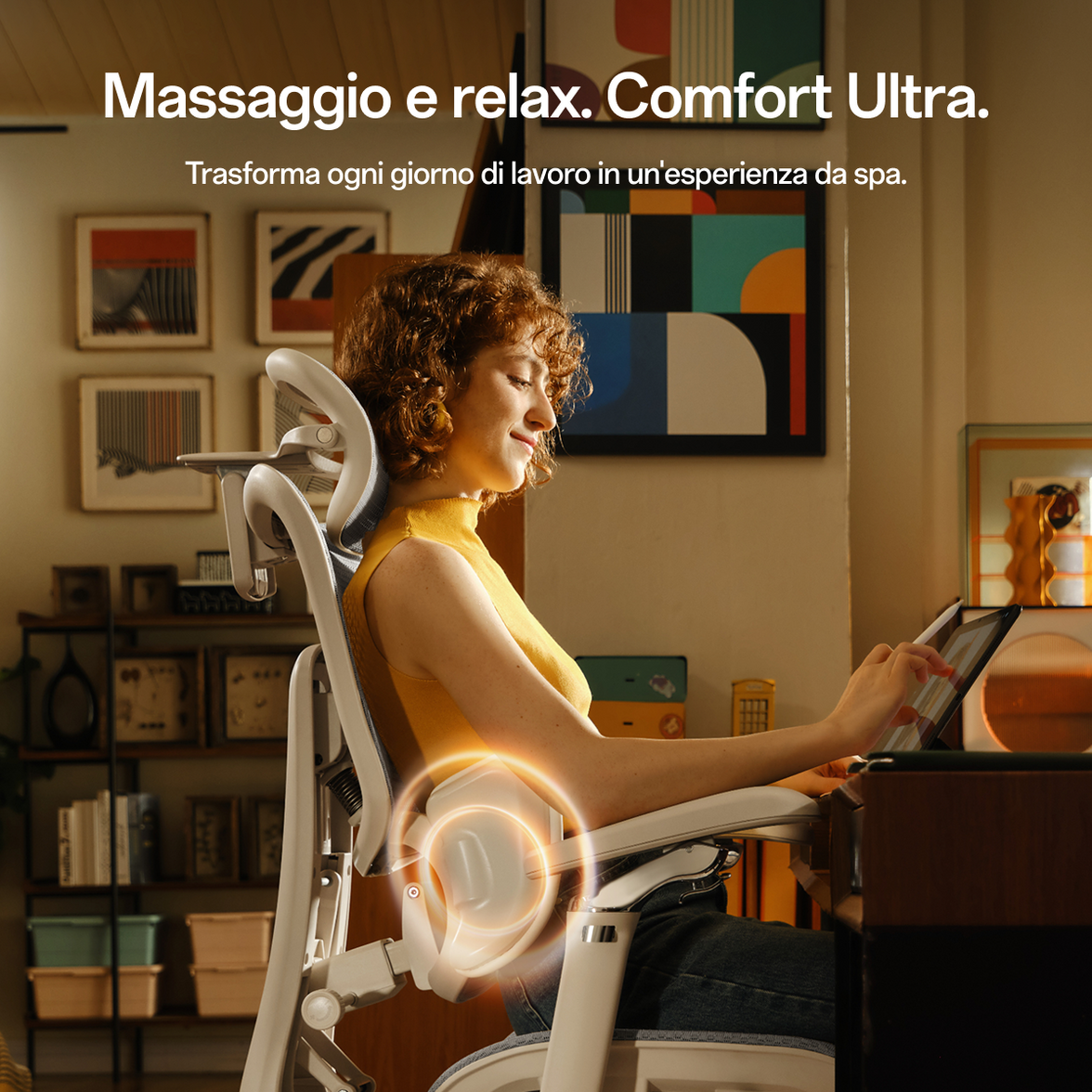 Why Does Your Lower Back Feel Tired After Sitting? Posture, Muscle Fatigue, and Lumbar Support Explained
Everyday comfort · Chair setup · Movement
Your back may need a change.Not a “perfect” posture.
It is 3 p.m. You have not done anything strenuous, yet your
lower back feels tired. You sit taller, shift to one side,
then stand for a moment. Let’s walk through the settings
and everyday habits worth checking.
Quick answer
Long periods in one position and a chair setup
that does not suit you can contribute to discomfort.
Start with comfortable lower-back support, suitable
seat height and depth, and room to change position.
In this guide, we’ll help you check each element and
build more movement into your workday.
This article provides general workstation information, not
a diagnosis or medical treatment. Fatigue and pain can have
several causes. Seek professional advice for persistent,
worsening, or concerning symptoms.
Inside this guide
The familiar tired feeling
Prolonged sitting and fatigue
Check your chair setup
Lumbar support height
Seat depth
Recline and reach
Movement breaks
Our three-zone lumbar design
Quick reference table
Frequently asked questions
Comfort is a fit
01 / NOTICE THE PATTERN
The familiar tired feeling
You may notice stiffness after a meeting or find yourself
shifting more often towards the end of the day. Sometimes
standing or walking feels more comfortable.
Notice when it happens, how long you have been seated,
and whether a different position helps. These observations
can help you decide which parts of your workstation to
check first.
If you are unsure where to start, our guide to
choosing lumbar support for your body type
explains the fit considerations to check before changing
several settings at once.
02 / LOOK BEYOND ONE POSTURE
Why prolonged sitting can feel tiring
Sitting is not completely passive: the effort involved
changes with your task, position, and the support available.
Remaining in one position for a long time may become
uncomfortable, even if that position felt fine at first.
There is no single posture that everyone needs to hold
throughout the day. Workstation guidance from the
US Occupational Safety and Health Administration,
OSHA,
includes changing position and making small adjustments,
rather than remaining still.
A useful starting point:
aim for a setup that supports you and permits comfortable
changes—not one that forces you to hold yourself rigidly upright.
03 / CHECK THE WHOLE SETUP
How chair setup can add to discomfort
Your lumbar support works as part of a larger setup.
Check your chair and desk together, starting with these
four common fit issues.
Support in the wrong place
The lumbar pad may feel too high, too low, or too
prominent for your body.
A seat that feels too deep
You may slide forwards to avoid pressure behind
the knees and stop using the backrest.
Feet without support
Check whether seat height and desk height work together
without leaving your feet dangling.
A desk that makes you reach
Keyboard, mouse, and screen placement may pull you
away from an otherwise comfortable position.
For model-specific controls and instructions, visit our
user manual and assembly guide hub.
Select your exact model and edition before adjusting
an unfamiliar mechanism.
04 / FIND COMFORTABLE CONTACT
Where should lumbar support sit?
Sit back comfortably and locate the inward curve of your
lower back. Use that area as a starting point for the support
position, rather than relying on the same numbered setting
as someone else.
Where your model allows it, make small changes to height
or depth. The support should not force you forwards or
create a sharp pressure point. Reduce or reposition it
if it feels intrusive.
Our guide to
adjusting an ergonomic chair for better comfort
brings the main settings together. Use it alongside
the instructions for your specific chair.
05 / GIVE YOUR BACK ROOM TO REACH
Seat depth: support without pressure behind the knees
Check whether you can sit against the backrest while
leaving a comfortable gap behind your knees. A small
finger-width gap can be a practical starting check,
not an exact measurement everyone must match.
If the front edge presses into your legs, check whether
the seat can move backwards. If the seat feels too short,
check its adjustment range without losing backrest contact.
Our
office chair fit guide
walks through height, depth, width, and lumbar position.
Compare your measurements with the specifications
for the configuration you are considering.
Check back support, clearance behind the knees,
and foot support together.
06 / SUPPORT WITHOUT OVERREACHING
Reclining: find a position that suits the task
You do not need to hold an exact 90-degree position
throughout the workday. Try a supported position that
lets you use your keyboard and see the screen without
reaching forwards.
A modest recline may feel comfortable, but no single angle
is right for every person or task. If reclining makes you
stretch your arms or crane your neck, reconsider the
setting and desk arrangement.
Adjust tilt tension and locking controls only as described
in your manual. Use deeper recline settings for suitable
break activities rather than trying to type from a
position that requires overreaching.
07 / MAKE ROOM FOR MOVEMENT
Movement breaks belong in the setup
Pair your chair adjustments with small opportunities
to move: stand for part of a call, walk to refill water,
or switch briefly to a different task.
A reminder can help you notice uninterrupted sitting,
but it is not a reason to wait if you already feel
uncomfortable. Choose movements that are comfortable
and appropriate for your health and mobility.
OSHA’s
workstation evaluation checklist
includes opportunities for changes in posture and
short recovery pauses during computer work.
Small changes can be built into ordinary work tasks.
Adapt activities to your own comfort and mobility.
08 / SUPPORT THAT FITS YOUR DAY
Get to know our three-zone lumbar design
Our E3 Pro 2026 features a three-zone lumbar support
system with a central support section and two side wings.
Together, these elements provide contact across the centre
and sides of your lower back, with adaptive movement as
you change position.
To find a comfortable fit, start with your seat height
and depth, then adjust the lumbar support using your
model’s controls. Aim for gentle, comfortable contact
rather than strong pressure against your back.
Explore the available configurations on our
E3 Pro 2026 product page.
You can also review the
E3 Air specifications
to compare the adjustment options that matter most
for your workspace.
Interested in powered lumbar support?
Explore our
HBADA X7
and its adjustment features. Start with a comfortable
fit, get familiar with the controls, and keep regular
movement part of your routine.
09 / YOUR QUICK CHECK
Chair setup reference table
Starting points to adjust—not rigid targets
Setting
What to check
Reconsider it if…
Lumbar position
Comfortable contact around the lower-back curve.
The support feels intrusive or pushes you forwards.
Seat depth
Backrest contact with comfortable clearance behind the knees.
You slide forwards to avoid the seat edge.
Recline
A supported position compatible with your task.
You must reach forwards to type or view the screen.
Seat height
Supported feet and comfortable access to the desk.
Your feet dangle or the desk forces your shoulders upwards.
Movement
Regular chances to change position or tasks.
You remain still for long periods despite discomfort.
Change one setting at a time so you can tell what feels
different. Stop any adjustment or activity that makes
symptoms worse.
10 / COMMON QUESTIONS
Lower-back fatigue from sitting: FAQs
Why does my lower back feel tired after sitting?
Prolonged time in one position, a setup that does not
fit you, and other factors can contribute. The feeling
alone cannot confirm a cause. Review your setup and
seek advice if symptoms persist or worsen.
Should I ignore it if standing makes it feel better?
No. Relief with a change of position is useful
information, but it is not a diagnosis. Pay attention
to symptoms that recur, interfere with daily activities,
or become more severe.
Where should lumbar support sit?
Start around the inward curve of your lower back.
Adjust within your model’s range until contact feels
comfortable rather than forceful. Individual proportions
affect the right position.
Do I need to sit completely upright?
You do not need to maintain one rigid posture.
Choose supported positions that suit your task
and allow comfortable changes without overreaching.
Will a new chair fix my back fatigue?
A chair that fits you can make it easier to find
a supported working position, but no chair can
guarantee symptom relief. Setup, movement, individual
circumstances, and any underlying health issue
also matter.
When should I get medical advice?
Seek advice for persistent or worsening symptoms,
pain that limits daily activities, or symptoms spreading
into a leg. New weakness or numbness needs prompt
assessment. Back pain with new bladder or bowel changes,
numbness around the groin or anus, or symptoms in both
legs requires emergency medical attention.
For further information on symptoms that need medical
attention, see the
NHS back pain guidance.
Use the appropriate medical or emergency service
in your country.
11 / THE TAKEAWAY
Comfort is a fit, not a feature
Start with a few practical checks: comfortable lower-back
contact, usable seat depth, supported feet, and a desk
arrangement that does not make you reach. Then make room
for movement throughout the day.
At HBADA, we want to help you get more from the adjustments
available on your chair. Take the time to find your settings,
revisit them when your tasks change, and pay attention to
what feels comfortable for you.
For more practical setup advice, explore our
ergonomic chair guides.
Enjoyed this guide? Stay connected with HBADA.
Make HBADA Europe one of your preferred sources on Google
for more of our ergonomic chair guides, workspace tips,
and practical advice.
Add HBADA Europe as a preferred source on Google
↗
Opens Google in a new tab. Confirm your selection
there if HBADA Europe is available.
Back to top ↑
Oct 20, 2026
Why Does Your Lower Back Feel Tired After Sitting? Posture, Muscle Fatigue, and Lumbar Support Explained
Everyday comfort · Chair setup · Movement
Your back may need a change.Not a “perfect” posture.
It is 3 p.m. You have not done anything strenuous, yet your
lower back feels tired. You sit taller, shift to one side,
then stand for a moment. Let’s walk through the settings
and everyday habits worth checking.
Quick answer
Long periods in one position and a chair setup
that does not suit you can contribute to discomfort.
Start with comfortable lower-back support, suitable
seat height and depth, and room to change position.
In this guide, we’ll help you check each element and
build more movement into your workday.
This article provides general workstation information, not
a diagnosis or medical treatment. Fatigue and pain can have
several causes. Seek professional advice for persistent,
worsening, or concerning symptoms.
Inside this guide
The familiar tired feeling
Prolonged sitting and fatigue
Check your chair setup
Lumbar support height
Seat depth
Recline and reach
Movement breaks
Our three-zone lumbar design
Quick reference table
Frequently asked questions
Comfort is a fit
01 / NOTICE THE PATTERN
The familiar tired feeling
You may notice stiffness after a meeting or find yourself
shifting more often towards the end of the day. Sometimes
standing or walking feels more comfortable.
Notice when it happens, how long you have been seated,
and whether a different position helps. These observations
can help you decide which parts of your workstation to
check first.
If you are unsure where to start, our guide to
choosing lumbar support for your body type
explains the fit considerations to check before changing
several settings at once.
02 / LOOK BEYOND ONE POSTURE
Why prolonged sitting can feel tiring
Sitting is not completely passive: the effort involved
changes with your task, position, and the support available.
Remaining in one position for a long time may become
uncomfortable, even if that position felt fine at first.
There is no single posture that everyone needs to hold
throughout the day. Workstation guidance from the
US Occupational Safety and Health Administration,
OSHA,
includes changing position and making small adjustments,
rather than remaining still.
A useful starting point:
aim for a setup that supports you and permits comfortable
changes—not one that forces you to hold yourself rigidly upright.
03 / CHECK THE WHOLE SETUP
How chair setup can add to discomfort
Your lumbar support works as part of a larger setup.
Check your chair and desk together, starting with these
four common fit issues.
Support in the wrong place
The lumbar pad may feel too high, too low, or too
prominent for your body.
A seat that feels too deep
You may slide forwards to avoid pressure behind
the knees and stop using the backrest.
Feet without support
Check whether seat height and desk height work together
without leaving your feet dangling.
A desk that makes you reach
Keyboard, mouse, and screen placement may pull you
away from an otherwise comfortable position.
For model-specific controls and instructions, visit our
user manual and assembly guide hub.
Select your exact model and edition before adjusting
an unfamiliar mechanism.
04 / FIND COMFORTABLE CONTACT
Where should lumbar support sit?
Sit back comfortably and locate the inward curve of your
lower back. Use that area as a starting point for the support
position, rather than relying on the same numbered setting
as someone else.
Where your model allows it, make small changes to height
or depth. The support should not force you forwards or
create a sharp pressure point. Reduce or reposition it
if it feels intrusive.
Our guide to
adjusting an ergonomic chair for better comfort
brings the main settings together. Use it alongside
the instructions for your specific chair.
05 / GIVE YOUR BACK ROOM TO REACH
Seat depth: support without pressure behind the knees
Check whether you can sit against the backrest while
leaving a comfortable gap behind your knees. A small
finger-width gap can be a practical starting check,
not an exact measurement everyone must match.
If the front edge presses into your legs, check whether
the seat can move backwards. If the seat feels too short,
check its adjustment range without losing backrest contact.
Our
office chair fit guide
walks through height, depth, width, and lumbar position.
Compare your measurements with the specifications
for the configuration you are considering.
Check back support, clearance behind the knees,
and foot support together.
06 / SUPPORT WITHOUT OVERREACHING
Reclining: find a position that suits the task
You do not need to hold an exact 90-degree position
throughout the workday. Try a supported position that
lets you use your keyboard and see the screen without
reaching forwards.
A modest recline may feel comfortable, but no single angle
is right for every person or task. If reclining makes you
stretch your arms or crane your neck, reconsider the
setting and desk arrangement.
Adjust tilt tension and locking controls only as described
in your manual. Use deeper recline settings for suitable
break activities rather than trying to type from a
position that requires overreaching.
07 / MAKE ROOM FOR MOVEMENT
Movement breaks belong in the setup
Pair your chair adjustments with small opportunities
to move: stand for part of a call, walk to refill water,
or switch briefly to a different task.
A reminder can help you notice uninterrupted sitting,
but it is not a reason to wait if you already feel
uncomfortable. Choose movements that are comfortable
and appropriate for your health and mobility.
OSHA’s
workstation evaluation checklist
includes opportunities for changes in posture and
short recovery pauses during computer work.
Small changes can be built into ordinary work tasks.
Adapt activities to your own comfort and mobility.
08 / SUPPORT THAT FITS YOUR DAY
Get to know our three-zone lumbar design
Our E3 Pro 2026 features a three-zone lumbar support
system with a central support section and two side wings.
Together, these elements provide contact across the centre
and sides of your lower back, with adaptive movement as
you change position.
To find a comfortable fit, start with your seat height
and depth, then adjust the lumbar support using your
model’s controls. Aim for gentle, comfortable contact
rather than strong pressure against your back.
Explore the available configurations on our
E3 Pro 2026 product page.
You can also review the
E3 Air specifications
to compare the adjustment options that matter most
for your workspace.
Interested in powered lumbar support?
Explore our
HBADA X7
and its adjustment features. Start with a comfortable
fit, get familiar with the controls, and keep regular
movement part of your routine.
09 / YOUR QUICK CHECK
Chair setup reference table
Starting points to adjust—not rigid targets
Setting
What to check
Reconsider it if…
Lumbar position
Comfortable contact around the lower-back curve.
The support feels intrusive or pushes you forwards.
Seat depth
Backrest contact with comfortable clearance behind the knees.
You slide forwards to avoid the seat edge.
Recline
A supported position compatible with your task.
You must reach forwards to type or view the screen.
Seat height
Supported feet and comfortable access to the desk.
Your feet dangle or the desk forces your shoulders upwards.
Movement
Regular chances to change position or tasks.
You remain still for long periods despite discomfort.
Change one setting at a time so you can tell what feels
different. Stop any adjustment or activity that makes
symptoms worse.
10 / COMMON QUESTIONS
Lower-back fatigue from sitting: FAQs
Why does my lower back feel tired after sitting?
Prolonged time in one position, a setup that does not
fit you, and other factors can contribute. The feeling
alone cannot confirm a cause. Review your setup and
seek advice if symptoms persist or worsen.
Should I ignore it if standing makes it feel better?
No. Relief with a change of position is useful
information, but it is not a diagnosis. Pay attention
to symptoms that recur, interfere with daily activities,
or become more severe.
Where should lumbar support sit?
Start around the inward curve of your lower back.
Adjust within your model’s range until contact feels
comfortable rather than forceful. Individual proportions
affect the right position.
Do I need to sit completely upright?
You do not need to maintain one rigid posture.
Choose supported positions that suit your task
and allow comfortable changes without overreaching.
Will a new chair fix my back fatigue?
A chair that fits you can make it easier to find
a supported working position, but no chair can
guarantee symptom relief. Setup, movement, individual
circumstances, and any underlying health issue
also matter.
When should I get medical advice?
Seek advice for persistent or worsening symptoms,
pain that limits daily activities, or symptoms spreading
into a leg. New weakness or numbness needs prompt
assessment. Back pain with new bladder or bowel changes,
numbness around the groin or anus, or symptoms in both
legs requires emergency medical attention.
For further information on symptoms that need medical
attention, see the
NHS back pain guidance.
Use the appropriate medical or emergency service
in your country.
11 / THE TAKEAWAY
Comfort is a fit, not a feature
Start with a few practical checks: comfortable lower-back
contact, usable seat depth, supported feet, and a desk
arrangement that does not make you reach. Then make room
for movement throughout the day.
At HBADA, we want to help you get more from the adjustments
available on your chair. Take the time to find your settings,
revisit them when your tasks change, and pay attention to
what feels comfortable for you.
For more practical setup advice, explore our
ergonomic chair guides.
Enjoyed this guide? Stay connected with HBADA.
Make HBADA Europe one of your preferred sources on Google
for more of our ergonomic chair guides, workspace tips,
and practical advice.
Add HBADA Europe as a preferred source on Google
↗
Opens Google in a new tab. Confirm your selection
there if HBADA Europe is available.
Back to top ↑
Oct 20, 2026
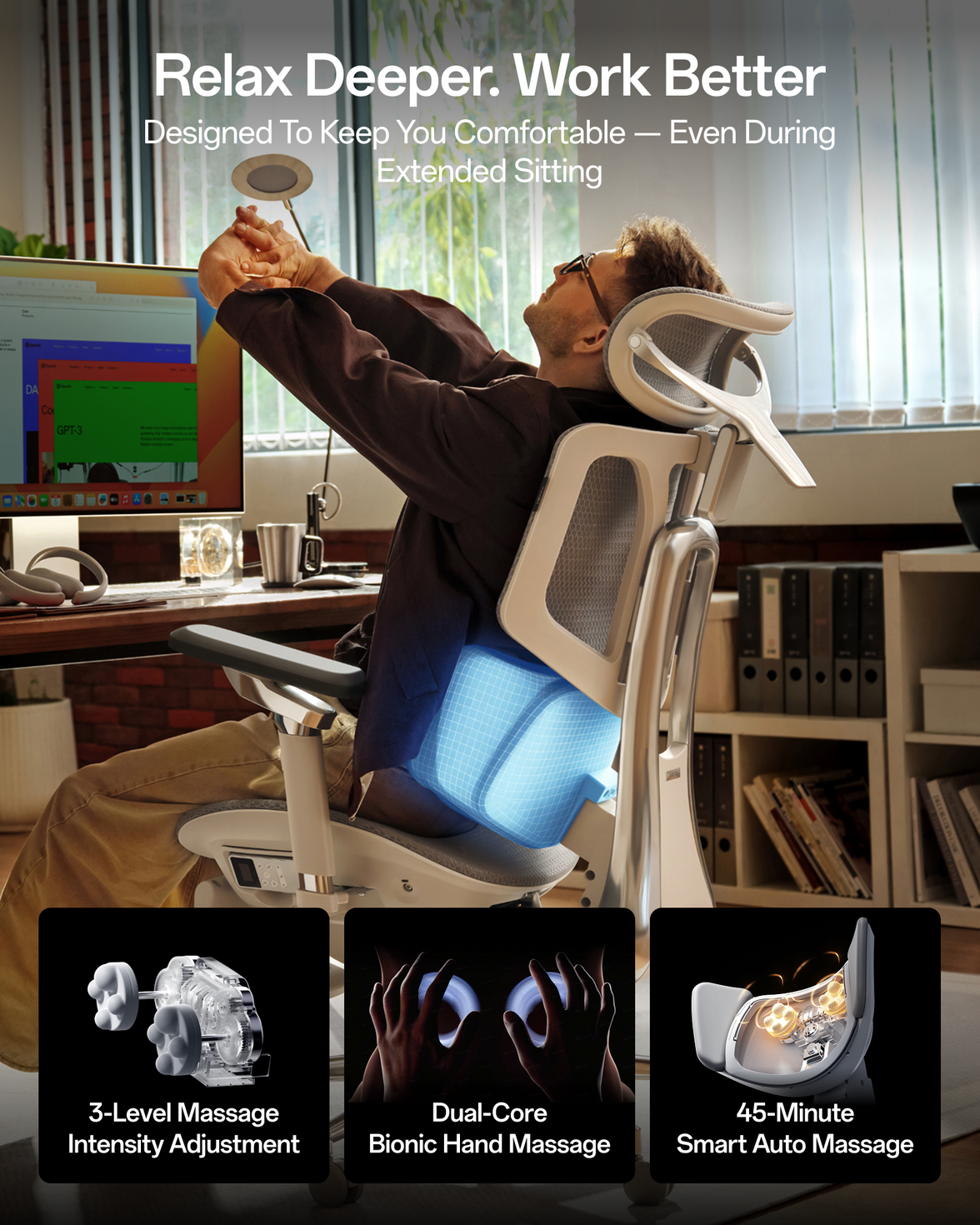 How Long Do Office Chairs Last? Durability Tests Explained
The everyday durability guide
A lasting chair starts with more than a number.
Before buying an office chair, it is natural to ask: “Will this actually hold up?” The useful answer comes from understanding its components, how you use it, and what happens when a part needs attention.
Quick answer
Office chairs do not have one universal lifespan. Materials, construction, daily use, user load, maintenance, and access to replacement parts all affect how long a chair remains useful. Component tests help explain durability, but they do not guarantee a specific number of years. Consider repair for an isolated, serviceable problem; consider replacement when safety, fit, or several major components can no longer be restored.
Inside this guide
How long should a chair last?
Cycles are not hours
What affects lifespan?
Understanding durability tests
Signs of wear
Repair or replace?
Making your chair last
Common questions
The buying takeaway
01 / THE REAL ANSWER
How long should an office chair last?
A chair’s age tells only part of its story. A lightly used home-office chair and a shared chair used across multiple shifts can accumulate very different amounts of wear in the same calendar year.
Rather than treating a general lifespan estimate as a replacement deadline, look at whether the chair remains stable, holds its adjustments, and supports your working position. A chair may still be usable after a replaceable component wears out. Conversely, a newer chair may need attention if it develops a structural or mechanical fault.
Three different things: a warranty describes coverage under stated terms; a durability test measures performance under a defined procedure; service life describes how long the chair remains usable in practice. These are not interchangeable.
When exploring HBADA ergonomic office chairs , review the specifications and service information for the exact model and configuration available in your delivery country.
02 / TESTING WITHOUT THE GUESSWORK
Why test cycles cannot simply become hours of use
Durability testing can repeat a defined action, such as rotating a seat or operating a reclining mechanism, under controlled conditions. The resulting cycle count describes that test—not a complete record of everyday ownership.
One person may recline frequently, while another stays mostly upright. Loads, movement patterns, cleaning habits, and the surrounding environment also differ. There is no universal conversion from a component cycle count to “hours of sitting” or “years before replacement”.
About a “1,000-hour test”: an actual time-based test needs a documented method and recorded observations. Component cycle counts alone cannot establish that a chair has completed 1,000 hours of real-world testing.
Use laboratory figures as one part of your assessment, alongside fit, serviceability, warranty terms, and the information available about the test itself.
03 / WHAT MAKES THE DIFFERENCE
What affects ergonomic office chair lifespan?
Durability is not just about the seat surface. A chair is a system of moving and load-bearing parts, and the condition of each one matters.
Construction and components
The base, frame, lift, reclining mechanism, and attachment points all contribute to how the chair handles everyday use. Check the specifications of the exact model rather than relying on appearance alone.
Seat and back materials
Mesh, fabric, foam, and other upholstery materials wear differently. Check for changes in support, tension, seams, and attachment points—not just cosmetic marks.
How the chair is used
Shared use, frequent adjustments, repeated reclining, and loads outside the stated limits can change the demands placed on a chair.
Care and repair options
Appropriate cleaning and timely attention to loose or worn parts help maintain usability. Available, compatible replacement parts can also make repair more practical.
04 / READING THE EVIDENCE
What office chair durability tests actually tell you
A useful test claim identifies the component being assessed. A lift test, for example, does not establish how long the mesh will retain its tension. Likewise, a rotation test does not measure every part of the chair.
Read each test within its stated scope
Test area
What to check
What not to assume
Armrests
The tested movement or load, cycle count, and pass criteria.
That the result guarantees the same lifespan for the seat or backrest.
Gas lift
The lift test procedure and the model or component it applies to.
That lift cycles measure mesh durability or predict a fixed number of years.
Rotation
The stated rotation procedure, loading, and test conditions.
That rotation cycles equal hours spent sitting.
Reclining mechanism
The tested movement, applied load, and assessment criteria.
That the mechanism cannot develop a fault under different conditions.
Look beyond the headline cycle count
When comparing test claims, ask which part was tested, what load was applied, how the movement was defined, and what counted as passing. Two large numbers are not necessarily comparable if the procedures differ.
If a listing mentions a testing standard or certification, look for documentation that identifies the exact model and scope. A brief product-page statement is not a substitute for a full test report.
Check the version you are buying. Do not assume that a test figure shown for a different model, configuration, or regional listing automatically applies to the chair in your basket.
05 / NOTICE THE CHANGES
Signs of office chair wear and tear to watch for
Pay attention to changes in how the chair behaves. Surface wear may be cosmetic; instability or a mechanism that no longer holds its position deserves closer attention.
The seat no longer holds its height. Check with support whether the lift or another component needs service.
The chair feels unstable. New wobbling, a damaged base, or visible cracks should be assessed before continued use.
The seat or back has lost support. Look for persistent sagging, damaged seams, or attachment points pulling away.
An adjustment no longer stays in place. A slipping backrest or failed locking mechanism can change your sitting position unexpectedly.
Several faults are developing together. Consider the condition of the whole chair instead of evaluating each repair in isolation.
Do not judge a problem by sound alone. A squeak may have a straightforward cause, but a new noise accompanied by looseness, cracks, or unexpected movement needs investigation. Stop using a chair that appears structurally unsafe.
New discomfort is also a reason to reassess your chair settings and workstation. It does not, by itself, prove that the chair is worn out or identify a medical cause.
06 / THE PRACTICAL DECISION
When should you repair or replace an office chair?
Start with the fault, not the chair’s birthday. An isolated problem may be repairable if the rest of the chair is sound and an approved replacement part is available.
Repair or replace: questions to guide your decision
Situation
Suggested next step
One worn, replaceable component
Ask about compatible parts, coverage, and the recommended repair procedure.
Loose fasteners without visible damage
Follow the assembly instructions or ask support how to inspect and secure the connection.
Cracked or damaged load-bearing structure
Stop using the chair and seek assessment. Do not attempt an improvised structural repair.
Several major parts need replacement
Compare the complete repair cost, parts availability, and remaining condition with replacement.
The chair no longer fits your needs
Recheck adjustments first. Consider a different chair if its adjustment range cannot provide a suitable fit.
What about a chair that keeps sinking?
A sinking seat can indicate a problem with the gas lift, but the cause and compatible replacement should be confirmed with the manufacturer. Ask for a repair quote before assuming the entire chair must be replaced.
Do not open, drill, heat, or modify a gas cylinder. Use manufacturer-approved service guidance and seek professional help when necessary.
Compare the complete repair cost
Consider the replacement part, delivery, any installation charge, and the condition of the remaining components. Check availability for your delivery country rather than relying on a price quoted for another market.
Keep your order details, model information, and clear photographs of the issue ready when contacting the seller or manufacturer.
07 / SMALL HABITS, USEFUL UPKEEP
How to help your office chair last longer
Good care does not make a chair indestructible, but it can help you identify problems early and avoid preventable damage.
Follow the care instructions for your model. Use cleaning methods suited to its materials. Avoid applying a leather treatment or strong cleaning product to a surface it is not intended for.
Keep castors clear. Remove accessible hair and debris as directed, and check that the wheels remain securely attached.
Check connections when something changes. Investigate new looseness or movement. Tighten fasteners only as instructed; overtightening can cause damage.
Stay within the stated operating limits. Follow the chair’s load and use instructions. Do not stand on the seat or force an adjustment past its stop.
Address small faults before they spread. Contact support when a mechanism stops working normally rather than compensating with an awkward sitting position.
Keep service information accessible. Save the manual and purchase details so that checking coverage or identifying a replacement part is easier.
08 / COMMON QUESTIONS
Office chair lifespan FAQs
Should I replace my office chair after five years?
Not automatically. Assess its stability, adjustment mechanisms, seat support, and suitability for your workstation. Age alone is not a reliable replacement rule.
Do higher test-cycle numbers mean a chair lasts longer?
They can provide useful information about a tested component, but only in the context of the procedure, load, and pass criteria. They do not establish a universal lifespan or make different test methods directly comparable.
Does a long warranty guarantee the same service life?
No. Warranty coverage depends on its terms, exclusions, and covered components. It is different from a prediction of how long a chair will remain comfortable and functional in your particular setting.
Can a sinking office chair be repaired?
It may be repairable if the cause is identified and a compatible replacement component is available. Contact the manufacturer for guidance. Do not dismantle or modify the gas cylinder itself.
Does mesh always wear out before a padded seat?
Material type alone cannot answer that question. Construction, material quality, loading, and care all matter. Inspect mesh for loss of tension or attachment damage and padded seats for lasting compression or other changes in support.
What should I check when ordering an office chair in Europe?
Check the exact model and configuration, fit and adjustment range, stated load limit, delivery availability, service terms, and replacement-part options for your country. Do not assume that details from another regional store apply to your order.
09 / THE TAKEAWAY
Buy for support, serviceability, and everyday use
The most useful durability question is not simply “How many years will it last?” It is “What evidence is available, does this chair fit my needs, and can I get help if something wears out?”
Read component figures in context, keep up with appropriate care, and assess faults early. That gives you a more practical basis for choosing and maintaining a chair than an unsupported lifespan promise.
Explore HBADA Europe
Find the right fit for your everyday workspace.
Explore HBADA’s European range and compare the specifications of the models that suit your workspace. Review adjustment options, delivery availability, and service information before choosing.
Explore HBADA Europe →
Enjoyed this guide? Stay connected with HBADA.
Make HBADA Europe one of your preferred sources on Google for more ergonomic chair guides, workspace tips, and practical advice.
Add HBADA Europe as a preferred source ↗
Opens Google in a new tab. Confirm your selection there if HBADA Europe is available.
Back to top ↑
Oct 19, 2026
How Long Do Office Chairs Last? Durability Tests Explained
The everyday durability guide
A lasting chair starts with more than a number.
Before buying an office chair, it is natural to ask: “Will this actually hold up?” The useful answer comes from understanding its components, how you use it, and what happens when a part needs attention.
Quick answer
Office chairs do not have one universal lifespan. Materials, construction, daily use, user load, maintenance, and access to replacement parts all affect how long a chair remains useful. Component tests help explain durability, but they do not guarantee a specific number of years. Consider repair for an isolated, serviceable problem; consider replacement when safety, fit, or several major components can no longer be restored.
Inside this guide
How long should a chair last?
Cycles are not hours
What affects lifespan?
Understanding durability tests
Signs of wear
Repair or replace?
Making your chair last
Common questions
The buying takeaway
01 / THE REAL ANSWER
How long should an office chair last?
A chair’s age tells only part of its story. A lightly used home-office chair and a shared chair used across multiple shifts can accumulate very different amounts of wear in the same calendar year.
Rather than treating a general lifespan estimate as a replacement deadline, look at whether the chair remains stable, holds its adjustments, and supports your working position. A chair may still be usable after a replaceable component wears out. Conversely, a newer chair may need attention if it develops a structural or mechanical fault.
Three different things: a warranty describes coverage under stated terms; a durability test measures performance under a defined procedure; service life describes how long the chair remains usable in practice. These are not interchangeable.
When exploring HBADA ergonomic office chairs , review the specifications and service information for the exact model and configuration available in your delivery country.
02 / TESTING WITHOUT THE GUESSWORK
Why test cycles cannot simply become hours of use
Durability testing can repeat a defined action, such as rotating a seat or operating a reclining mechanism, under controlled conditions. The resulting cycle count describes that test—not a complete record of everyday ownership.
One person may recline frequently, while another stays mostly upright. Loads, movement patterns, cleaning habits, and the surrounding environment also differ. There is no universal conversion from a component cycle count to “hours of sitting” or “years before replacement”.
About a “1,000-hour test”: an actual time-based test needs a documented method and recorded observations. Component cycle counts alone cannot establish that a chair has completed 1,000 hours of real-world testing.
Use laboratory figures as one part of your assessment, alongside fit, serviceability, warranty terms, and the information available about the test itself.
03 / WHAT MAKES THE DIFFERENCE
What affects ergonomic office chair lifespan?
Durability is not just about the seat surface. A chair is a system of moving and load-bearing parts, and the condition of each one matters.
Construction and components
The base, frame, lift, reclining mechanism, and attachment points all contribute to how the chair handles everyday use. Check the specifications of the exact model rather than relying on appearance alone.
Seat and back materials
Mesh, fabric, foam, and other upholstery materials wear differently. Check for changes in support, tension, seams, and attachment points—not just cosmetic marks.
How the chair is used
Shared use, frequent adjustments, repeated reclining, and loads outside the stated limits can change the demands placed on a chair.
Care and repair options
Appropriate cleaning and timely attention to loose or worn parts help maintain usability. Available, compatible replacement parts can also make repair more practical.
04 / READING THE EVIDENCE
What office chair durability tests actually tell you
A useful test claim identifies the component being assessed. A lift test, for example, does not establish how long the mesh will retain its tension. Likewise, a rotation test does not measure every part of the chair.
Read each test within its stated scope
Test area
What to check
What not to assume
Armrests
The tested movement or load, cycle count, and pass criteria.
That the result guarantees the same lifespan for the seat or backrest.
Gas lift
The lift test procedure and the model or component it applies to.
That lift cycles measure mesh durability or predict a fixed number of years.
Rotation
The stated rotation procedure, loading, and test conditions.
That rotation cycles equal hours spent sitting.
Reclining mechanism
The tested movement, applied load, and assessment criteria.
That the mechanism cannot develop a fault under different conditions.
Look beyond the headline cycle count
When comparing test claims, ask which part was tested, what load was applied, how the movement was defined, and what counted as passing. Two large numbers are not necessarily comparable if the procedures differ.
If a listing mentions a testing standard or certification, look for documentation that identifies the exact model and scope. A brief product-page statement is not a substitute for a full test report.
Check the version you are buying. Do not assume that a test figure shown for a different model, configuration, or regional listing automatically applies to the chair in your basket.
05 / NOTICE THE CHANGES
Signs of office chair wear and tear to watch for
Pay attention to changes in how the chair behaves. Surface wear may be cosmetic; instability or a mechanism that no longer holds its position deserves closer attention.
The seat no longer holds its height. Check with support whether the lift or another component needs service.
The chair feels unstable. New wobbling, a damaged base, or visible cracks should be assessed before continued use.
The seat or back has lost support. Look for persistent sagging, damaged seams, or attachment points pulling away.
An adjustment no longer stays in place. A slipping backrest or failed locking mechanism can change your sitting position unexpectedly.
Several faults are developing together. Consider the condition of the whole chair instead of evaluating each repair in isolation.
Do not judge a problem by sound alone. A squeak may have a straightforward cause, but a new noise accompanied by looseness, cracks, or unexpected movement needs investigation. Stop using a chair that appears structurally unsafe.
New discomfort is also a reason to reassess your chair settings and workstation. It does not, by itself, prove that the chair is worn out or identify a medical cause.
06 / THE PRACTICAL DECISION
When should you repair or replace an office chair?
Start with the fault, not the chair’s birthday. An isolated problem may be repairable if the rest of the chair is sound and an approved replacement part is available.
Repair or replace: questions to guide your decision
Situation
Suggested next step
One worn, replaceable component
Ask about compatible parts, coverage, and the recommended repair procedure.
Loose fasteners without visible damage
Follow the assembly instructions or ask support how to inspect and secure the connection.
Cracked or damaged load-bearing structure
Stop using the chair and seek assessment. Do not attempt an improvised structural repair.
Several major parts need replacement
Compare the complete repair cost, parts availability, and remaining condition with replacement.
The chair no longer fits your needs
Recheck adjustments first. Consider a different chair if its adjustment range cannot provide a suitable fit.
What about a chair that keeps sinking?
A sinking seat can indicate a problem with the gas lift, but the cause and compatible replacement should be confirmed with the manufacturer. Ask for a repair quote before assuming the entire chair must be replaced.
Do not open, drill, heat, or modify a gas cylinder. Use manufacturer-approved service guidance and seek professional help when necessary.
Compare the complete repair cost
Consider the replacement part, delivery, any installation charge, and the condition of the remaining components. Check availability for your delivery country rather than relying on a price quoted for another market.
Keep your order details, model information, and clear photographs of the issue ready when contacting the seller or manufacturer.
07 / SMALL HABITS, USEFUL UPKEEP
How to help your office chair last longer
Good care does not make a chair indestructible, but it can help you identify problems early and avoid preventable damage.
Follow the care instructions for your model. Use cleaning methods suited to its materials. Avoid applying a leather treatment or strong cleaning product to a surface it is not intended for.
Keep castors clear. Remove accessible hair and debris as directed, and check that the wheels remain securely attached.
Check connections when something changes. Investigate new looseness or movement. Tighten fasteners only as instructed; overtightening can cause damage.
Stay within the stated operating limits. Follow the chair’s load and use instructions. Do not stand on the seat or force an adjustment past its stop.
Address small faults before they spread. Contact support when a mechanism stops working normally rather than compensating with an awkward sitting position.
Keep service information accessible. Save the manual and purchase details so that checking coverage or identifying a replacement part is easier.
08 / COMMON QUESTIONS
Office chair lifespan FAQs
Should I replace my office chair after five years?
Not automatically. Assess its stability, adjustment mechanisms, seat support, and suitability for your workstation. Age alone is not a reliable replacement rule.
Do higher test-cycle numbers mean a chair lasts longer?
They can provide useful information about a tested component, but only in the context of the procedure, load, and pass criteria. They do not establish a universal lifespan or make different test methods directly comparable.
Does a long warranty guarantee the same service life?
No. Warranty coverage depends on its terms, exclusions, and covered components. It is different from a prediction of how long a chair will remain comfortable and functional in your particular setting.
Can a sinking office chair be repaired?
It may be repairable if the cause is identified and a compatible replacement component is available. Contact the manufacturer for guidance. Do not dismantle or modify the gas cylinder itself.
Does mesh always wear out before a padded seat?
Material type alone cannot answer that question. Construction, material quality, loading, and care all matter. Inspect mesh for loss of tension or attachment damage and padded seats for lasting compression or other changes in support.
What should I check when ordering an office chair in Europe?
Check the exact model and configuration, fit and adjustment range, stated load limit, delivery availability, service terms, and replacement-part options for your country. Do not assume that details from another regional store apply to your order.
09 / THE TAKEAWAY
Buy for support, serviceability, and everyday use
The most useful durability question is not simply “How many years will it last?” It is “What evidence is available, does this chair fit my needs, and can I get help if something wears out?”
Read component figures in context, keep up with appropriate care, and assess faults early. That gives you a more practical basis for choosing and maintaining a chair than an unsupported lifespan promise.
Explore HBADA Europe
Find the right fit for your everyday workspace.
Explore HBADA’s European range and compare the specifications of the models that suit your workspace. Review adjustment options, delivery availability, and service information before choosing.
Explore HBADA Europe →
Enjoyed this guide? Stay connected with HBADA.
Make HBADA Europe one of your preferred sources on Google for more ergonomic chair guides, workspace tips, and practical advice.
Add HBADA Europe as a preferred source ↗
Opens Google in a new tab. Confirm your selection there if HBADA Europe is available.
Back to top ↑
Oct 19, 2026


