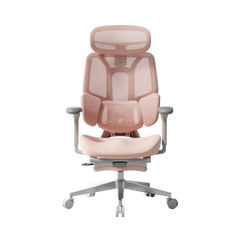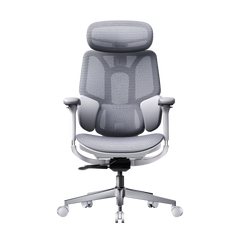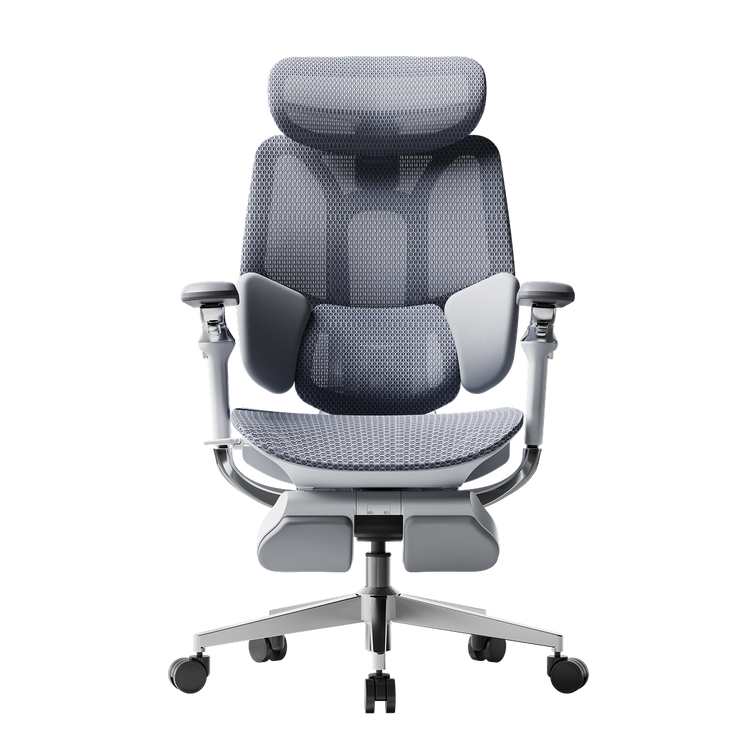
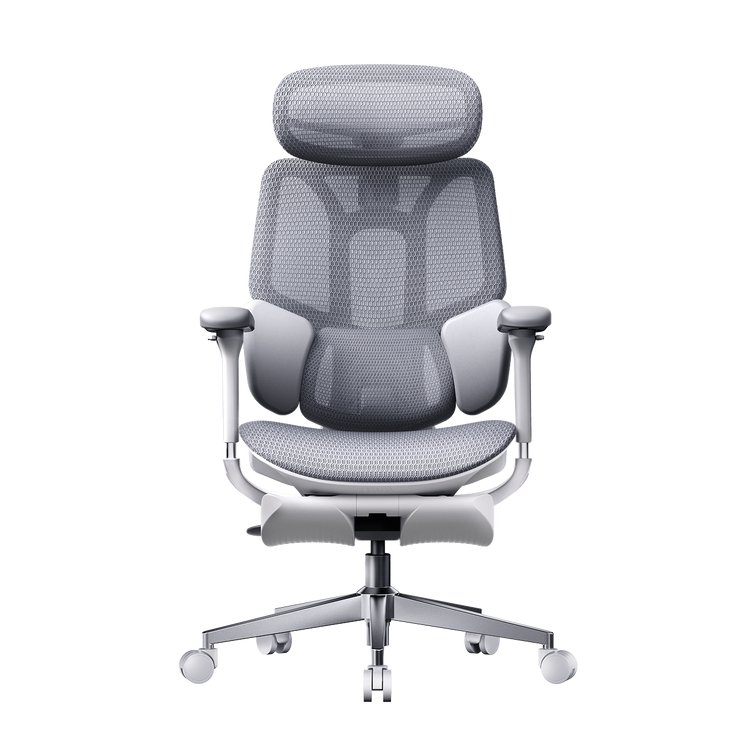
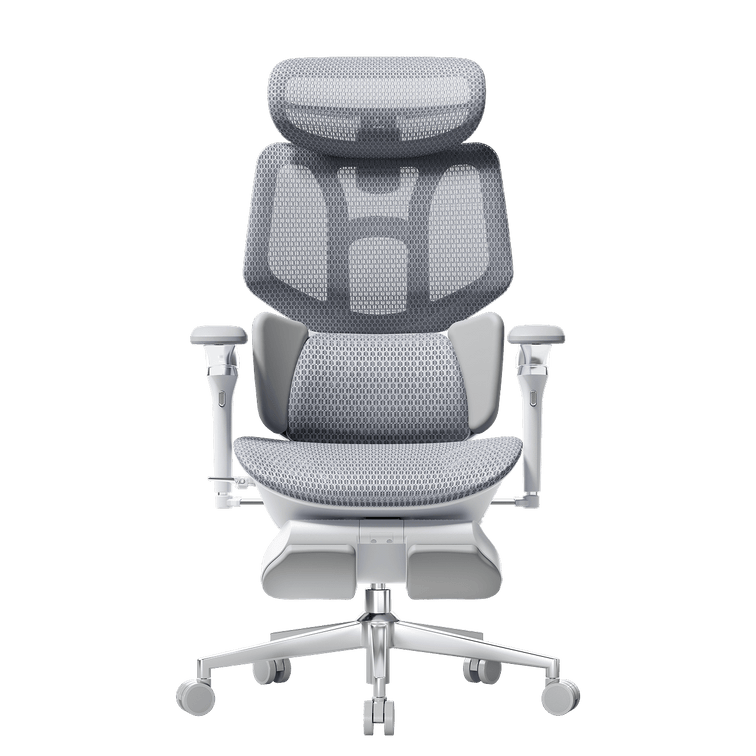
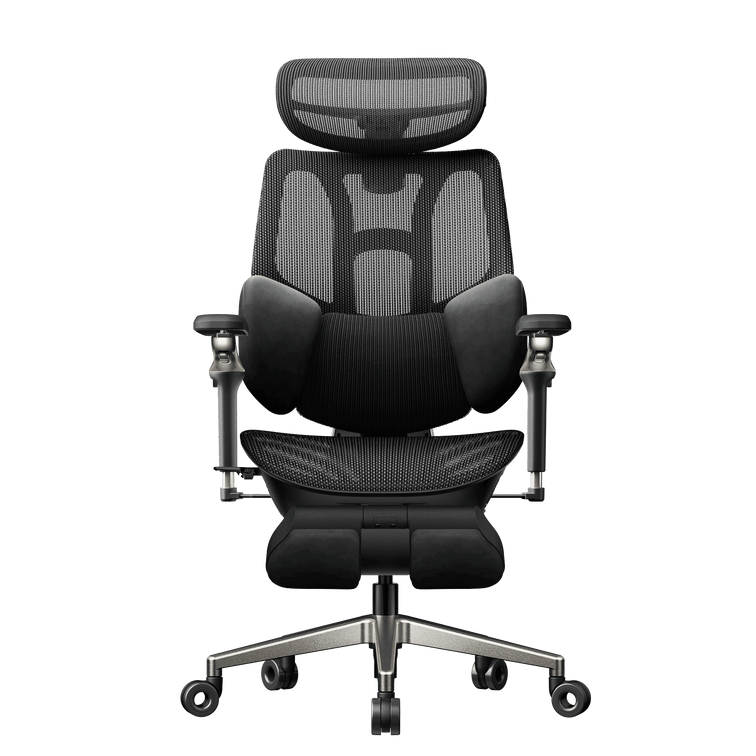

Look past the logo.
Understand the testing.
A clearer guide to BIFMA, EN 1335, SGS and TÜV for office chair buyers in Europe.
Quick answer: ANSI/BIFMA X5.1 is a safety, strength and durability testing standard for general-purpose office chairs. It is not, by itself, a product certification. European buyers may also see EN 1335 on listings. Check the exact model, standard edition, testing organisation and supporting documentation rather than relying on a badge alone.
Certification badges are everywhere on office chair listings. BIFMA. SGS. TÜV. EN 1335. It's easy to scroll past them without really knowing what they mean or whether they matter.
Some names identify standards. Others identify testing organisations or certification programmes. Understanding that difference is the first step towards judging the evidence behind a product.
This guide breaks down what BIFMA X5.1 covers, how it relates to other common names, and what to look for so you're not just trusting a logo.
What Is BIFMA X5.1 Certification?
BIFMA stands for the Business and Institutional Furniture Manufacturers Association. ANSI/BIFMA X5.1 sets out tests for general-purpose office chairs, providing a common basis for evaluating mechanical safety and durability.
“BIFMA X5.1 certification” is common shopping language, but a listing should explain whether it means a test report, a statement of conformance, or participation in a named verification or certification programme.
The BIFMA Compliant programme is a separate verification programme with laboratory requirements, a public product registry and report auditing. It should not be assumed from a generic BIFMA logo.
Why BIFMA X5.1 Certification Matters
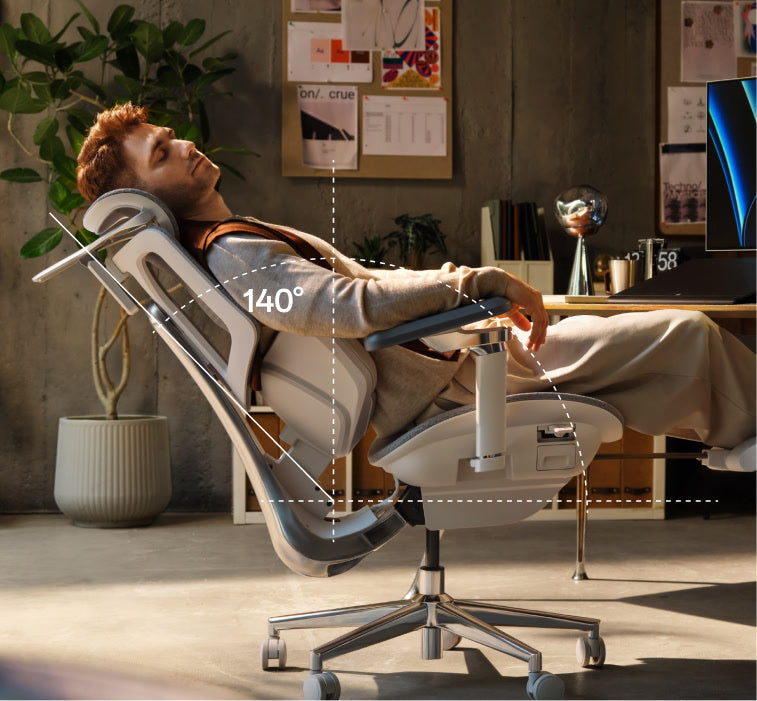
Think about how much a chair actually goes through over a few years: thousands of sit-downs, constant leaning back, repeated adjustments and rolling across the floor. A chair that looks fine on day one still needs to withstand repeated use.
Documented testing gives you more to evaluate than phrases such as “commercial grade” or “built to last”. It helps you ask specific questions about the product rather than judging durability from photographs alone.
What the Testing Actually Covers
X5.1 is a collection of tests, not one universal stress-cycle check. Applicable tests depend on the chair's design and the edition used.
| Testing area | What it examines |
|---|---|
| Backrest and arm strength | Resistance to specified applied forces. |
| Seat impact and durability | Structural response to defined impacts and repeated loading. |
| Stability | Resistance to tipping in prescribed test positions. |
| Swivel and tilt mechanisms | Performance during repeated movement under defined conditions. |
| Castors and base | Durability of the supporting and rolling assembly. |
See BIFMA's X5.1 overview and Intertek's explanation of testing updates for examples of the methods involved.
What Is BIFMA Certification, in Plain Terms?
Start with three separate questions: what requirements were used, who performed the tests, and what claim the resulting documentation supports.
The standard
Defines the test methods and acceptance requirements.
The evidence
Identifies the tested product, scope, laboratory and results.
BIFMA develops standards; it is not the laboratory behind every chair test. Its Compliant programme allows testing by an in-house or third-party ISO/IEC 17025-accredited laboratory with the relevant standard in its accreditation scope.
That means “tested to X5.1” does not automatically mean “independently certified by BIFMA”.
SGS vs BIFMA: What's the Difference?
BIFMA and SGS aren't competing standards. They serve different roles.
- BIFMA: Develops furniture standards, including X5.1.
- SGS: Provides testing, inspection and certification services, including furniture testing.
A manufacturer may commission an SGS laboratory to test a chair against a BIFMA standard. However, you still need to check the specific laboratory, report, model and test scope.
An SGS report for a gas lift does not establish that the complete chair passed all applicable X5.1 tests. Seeing both names on a listing is not a substitute for reading what was tested.
Source: SGS furniture testing services.
TÜV Office Chair Certification Explained
TÜV names also appear on office chair listings. Organisations such as TÜV Rheinland and TÜV SÜD provide testing and certification services, but the name alone does not identify the standard or product covered.
Check the issuing organisation, certificate number, model and scope. The evidence may concern a complete chair, a component or a specific characteristic.
For TÜV Rheinland claims, its furniture testing information explains how certificate identification numbers can be checked through Certipedia.
Office Chair Safety Standards Beyond BIFMA
European buyers will often encounter EN 1335 alongside ANSI/BIFMA X5.1. These references address office seating, but they are not interchangeable.
| Reference | Main focus | What to check |
|---|---|---|
| ANSI/BIFMA X5.1 | Mechanical safety, strength and durability of general-purpose office chairs. | The tested model, edition and applicable test results. |
| EN 1335-1 | Office work chair dimensions and their measurement. | The dimensional classification and adjustment requirements. |
| EN 1335-2 | Safety requirements for office work chairs. | Whether the report covers this part, not just dimensional measurements. |
Types Ax, A, B and C are dimensional classifications, not a ranking of daily sitting hours. Type Ax was introduced to accommodate a wider range of users; it is not an automatic “8+ hours” guarantee.
When comparing chairs, check which requirements were actually evaluated. A reference to one standard should not be presented as proof that the product meets another.
Sources: SATRA's standards explanation and European seating testing guidance.
How to Spot a Genuinely BIFMA Certified Office Chair
Certification claims aren't all equally clear. Use these checks to understand what a listing actually supports.
- Match the model. Check the model number and configuration. Evidence for another chair in the same product family may not cover your selection.
- Find the exact standard. Look for the standard number and edition, not just “BIFMA tested” or “EN 1335”.
- Check the scope. Establish whether the documentation covers the whole chair, selected tests or a component such as the gas lift.
- Identify the laboratory and report. Ask for the report reference, results and relevant accreditation details.
- Verify a named programme. If the seller claims BIFMA Compliant status, check the product registry linked from the official programme page.
- Read the limits. Keep test results separate from the manufacturer's weight rating, warranty and instructions for use.
How HBADA Chairs Measure Up
Testing information should be checked model by model. Start with the European product page, then request supporting documentation for the exact version you're considering.
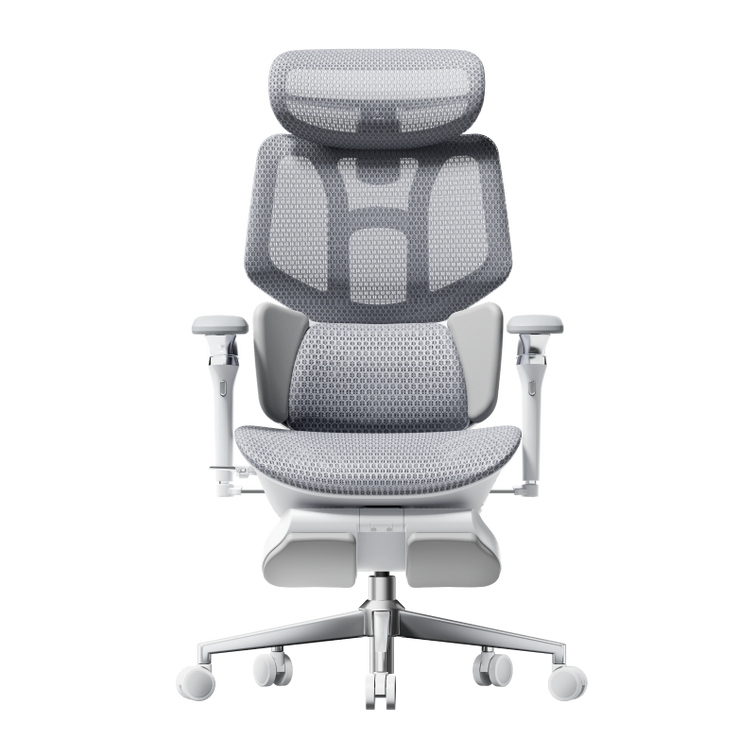
HBADA E3 Pro 2026
Review the E3 Pro 2026 product page for published specifications and testing information. If you are comparing a cycle-count claim, ask which test and conditions the number refers to.
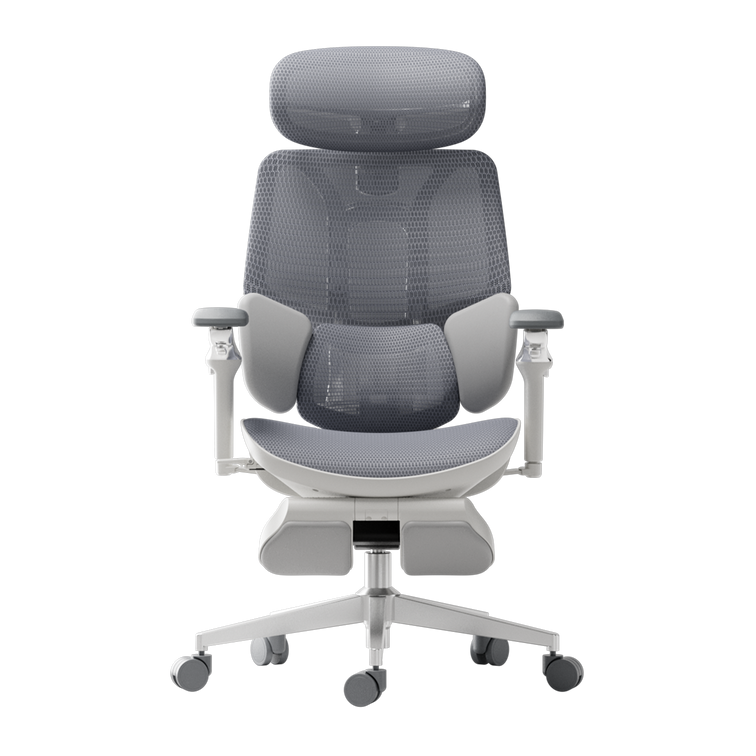
HBADA X7
Review the X7 product page for your selected configuration. Request the applicable documentation rather than assuming every X7-series version has identical coverage.
Certification specifics can vary by version, region and configuration. Product-page badges are a starting point, not a replacement for the underlying report or certificate.
For an EU purchase, confirm that the documentation applies to the model sold through the European store. Do not assume a report linked to another market covers the same configuration.
If the documentation is not shown, contact HBADA EU support with the product link and model you're considering.
Red Flags to Watch For
- Unexplained badges: Logos appear without a standard, report reference or scope.
- A model mismatch: The certificate names a different model or configuration with no explanation of coverage.
- Component evidence presented as whole-chair proof: A gas-lift report is used to imply complete chair compliance.
- Cycle counts without context: A large number appears without the test method, load or result.
- Standards treated as interchangeable: One test result is used to suggest compliance with several unrelated requirements.
- Unsupported guarantees: A test claim is presented as proof of unlimited service life or comfort for everyone.
A low price alone does not prove a certification claim is false. Likewise, a high price does not prove it is valid. Judge the documentation, not the price tag.
Frequently Asked Questions
What does BIFMA X5.1 testing cover?
It evaluates defined aspects of chair strength, stability and durability. Applicable checks can include the seat, backrest, arms, swivel, tilt mechanism, castors and base.
Is BIFMA X5.1 a certification?
It is a testing standard. A seller using “certified” should identify the report, certification scheme or verification programme that supports that wording.
Is SGS the same as BIFMA?
No. BIFMA develops standards; SGS provides testing and other assurance services. Check the individual report to see what an SGS laboratory tested.
What does a TÜV office chair certificate tell me?
Its meaning depends on the issuer and scope. Verify the certificate number and covered model rather than assuming every TÜV-related claim covers the complete chair.
Is BIFMA X5.1 the same as EN 1335?
No. They have different requirements and methods. EN 1335-1 concerns dimensions, while EN 1335-2 concerns safety requirements. Check the exact standards covered by the product's documentation.
Does EN 1335 Type Ax mean a chair is certified for eight-hour days?
No. The chair types in EN 1335-1 concern dimensions and adjustment requirements. They are not daily sitting-hour ratings.
Do more test cycles mean a chair will last longer?
Only comparable test conditions make cycle counts useful for comparison. A cycle count does not guarantee a specific lifespan. Use, maintenance, loading and environment also affect performance over time.
What is the most useful evidence to request?
Ask for the model-specific report or certificate reference, standard edition, testing organisation, scope and results. If a public verification programme is claimed, check its registry too.
Final Thoughts
BIFMA X5.1 is more useful when you understand the evidence behind the claim. For European buyers, knowing how it differs from EN 1335 makes product comparisons clearer.
The goal isn't to chase every logo you can find. It's to understand what each one verifies and keep that separate from personal fit, warranty coverage and expected service life.
Whether you're comparing HBADA models or shopping elsewhere, the same principle applies: look past the logo, check the model and ask what was tested.