

Cart
Your shopping cart is empty
Continue Shopping
Every Order, Backed by HBADA
30-day in-home Trial
Free 2-Business-Day Shipping
5-Year Hassle-Free Warranty
24/7 Customer Support
You are currently shopping on our Europe Store.
Remove this item from your cart?
Cart
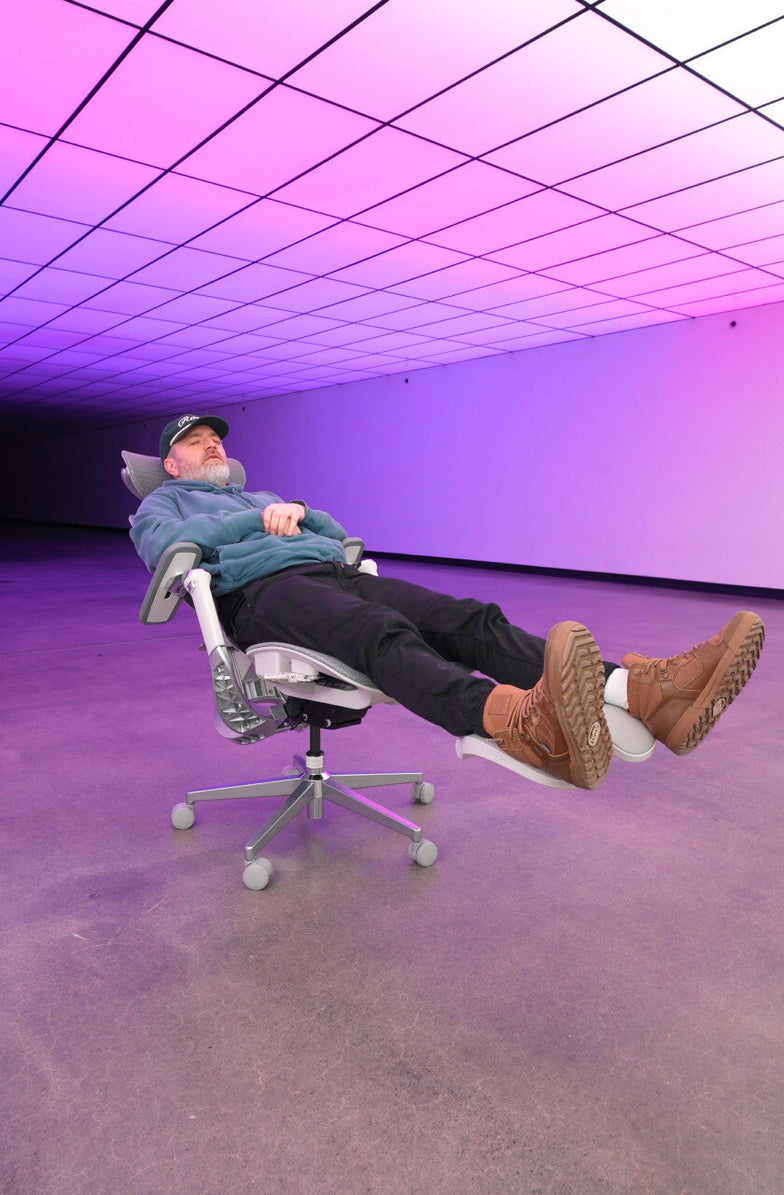 HBADA Guide: How to Remove an Office Chair Gas Cylinder (2026)
If your office chair continues to drop to the floor, cannot maintain its height or simply wobbles a bit, the issue is likely the gas cylinder. The fortunate part is that you don't have to purchase a new chair. You just need to remove office chair gas cylinder and pop in a new one. Obviously it sounds like a hassle to you, right? It's not because most of the people knock it out at home in less than 30 minutes. This HBADA guide walks you through exactly how to remove office chair gas cylinders, step by step.
Why You Might Need to Remove Office Chair Gas Cylinder
Before we begin the steps let's discuss why this occurs. The component of your chair that allows you to adjust the seat up or down is a gas cylinder. Over time, with daily use, it can wear out. Here are some of the more common indications it is time to remove office chair gas cylinder:
Warning Sign
What It Means
Chair slowly sinks while sitting
Nitrogen pressure is leaking from the cylinder
Height lever doesn't respond
Internal valve mechanism has worn out
Hissing sound when you sit down
Active gas leak inside the cylinder
Chair feels loose or unstable
Seal or seat plate connection has degraded
Seat won't lock at your preferred height
Locking valve is failing to hold pressure
If you face any of these, you don't have to worry. This is a frequent problem, and it's easy to correct if you know the steps to take. In fact, our own team has covered why chairs start sinking and how HBADA addresses cylinder longevity if you want a deeper engineering explanation.
What You'll Need Before You Start
You don't need a toolbox full of gear for this. The majority of people already have everything at home. Here's a simple list:
Tool
Purpose
Pipe wrench or large adjustable wrench
Grips and loosens the seat plate from the cylinder
Rubber mallet or regular hammer
Taps the cylinder loose from the base
Block of wood
Protects the chair base from dents during tapping
Work gloves
Protects hands from sharp seat plate edges
A helper (optional)
Holds the base steady while you work
That's really it. You won't need any power tools. It's largely a matter of leveraging and a little patience.
Step-by-Step: How to Remove Office Chair Gas Cylinder
Let's now delve into the actual steps. Take your time with each one, and don't rush the process.
Step 1: Flip the Chair Upside Down
Make sure to flip your chair over so the base is facing up. Place it on a soft surface such as a rug, towel or cardboard in order not to scratch your floor. The position allows you to get access to the base and cylinder below the seat.
Step 2: Locate the Gas Cylinder
Look at the middle of the chair base. You'll see a long metal tube connecting the base to the seat. That tube is the gas cylinder. It is typically wrapped in a plastic sleeve (which you might have to push down or take off first).
Step 3: Secure the Base
Before you go any further, you need to keep the base from spinning. Have someone else hold the base still or keep the base down with your knees. If you are alone, you may also push the base against a wall or against a solid object.
Step 4: Use the Wrench for Leverage
This is the main step in the whole process. Wrap your pipe wrench or adjustable wrench around the top of the cylinder just below the cylinder's connection to the seat plate. Hold securely and twist as you pull the wrench towards yourself. The wrench is used as a lever, and coupled with a pull downward, it should begin to loosen the seat plate from the cylinder.
Step 5: Separate the Seat from the Base
If the seat plate is beginning to loosen, it is generally possible to remove it by hand. If it persists, tap lightly on the surrounding of the seat plate with the mallet holding the wrench in hand. This helps to unplug without harming the components.
Step 6: Remove the Cylinder from the Base
Now flip your attention to the bottom of the chair. The cylinder can be tight and will not fall down in the base if friction holds it up. Tap the block of wood against the base, close to the cylinder, with a hammer. Evenly work around edges rather than blaming one area too much. The cylinder should slide out after a couple of taps.
Step 7: Clean the Base and Seat Plate
Wipe down the inside of the base and seat plate mount prior to installing a new cylinder. Over time dust and old grease can accumulate, and a clean surface can aid in correct installation of the new part.
Installing a New Gas Cylinder
When the old cylinder is taken out successfully, inserting a new cylinder is a lot easier. Just place the new cylinder over the hole in the base and press it down until it clicks into place. Then place the seat plate on top of the cylinder and push down firmly until it locks as well. Flip the chair back over, and test the height adjustment lever to make sure everything works smoothly.
Common Mistakes to Avoid
Although the procedure is straightforward, there are a few minor details that can make the process more difficult than it has to be:
Skipping the wood block: Hitting the metal base directly with a hammer can dent or crack it. Never use any other material as a buffer.
Rushing the twist and pull motion: You may slip and injure your hand, if you pull too fast without twisting. Go slow and steady.
Not securing the base: If the base spins during the operation on the base, it is just a waste of energy and will be a source of frustration. Always stabilize it first.
Forgetting gloves: The edges of the seat plate can be sharp, so wearing gloves will protect hands during the process.
Can You Safely Remove Office Chair Gas Cylinder Off By Yourself?
Yes, it is a safe activity for most to do at home. Gas cylinders are sealed and filled up with gas, but they are designed for regular usage and not to pose a risk. Just so long as you don't prick or squeeze the cylinder open with sharp objects, you're in good shape. Simply continue to twist, pull and tap as mentioned above.
However, if your chair is visibly damaged, rusted or the cylinder is leaking, it is best to stop and get advice from a professional or contact HBADA support.
When Should You Replace the Cylinder Instead of Repairing It?
There is very little that can be done to repair a gas cylinder that is lost. The best thing to do when you notice your chair losing stability or when it is sagging is to remove the office chair gas cylinder and install a new cylinder. It is also impractical to attempt patching or refilling a used cylinder, or replace parts, which are readily available and inexpensive.
Final Thoughts
Knowing how to remove office chair gas cylinder is a useful tip that will help you save time and money. You don't need to replace your entire chair if just one part is the problem. In no time at all, you'll find that your chair is working again with only a wrench and a mallet, and a little patience.
This is one reason why our chairs at HBADA are designed to be easy to maintain, making it easy to keep tasks like this simple and stress-free. Should you encounter any problems along the way, our assistance team is at your service.
FAQs
1. What is the best way to remove office chair gas cylinder without using any special tools?
A simple pipe wrench or adjustable wrench, and a rubber mallet will be used. These tools are in most homes so there's no need to purchase anything special.
2. Do I find it difficult to do on my own?
Not really. Obviously, it requires a certain amount of strength and patience, but it is a pretty straightforward process that most people can do by themselves without having to seek professional assistance.
3. How long does it take to remove office chair gas cylinder?
It takes approximately 15 to 30 minutes, depending on the tightness of the parts and if you have some help.
4. Can I remove the old cylinder then reuse it?
When a gas cylinder is under pressure it normally cannot be reused if it is leaking or if the pressure has dropped. This is to have it replaced with a new one.
5. What happens if the cylinder does not slide out of the base?
Tap evenly around the base with a wood block and hammer. Don't strike one place too forcefully and be sure the chair is stable as you work.
6. Are HBADA replacement cylinders easy to install?
Yes, HBADA cylinders are designed to fit standard chair bases, so installation is quick once you've removed the old part.
Jul 14, 2026
HBADA Guide: How to Remove an Office Chair Gas Cylinder (2026)
If your office chair continues to drop to the floor, cannot maintain its height or simply wobbles a bit, the issue is likely the gas cylinder. The fortunate part is that you don't have to purchase a new chair. You just need to remove office chair gas cylinder and pop in a new one. Obviously it sounds like a hassle to you, right? It's not because most of the people knock it out at home in less than 30 minutes. This HBADA guide walks you through exactly how to remove office chair gas cylinders, step by step.
Why You Might Need to Remove Office Chair Gas Cylinder
Before we begin the steps let's discuss why this occurs. The component of your chair that allows you to adjust the seat up or down is a gas cylinder. Over time, with daily use, it can wear out. Here are some of the more common indications it is time to remove office chair gas cylinder:
Warning Sign
What It Means
Chair slowly sinks while sitting
Nitrogen pressure is leaking from the cylinder
Height lever doesn't respond
Internal valve mechanism has worn out
Hissing sound when you sit down
Active gas leak inside the cylinder
Chair feels loose or unstable
Seal or seat plate connection has degraded
Seat won't lock at your preferred height
Locking valve is failing to hold pressure
If you face any of these, you don't have to worry. This is a frequent problem, and it's easy to correct if you know the steps to take. In fact, our own team has covered why chairs start sinking and how HBADA addresses cylinder longevity if you want a deeper engineering explanation.
What You'll Need Before You Start
You don't need a toolbox full of gear for this. The majority of people already have everything at home. Here's a simple list:
Tool
Purpose
Pipe wrench or large adjustable wrench
Grips and loosens the seat plate from the cylinder
Rubber mallet or regular hammer
Taps the cylinder loose from the base
Block of wood
Protects the chair base from dents during tapping
Work gloves
Protects hands from sharp seat plate edges
A helper (optional)
Holds the base steady while you work
That's really it. You won't need any power tools. It's largely a matter of leveraging and a little patience.
Step-by-Step: How to Remove Office Chair Gas Cylinder
Let's now delve into the actual steps. Take your time with each one, and don't rush the process.
Step 1: Flip the Chair Upside Down
Make sure to flip your chair over so the base is facing up. Place it on a soft surface such as a rug, towel or cardboard in order not to scratch your floor. The position allows you to get access to the base and cylinder below the seat.
Step 2: Locate the Gas Cylinder
Look at the middle of the chair base. You'll see a long metal tube connecting the base to the seat. That tube is the gas cylinder. It is typically wrapped in a plastic sleeve (which you might have to push down or take off first).
Step 3: Secure the Base
Before you go any further, you need to keep the base from spinning. Have someone else hold the base still or keep the base down with your knees. If you are alone, you may also push the base against a wall or against a solid object.
Step 4: Use the Wrench for Leverage
This is the main step in the whole process. Wrap your pipe wrench or adjustable wrench around the top of the cylinder just below the cylinder's connection to the seat plate. Hold securely and twist as you pull the wrench towards yourself. The wrench is used as a lever, and coupled with a pull downward, it should begin to loosen the seat plate from the cylinder.
Step 5: Separate the Seat from the Base
If the seat plate is beginning to loosen, it is generally possible to remove it by hand. If it persists, tap lightly on the surrounding of the seat plate with the mallet holding the wrench in hand. This helps to unplug without harming the components.
Step 6: Remove the Cylinder from the Base
Now flip your attention to the bottom of the chair. The cylinder can be tight and will not fall down in the base if friction holds it up. Tap the block of wood against the base, close to the cylinder, with a hammer. Evenly work around edges rather than blaming one area too much. The cylinder should slide out after a couple of taps.
Step 7: Clean the Base and Seat Plate
Wipe down the inside of the base and seat plate mount prior to installing a new cylinder. Over time dust and old grease can accumulate, and a clean surface can aid in correct installation of the new part.
Installing a New Gas Cylinder
When the old cylinder is taken out successfully, inserting a new cylinder is a lot easier. Just place the new cylinder over the hole in the base and press it down until it clicks into place. Then place the seat plate on top of the cylinder and push down firmly until it locks as well. Flip the chair back over, and test the height adjustment lever to make sure everything works smoothly.
Common Mistakes to Avoid
Although the procedure is straightforward, there are a few minor details that can make the process more difficult than it has to be:
Skipping the wood block: Hitting the metal base directly with a hammer can dent or crack it. Never use any other material as a buffer.
Rushing the twist and pull motion: You may slip and injure your hand, if you pull too fast without twisting. Go slow and steady.
Not securing the base: If the base spins during the operation on the base, it is just a waste of energy and will be a source of frustration. Always stabilize it first.
Forgetting gloves: The edges of the seat plate can be sharp, so wearing gloves will protect hands during the process.
Can You Safely Remove Office Chair Gas Cylinder Off By Yourself?
Yes, it is a safe activity for most to do at home. Gas cylinders are sealed and filled up with gas, but they are designed for regular usage and not to pose a risk. Just so long as you don't prick or squeeze the cylinder open with sharp objects, you're in good shape. Simply continue to twist, pull and tap as mentioned above.
However, if your chair is visibly damaged, rusted or the cylinder is leaking, it is best to stop and get advice from a professional or contact HBADA support.
When Should You Replace the Cylinder Instead of Repairing It?
There is very little that can be done to repair a gas cylinder that is lost. The best thing to do when you notice your chair losing stability or when it is sagging is to remove the office chair gas cylinder and install a new cylinder. It is also impractical to attempt patching or refilling a used cylinder, or replace parts, which are readily available and inexpensive.
Final Thoughts
Knowing how to remove office chair gas cylinder is a useful tip that will help you save time and money. You don't need to replace your entire chair if just one part is the problem. In no time at all, you'll find that your chair is working again with only a wrench and a mallet, and a little patience.
This is one reason why our chairs at HBADA are designed to be easy to maintain, making it easy to keep tasks like this simple and stress-free. Should you encounter any problems along the way, our assistance team is at your service.
FAQs
1. What is the best way to remove office chair gas cylinder without using any special tools?
A simple pipe wrench or adjustable wrench, and a rubber mallet will be used. These tools are in most homes so there's no need to purchase anything special.
2. Do I find it difficult to do on my own?
Not really. Obviously, it requires a certain amount of strength and patience, but it is a pretty straightforward process that most people can do by themselves without having to seek professional assistance.
3. How long does it take to remove office chair gas cylinder?
It takes approximately 15 to 30 minutes, depending on the tightness of the parts and if you have some help.
4. Can I remove the old cylinder then reuse it?
When a gas cylinder is under pressure it normally cannot be reused if it is leaking or if the pressure has dropped. This is to have it replaced with a new one.
5. What happens if the cylinder does not slide out of the base?
Tap evenly around the base with a wood block and hammer. Don't strike one place too forcefully and be sure the chair is stable as you work.
6. Are HBADA replacement cylinders easy to install?
Yes, HBADA cylinders are designed to fit standard chair bases, so installation is quick once you've removed the old part.
Jul 14, 2026
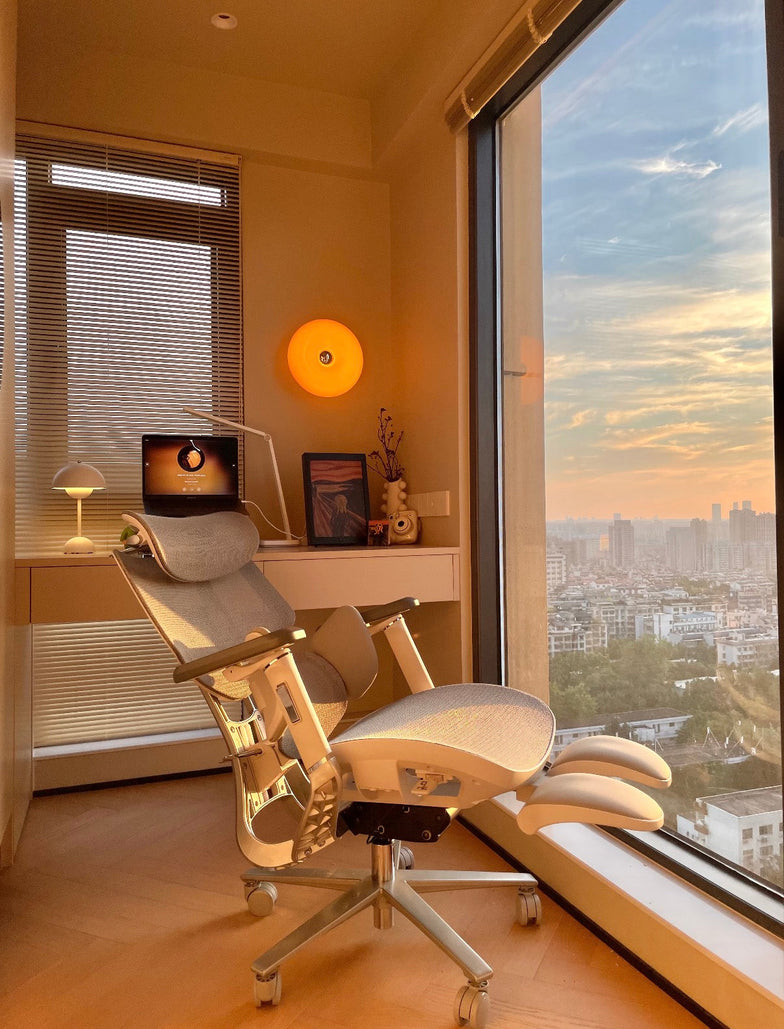 2026 Office Chair Price Guide: How Much Should You Invest for Home Office Chair?
Upgrading your remote workspace often brings up a critical question: Is a premium ergonomic chair truly worth the higher price tag, or will a basic budget seat suffice? Many professionals opt for the cheapest available option, only to discover that budget foam and rigid frames lead to chronic back pain, reduced productivity, and the need to replace them within a year. Understanding the direct link between chair engineering and long-term physical health completely changes how you view this purchase. Our 2026 office chair price guide breaks down exactly what you get at every price tier and helps you determine how much you should invest for a home office chair to achieve permanent physical comfort and secure a high return on your personal health investment.
The True Cost of Cheap Seating vs. Premium Investment
Clinical data indicate that using non-ergonomic seating for more than 4 hours daily accelerates intervertebral disc compression by 30%, resulting in an estimated annual productivity loss and physical therapy costs of $1,200. Investing in commercial-grade biomechanical support from our engineered lineup reverses this trajectory by sustaining neutral pelvic alignment and drastically reducing cumulative spinal load.
The Hidden Health Tax of Budget Chairs
Using cheap office chairs takes a daily toll on your body. These chairs often use low-quality foam and stiff plastic backs that do not support your spine’s natural shape. Without proper support, your lower back slumps, making your core muscles work harder to hold you up. After eight hours, this can lead to muscle inflammation, reduced blood flow to your legs, and ongoing back stiffness, making it harder to focus on your work.
Replacement Frequency and Long-Term ROI
A typical $150 budget chair often breaks down within 12 to 18 months due to issues such as deflating cylinders, worn wheels and flattened foam. If you buy a new cheap chair every year, you could spend $750 over five years, not including extra medical costs from bad posture. On the other hand, investing in a high-quality chair built to last ten years can save you money in the long run by avoiding frequent replacements and reducing health-related expenses.
2026 Office Chair Price Tiers Explained
In 2026, ergonomic chairs fall into three main price ranges: budget models under $200, performance chairs from $200 to $600, and smart therapeutic chairs over $600. Each step up brings better materials, more advanced support features, and improved comfort for longer use.
The Budget Tier (Under $200 / £150)
Chairs under $200 usually offer simple height adjustment and fixed lumbar support. They are made with single-layer mesh and basic foam that loses much of its shape within six months of daily use. While these chairs work for short periods, they lack the adjustments needed for long hours. They are best for occasional use, not for full-time remote work.
The Mid-Range Performance Tier ($200 - $600 / £150 - £450)
Spanning from $200 to $600, the mid-range performance tier integrates heavy-duty aluminum chassis components with dynamic posture tracking. In this bracket, our engineered models feature our patented 3-zone adaptive lumbar support, which utilizes spring-loaded lateral wings to continuously cradle the lower spine during micro-movements. Additionally, advanced ergonomic features, such as our 720-degree omni-adjustable armrests, are now standard, offering unmatched multi-axial relief for shoulder tension by perfectly tracking your forearm pivot. This tier is optimized for professionals seeking a robust, bio-synchronized seating experience that can withstand grueling eight-hour shifts.
Discover the heavy-duty engineering and adaptive relief of our HBADA E3 Pro 2026 Edition.
The Premium & Smart Tier ($600+ / £450+)
At $600 and above, seating transcends basic mechanical support, becoming a fully automated health ecosystem. Devices in this category operate as an intelligent spinal decompression office chair, delivering built-in bionic massages, active thermal therapy, and predictive tracking. This bracket is defined by our flagship HBADA AI-Powered x7, representing the absolute best ergonomic office chair 2026 has seen. It is designed specifically for tech-forward power users who demand active, zero-latency physical recovery right at their desk.
How Much Should You Invest for a Home Office Chair?
To get the best value for your health, experts suggest spending at least $400 on a chair if you sit for more than five hours a day. Your personal needs, such as back or neck issues, will help you decide whether you need a chair with manual adjustments or one with smart, automated support.
Assessing Your Daily Seat Time
The best way to set your chair budget is to count how many hours you sit each day. After four hours, the pressure on your lower back rises quickly. If you often work 8 to 10 hours at your desk, it is important to choose a high-quality chair with breathable mesh and an adjustable recline to keep you comfortable and prevent overheating.
Factoring in Pre-Existing Health Needs
For individuals actively managing chronic joint stiffness, sciatica, or repetitive strain injuries (RSI), upgrading your seating is not a luxury, it is a strict medical necessity. An ergonomic chair upgrade for back pain in the premium tier pays for itself almost immediately by mitigating the need for ongoing physical therapy appointments, chiropractic adjustments, and expensive ergonomic accessories like external back braces.
Justifying the Premium Upgrade: The HBADA AI-Powered x7
The HBADA AI-Powered x7 revolutionizes the premium workspace sector by using microsecond-level Hall magnetic pressure sensors to actively shift its lumbar module by up to 50mm in real time. This transition from passive mechanical resistance to predictive algorithmic calibration ensures zero-latency postural correction for high-intensity professionals seeking the ultimate investment in physical health.
Replacing Manual Adjustments with AI Technology
Traditional ergonomic chairs require users to constantly reach for manual tension levers and adjustment dials to fine-tune their spinal support. This manual process often results in incorrect calibration and user frustration. By upgrading to an office chair with active lumbar tracking, an automotive-grade internal compute chip assumes full responsibility for your physical alignment. As you lean forward to type or tilt backward during a conference call, the internal dual-axis motors detect the change in pressure and move the lumbar pad to fill the gap, ensuring absolute spinal safety without requiring any manual input.
The Cost Savings of Built-In Therapy
When evaluating the higher initial purchase price of the smart tier, consumers must calculate the consolidated financial value of integrated recovery tools. The smart chassis features an 8D Bionic Hand Massage system and 129°F graphene infrared heat therapy, providing clinical-grade deep tissue relief on demand. Over a three-year lifecycle, the cost of this chair is significantly lower than the cumulative expense of purchasing independent massagers and heating pads, and booking professional massage therapy sessions to treat desk-induced muscle fatigue.
Explore the clinical-grade automated therapy features inside our flagship smart series.
Price vs. Performance Matrix Across Tiers
Compared over five years, premium smart chairs give you a 45% better return on investment than budget options. This is because you avoid frequent replacements and lower your health costs. Our data shows the specific benefits you get at each price point.
Investment Tier
Core Lumbar Technology
Upper Body Tracking
Expected Lifespan
Cost-Benefit Analysis
Budget ($150)
Fixed Static Cushion
Fixed Plastic Armrests
12 - 18 Months
Requires frequent replacement; high physical fatigue cost.
Mid-Range ($450)
3-Zone Adaptive Lumbar Support
720 Degree Omni Adjustable Armrests
5 - 8 Years
High durability; exceptional manual mechanical ROI.
Premium ($800+)
Motorized Smart Active Tracking
4-Way Dual-Axis Neck Cradle
10+ Years
Maximum health yield; eliminates manual calibration entirely.
UK Workplace Compliance and Regulatory Financial Impact
According to the UK Health and Safety Executive (HSE), employers and remote professionals must comply with the Health and Safety (Display Screen Equipment) Regulations 1992 by utilizing highly adjustable, stable seating to mitigate industrial musculoskeletal disorders. Procuring certified ergonomic furniture prevents costly non-compliance liabilities while actively suppressing the physiological hazards of prolonged sedentary work. For corporate procurement managers outfitting remote teams, investing in heavily vetted, BIFMA-certified seating from HBADA guarantees regulatory compliance, shields the organization from potential compensation claims related to repetitive strain injuries, and demonstrably boosts productivity in the local workforce.
FAQ
Is spending over $500 on an office chair actually worth it for remote workers?
Yes. Over a 5- to 10-year lifespan, a $500+ premium chair costs pennies a day. This upfront investment directly prevents the severe long-term medical expenses, lost productivity, and chronic lumbar degradation caused by cheap, unsupportive foam seating.
How long should a premium ergonomic chair last before needing to be replaced?
A commercial-grade premium chair built with aircraft-grade aluminum and CloudMesh is engineered to last over a decade. Unlike budget models with degrading foam, our BIFMA-certified mechanical joints and gas cylinders withstand years of heavy, daily stress without failure.
Does the advanced tech in the HBADA AI-Powered x7 require expensive maintenance?
No, the intelligent systems are virtually maintenance-free. The tracking motors and sensors are sealed in a dust-proof casing to prevent environmental wear. The 5,200 mAh lithium-ion battery requires only basic magnetic charging, similar to maintaining a premium smartphone.
Are premium office chairs tax-deductible for home office workers in the UK?
In many cases, yes. UK sole traders can often claim an ergonomic desk chair as an allowable capital allowance. Remote employees should consult their HR department or HMRC regarding DSE compliance reimbursements and eligibility for personal tax relief.
Jul 06, 2026
2026 Office Chair Price Guide: How Much Should You Invest for Home Office Chair?
Upgrading your remote workspace often brings up a critical question: Is a premium ergonomic chair truly worth the higher price tag, or will a basic budget seat suffice? Many professionals opt for the cheapest available option, only to discover that budget foam and rigid frames lead to chronic back pain, reduced productivity, and the need to replace them within a year. Understanding the direct link between chair engineering and long-term physical health completely changes how you view this purchase. Our 2026 office chair price guide breaks down exactly what you get at every price tier and helps you determine how much you should invest for a home office chair to achieve permanent physical comfort and secure a high return on your personal health investment.
The True Cost of Cheap Seating vs. Premium Investment
Clinical data indicate that using non-ergonomic seating for more than 4 hours daily accelerates intervertebral disc compression by 30%, resulting in an estimated annual productivity loss and physical therapy costs of $1,200. Investing in commercial-grade biomechanical support from our engineered lineup reverses this trajectory by sustaining neutral pelvic alignment and drastically reducing cumulative spinal load.
The Hidden Health Tax of Budget Chairs
Using cheap office chairs takes a daily toll on your body. These chairs often use low-quality foam and stiff plastic backs that do not support your spine’s natural shape. Without proper support, your lower back slumps, making your core muscles work harder to hold you up. After eight hours, this can lead to muscle inflammation, reduced blood flow to your legs, and ongoing back stiffness, making it harder to focus on your work.
Replacement Frequency and Long-Term ROI
A typical $150 budget chair often breaks down within 12 to 18 months due to issues such as deflating cylinders, worn wheels and flattened foam. If you buy a new cheap chair every year, you could spend $750 over five years, not including extra medical costs from bad posture. On the other hand, investing in a high-quality chair built to last ten years can save you money in the long run by avoiding frequent replacements and reducing health-related expenses.
2026 Office Chair Price Tiers Explained
In 2026, ergonomic chairs fall into three main price ranges: budget models under $200, performance chairs from $200 to $600, and smart therapeutic chairs over $600. Each step up brings better materials, more advanced support features, and improved comfort for longer use.
The Budget Tier (Under $200 / £150)
Chairs under $200 usually offer simple height adjustment and fixed lumbar support. They are made with single-layer mesh and basic foam that loses much of its shape within six months of daily use. While these chairs work for short periods, they lack the adjustments needed for long hours. They are best for occasional use, not for full-time remote work.
The Mid-Range Performance Tier ($200 - $600 / £150 - £450)
Spanning from $200 to $600, the mid-range performance tier integrates heavy-duty aluminum chassis components with dynamic posture tracking. In this bracket, our engineered models feature our patented 3-zone adaptive lumbar support, which utilizes spring-loaded lateral wings to continuously cradle the lower spine during micro-movements. Additionally, advanced ergonomic features, such as our 720-degree omni-adjustable armrests, are now standard, offering unmatched multi-axial relief for shoulder tension by perfectly tracking your forearm pivot. This tier is optimized for professionals seeking a robust, bio-synchronized seating experience that can withstand grueling eight-hour shifts.
Discover the heavy-duty engineering and adaptive relief of our HBADA E3 Pro 2026 Edition.
The Premium & Smart Tier ($600+ / £450+)
At $600 and above, seating transcends basic mechanical support, becoming a fully automated health ecosystem. Devices in this category operate as an intelligent spinal decompression office chair, delivering built-in bionic massages, active thermal therapy, and predictive tracking. This bracket is defined by our flagship HBADA AI-Powered x7, representing the absolute best ergonomic office chair 2026 has seen. It is designed specifically for tech-forward power users who demand active, zero-latency physical recovery right at their desk.
How Much Should You Invest for a Home Office Chair?
To get the best value for your health, experts suggest spending at least $400 on a chair if you sit for more than five hours a day. Your personal needs, such as back or neck issues, will help you decide whether you need a chair with manual adjustments or one with smart, automated support.
Assessing Your Daily Seat Time
The best way to set your chair budget is to count how many hours you sit each day. After four hours, the pressure on your lower back rises quickly. If you often work 8 to 10 hours at your desk, it is important to choose a high-quality chair with breathable mesh and an adjustable recline to keep you comfortable and prevent overheating.
Factoring in Pre-Existing Health Needs
For individuals actively managing chronic joint stiffness, sciatica, or repetitive strain injuries (RSI), upgrading your seating is not a luxury, it is a strict medical necessity. An ergonomic chair upgrade for back pain in the premium tier pays for itself almost immediately by mitigating the need for ongoing physical therapy appointments, chiropractic adjustments, and expensive ergonomic accessories like external back braces.
Justifying the Premium Upgrade: The HBADA AI-Powered x7
The HBADA AI-Powered x7 revolutionizes the premium workspace sector by using microsecond-level Hall magnetic pressure sensors to actively shift its lumbar module by up to 50mm in real time. This transition from passive mechanical resistance to predictive algorithmic calibration ensures zero-latency postural correction for high-intensity professionals seeking the ultimate investment in physical health.
Replacing Manual Adjustments with AI Technology
Traditional ergonomic chairs require users to constantly reach for manual tension levers and adjustment dials to fine-tune their spinal support. This manual process often results in incorrect calibration and user frustration. By upgrading to an office chair with active lumbar tracking, an automotive-grade internal compute chip assumes full responsibility for your physical alignment. As you lean forward to type or tilt backward during a conference call, the internal dual-axis motors detect the change in pressure and move the lumbar pad to fill the gap, ensuring absolute spinal safety without requiring any manual input.
The Cost Savings of Built-In Therapy
When evaluating the higher initial purchase price of the smart tier, consumers must calculate the consolidated financial value of integrated recovery tools. The smart chassis features an 8D Bionic Hand Massage system and 129°F graphene infrared heat therapy, providing clinical-grade deep tissue relief on demand. Over a three-year lifecycle, the cost of this chair is significantly lower than the cumulative expense of purchasing independent massagers and heating pads, and booking professional massage therapy sessions to treat desk-induced muscle fatigue.
Explore the clinical-grade automated therapy features inside our flagship smart series.
Price vs. Performance Matrix Across Tiers
Compared over five years, premium smart chairs give you a 45% better return on investment than budget options. This is because you avoid frequent replacements and lower your health costs. Our data shows the specific benefits you get at each price point.
Investment Tier
Core Lumbar Technology
Upper Body Tracking
Expected Lifespan
Cost-Benefit Analysis
Budget ($150)
Fixed Static Cushion
Fixed Plastic Armrests
12 - 18 Months
Requires frequent replacement; high physical fatigue cost.
Mid-Range ($450)
3-Zone Adaptive Lumbar Support
720 Degree Omni Adjustable Armrests
5 - 8 Years
High durability; exceptional manual mechanical ROI.
Premium ($800+)
Motorized Smart Active Tracking
4-Way Dual-Axis Neck Cradle
10+ Years
Maximum health yield; eliminates manual calibration entirely.
UK Workplace Compliance and Regulatory Financial Impact
According to the UK Health and Safety Executive (HSE), employers and remote professionals must comply with the Health and Safety (Display Screen Equipment) Regulations 1992 by utilizing highly adjustable, stable seating to mitigate industrial musculoskeletal disorders. Procuring certified ergonomic furniture prevents costly non-compliance liabilities while actively suppressing the physiological hazards of prolonged sedentary work. For corporate procurement managers outfitting remote teams, investing in heavily vetted, BIFMA-certified seating from HBADA guarantees regulatory compliance, shields the organization from potential compensation claims related to repetitive strain injuries, and demonstrably boosts productivity in the local workforce.
FAQ
Is spending over $500 on an office chair actually worth it for remote workers?
Yes. Over a 5- to 10-year lifespan, a $500+ premium chair costs pennies a day. This upfront investment directly prevents the severe long-term medical expenses, lost productivity, and chronic lumbar degradation caused by cheap, unsupportive foam seating.
How long should a premium ergonomic chair last before needing to be replaced?
A commercial-grade premium chair built with aircraft-grade aluminum and CloudMesh is engineered to last over a decade. Unlike budget models with degrading foam, our BIFMA-certified mechanical joints and gas cylinders withstand years of heavy, daily stress without failure.
Does the advanced tech in the HBADA AI-Powered x7 require expensive maintenance?
No, the intelligent systems are virtually maintenance-free. The tracking motors and sensors are sealed in a dust-proof casing to prevent environmental wear. The 5,200 mAh lithium-ion battery requires only basic magnetic charging, similar to maintaining a premium smartphone.
Are premium office chairs tax-deductible for home office workers in the UK?
In many cases, yes. UK sole traders can often claim an ergonomic desk chair as an allowable capital allowance. Remote employees should consult their HR department or HMRC regarding DSE compliance reimbursements and eligibility for personal tax relief.
Jul 06, 2026
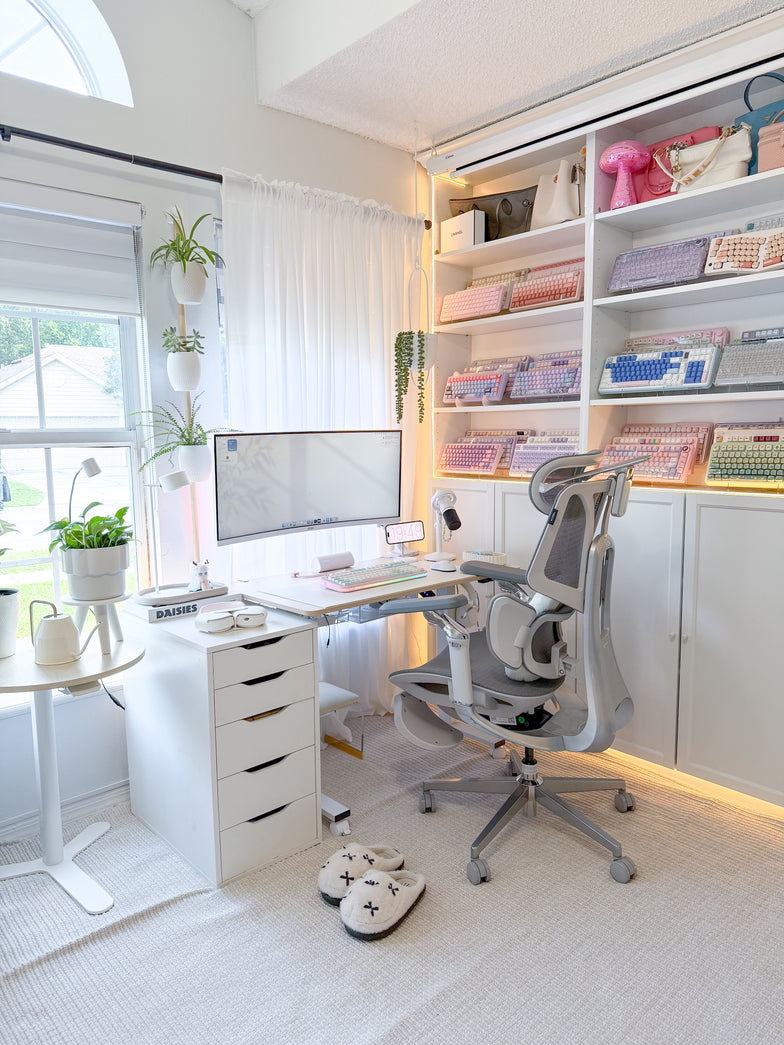 How Do I Know If My Office Chair Fits Me Correctly?
Your office chair is a key part of your workspace, but many people use one that doesn’t fit their bodies. A chair that doesn’t fit can cause more than just short-term discomfort—it can lead to long-term pain and tiredness. If you end your day with a sore neck or aching back, it’s time to check your setup. Learning how to tell if your chair fits is the first step toward a healthier, more productive workday.
Signs Your Office Chair Does Not Fit You
Many people wait until they feel pain before realizing something is wrong, but there are earlier warning signs to watch for. If you notice any of these, your chair might not be the right size or properly adjusted:
· The Perch: You find yourself sitting on the very edge of the seat because the backrest feels too far away.
· The Dangling Feet: Your heels don’t firmly touch the floor, or you find yourself crossing your legs to find balance.
· The Shoulder Shrug: Your armrests are so high that your shoulders stay hunched toward your ears.
· Circulation Cut-off: You feel a “pins and needles” sensation in your thighs or calves after an hour of sitting.
Recognizing these signs early can help you avoid long-term discomfort.
The 4-Step Ergonomic Chair Fit Guide for Proper Posture
To sit with good posture, you need to adjust your chair in a certain order. Use this ergonomic chair guide to set up your workspace.
1. Seat Height: The Foundation of Blood Flow
Begin by making sure your feet are flat on the floor. An ergonomic chair with adjustable seat height and depth lets you do this while keeping your knees at 90 degrees. If your knees are higher than your hips, there’s too much pressure on your sit-bones. If they’re lower, your lower back is under strain.
2. Seat Depth: Protecting Your Knees and Hips
Seat depth is often overlooked when setting up your chair. You should be able to sit all the way back so your spine touches the lumbar support, with about two to three inches (about a fist’s width) between the seat edge and the back of your knees. If the seat presses against your knees, it can cut off circulation. If the gap is too big, your thighs won’t get enough support.
3. Lumbar Support: Maintaining the Natural Curve
It’s important to adjust your chair for lower back support to prevent slouching. The lumbar curve should fit right into the small of your back, just above your belt line. If it’s too high or too low, it can push your spine out of its natural position, which is often why a chair feels uncomfortable after long use.
4. Armrest Alignment: Offloading Shoulder Weight
Set your armrests so your elbows are bent at 90 degrees and your shoulders stay relaxed. If the armrests are too wide or too high, they can cause neck and upper back tension. A good ergonomic chair lets you move the armrests inward to support your forearms while you type.
Advanced Solutions for Multi-Point and AI Adjustments
Today, you don’t have to struggle with manual knobs. High-quality chairs can now adjust themselves for you.
The Power of a Multi-Point Adjustment System
A high-quality ergonomic chair with a multi-point adjustment system lets you control every part that comes into contact with your body. This is important for people who sit at a computer, because the chair can move with you as you switch from typing to leaning back. Our design uses “Bio-Synchronization,” so the chair mirrors your body's natural movements.
HBADA AI-Powered x7: The Ultimate Fit
If you’re tired of making manual adjustments, the HBADA AI-Powered x7 is a new solution. It uses sensors to detect your body type and sitting habits in real time, automatically adjusting the lumbar support and seat depth to keep you in the right position. This helps fix poor posture caused by an ill-fitting chair by correcting your alignment before you feel any pain.
Comparing Support Levels for Your Best Fit
Feature
Standard Office Chair
Fully Adjustable Ergonomic
Hbada AI-Powered x7
Seat Depth
Fixed
Manual Adjustment
Auto-Adaptive
Lumbar Support
Static Pad
Height Adjustable
AI-Synchronized Tracking
Armrests
1D (Height)
4D (Height, Width, Depth, Pivot)
720° Bio-Sync Arms
User Fit
General
Custom Tailored
Proactive Real-Time Fit
Frequently Asked Questions (FAQ)
Q: How do I adjust my chair if I’m between sizes?A: Choose a chair with an adjustable seat height and depth. Adjust the seat forward or back to suit your leg length.
Q: Why does my back still hurt even after I adjusted my chair?A: Muscles need time to adjust to a better posture. If pain persists, your chair may not offer enough support.
Q: Can a footrest help if my chair doesn’t go low enough?A: Yes. If you’ve set your seat height so your arms are level with the desk but your feet don’t touch the floor, a footrest is a good temporary fix. For a long-term solution, look for an ergonomic chair that fits your height.
Q: What is the best way to fix shoulder pain from my chair?A: Make sure your armrests are set at the right height. When your arms are supported, the pressure is taken off your shoulder muscles. This is the quickest way to fix upper-body pain caused by your office chair.
Conclusion
Don’t Compromise on Your Comfort
Learning how to adjust your office chair is more than just convenient—it’s important for your long-term health. The right chair helps you feel less tired, work better, and avoid pain that impacts life outside of work. If your chair isn’t adjustable, consider upgrading to a fully adjustable ergonomic option, like the HBADA AI-Powered x7, which adapts to your needs and demonstrates the benefits of a good fit. Your body is valuable, so ensure your chair supports it.
Jul 03, 2026
How Do I Know If My Office Chair Fits Me Correctly?
Your office chair is a key part of your workspace, but many people use one that doesn’t fit their bodies. A chair that doesn’t fit can cause more than just short-term discomfort—it can lead to long-term pain and tiredness. If you end your day with a sore neck or aching back, it’s time to check your setup. Learning how to tell if your chair fits is the first step toward a healthier, more productive workday.
Signs Your Office Chair Does Not Fit You
Many people wait until they feel pain before realizing something is wrong, but there are earlier warning signs to watch for. If you notice any of these, your chair might not be the right size or properly adjusted:
· The Perch: You find yourself sitting on the very edge of the seat because the backrest feels too far away.
· The Dangling Feet: Your heels don’t firmly touch the floor, or you find yourself crossing your legs to find balance.
· The Shoulder Shrug: Your armrests are so high that your shoulders stay hunched toward your ears.
· Circulation Cut-off: You feel a “pins and needles” sensation in your thighs or calves after an hour of sitting.
Recognizing these signs early can help you avoid long-term discomfort.
The 4-Step Ergonomic Chair Fit Guide for Proper Posture
To sit with good posture, you need to adjust your chair in a certain order. Use this ergonomic chair guide to set up your workspace.
1. Seat Height: The Foundation of Blood Flow
Begin by making sure your feet are flat on the floor. An ergonomic chair with adjustable seat height and depth lets you do this while keeping your knees at 90 degrees. If your knees are higher than your hips, there’s too much pressure on your sit-bones. If they’re lower, your lower back is under strain.
2. Seat Depth: Protecting Your Knees and Hips
Seat depth is often overlooked when setting up your chair. You should be able to sit all the way back so your spine touches the lumbar support, with about two to three inches (about a fist’s width) between the seat edge and the back of your knees. If the seat presses against your knees, it can cut off circulation. If the gap is too big, your thighs won’t get enough support.
3. Lumbar Support: Maintaining the Natural Curve
It’s important to adjust your chair for lower back support to prevent slouching. The lumbar curve should fit right into the small of your back, just above your belt line. If it’s too high or too low, it can push your spine out of its natural position, which is often why a chair feels uncomfortable after long use.
4. Armrest Alignment: Offloading Shoulder Weight
Set your armrests so your elbows are bent at 90 degrees and your shoulders stay relaxed. If the armrests are too wide or too high, they can cause neck and upper back tension. A good ergonomic chair lets you move the armrests inward to support your forearms while you type.
Advanced Solutions for Multi-Point and AI Adjustments
Today, you don’t have to struggle with manual knobs. High-quality chairs can now adjust themselves for you.
The Power of a Multi-Point Adjustment System
A high-quality ergonomic chair with a multi-point adjustment system lets you control every part that comes into contact with your body. This is important for people who sit at a computer, because the chair can move with you as you switch from typing to leaning back. Our design uses “Bio-Synchronization,” so the chair mirrors your body's natural movements.
HBADA AI-Powered x7: The Ultimate Fit
If you’re tired of making manual adjustments, the HBADA AI-Powered x7 is a new solution. It uses sensors to detect your body type and sitting habits in real time, automatically adjusting the lumbar support and seat depth to keep you in the right position. This helps fix poor posture caused by an ill-fitting chair by correcting your alignment before you feel any pain.
Comparing Support Levels for Your Best Fit
Feature
Standard Office Chair
Fully Adjustable Ergonomic
Hbada AI-Powered x7
Seat Depth
Fixed
Manual Adjustment
Auto-Adaptive
Lumbar Support
Static Pad
Height Adjustable
AI-Synchronized Tracking
Armrests
1D (Height)
4D (Height, Width, Depth, Pivot)
720° Bio-Sync Arms
User Fit
General
Custom Tailored
Proactive Real-Time Fit
Frequently Asked Questions (FAQ)
Q: How do I adjust my chair if I’m between sizes?A: Choose a chair with an adjustable seat height and depth. Adjust the seat forward or back to suit your leg length.
Q: Why does my back still hurt even after I adjusted my chair?A: Muscles need time to adjust to a better posture. If pain persists, your chair may not offer enough support.
Q: Can a footrest help if my chair doesn’t go low enough?A: Yes. If you’ve set your seat height so your arms are level with the desk but your feet don’t touch the floor, a footrest is a good temporary fix. For a long-term solution, look for an ergonomic chair that fits your height.
Q: What is the best way to fix shoulder pain from my chair?A: Make sure your armrests are set at the right height. When your arms are supported, the pressure is taken off your shoulder muscles. This is the quickest way to fix upper-body pain caused by your office chair.
Conclusion
Don’t Compromise on Your Comfort
Learning how to adjust your office chair is more than just convenient—it’s important for your long-term health. The right chair helps you feel less tired, work better, and avoid pain that impacts life outside of work. If your chair isn’t adjustable, consider upgrading to a fully adjustable ergonomic option, like the HBADA AI-Powered x7, which adapts to your needs and demonstrates the benefits of a good fit. Your body is valuable, so ensure your chair supports it.
Jul 03, 2026
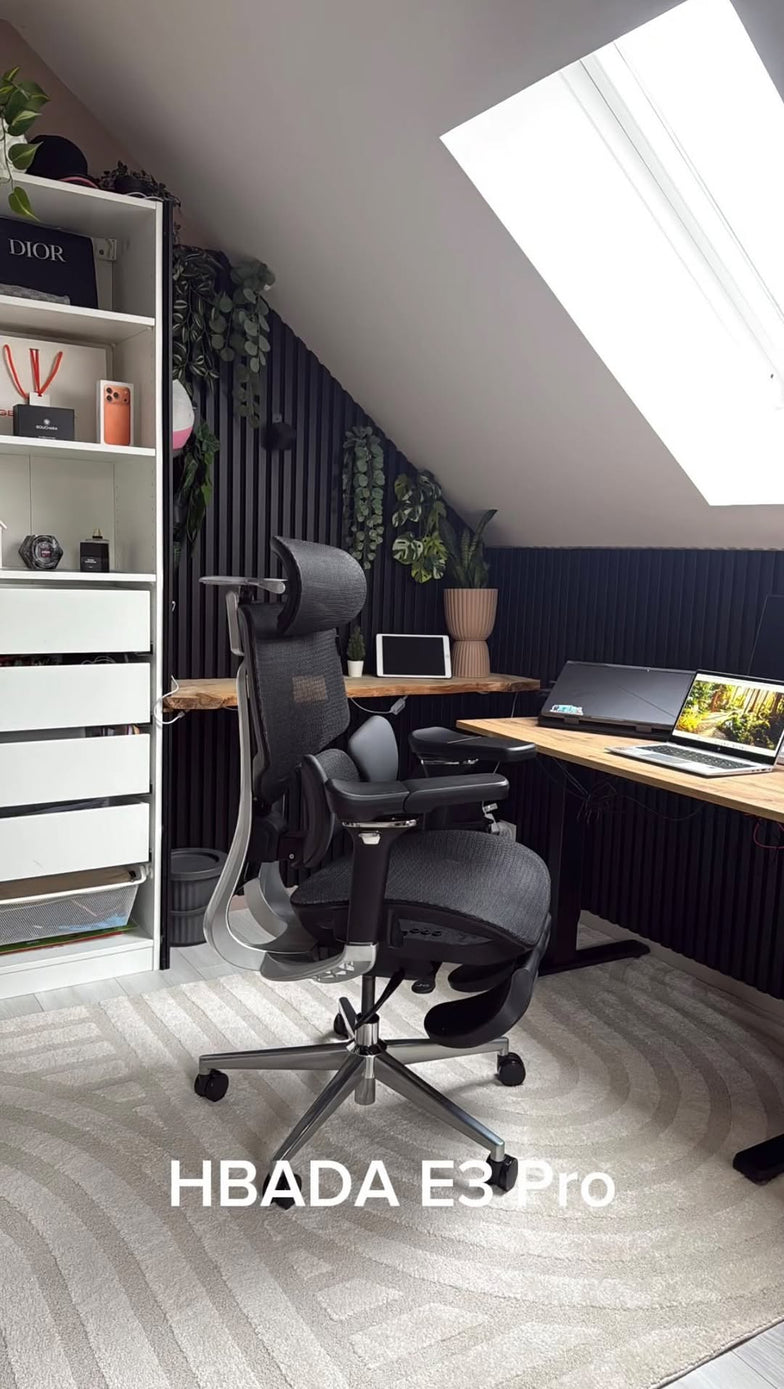 How to Choose the Right Lumbar Support for Your Body Type
Finding the perfect office chair isn’t just about the cushion; it’s about how the backrest interacts with your unique anatomy. A lumbar support that feels like a dream to a petite user might feel like a painful lump to someone with a larger frame. If you want to eliminate midday backaches, you must learn how to choose lumbar support that suits your body type. Let’s explore how to match your physical profile with the right ergonomic technology to ensure lasting comfort.
Why One-Size-Fits-All Lumbar Support Fails
Most office chairs have a fixed curve in the backrest. However, everyone’s spine is different, and the lower vertebrae sit at different heights depending on your torso and hips. If the support is in the wrong spot, it can cause muscle fatigue and poor posture. To solve this, look for an ergonomic chair with adjustable lumbar support or one made from flexible materials.
Lumbar Support for Posture Correction and Spinal Health
The primary goal of any backrest is to maintain the natural inward curve of your lower spine. Proper lumbar support for posture correction and spinal health acts as a physical reminder for your body to sit upright. Filling the gap between your lower back and the chair, it prevents the “C-slouch” that compresses spinal discs. For the best results, look for a high-back ergonomic chair that supports the entire length of your back, not just the base.
Identifying Your Body Type and Support Needs
To choose the best office chair for your body, start by thinking about your height and body shape.
1. Petite and Average Frames
If you have a shorter torso, the depth of the lumbar support matters more than its height. Too much support can push you forward in your seat. Look for a chair with adjustable lumbar height so you can set the support right at the small of your back.
2. Tall and Large Frames
Finding an ergonomic chair for tall people with lumbar support can be a challenge. Tall users often find that standard lumbar “humps” hit them at the top of the pelvis rather than the lower back. A high-back ergonomic chair for spinal alignment is non-negotiable here. It ensures the lumbar zone can be raised high enough to comfortably reach the L1-L5 vertebrae.
3. Users with Existing Chronic Pain
If you already have back pain, you need an ergonomic chair that does more than just adjust in height. Look for a chair that helps spread your weight away from your spine to reduce pressure and discomfort.
The Solution for 3-Zone Dynamic Lumbar Support
Most chairs only support your back in one spot. Our 3-zone dynamic lumbar support chair is different. It divides the backrest into three sections that move independently to better fit your back.
Benefits of the Best Ergonomic Chair with 3-Zone Lumbar Support
A chair with 3-zone lumbar support provides full back support. The middle part supports your spine, while the sides help the muscles on each side of your back. This design works especially well for people with wider hips or backs, since the side wings adjust to fit your shape.
Advanced Technology, Adaptive Tracking and AI
By 2026, office chairs will no longer rely on manual knobs. If you want a chair, you can adjust it once and not worry about it; adaptive technology is the way to go.
The Adaptive Lumbar Tracking Ergonomic Chair
An adaptive lumbar tracking chair uses sensors to keep the support in contact with your back as you move. Whether you lean forward to type or lean back to relax, the support stays with you. This way, your lower back is always protected.
Hbada AI-Powered x7: The Peak of Personalization
For the best fit for any body type, we suggest the Hbada AI-Powered x7. It uses sensors to track your posture in real time. No matter your height, the chair automatically changes the lumbar support to match your needs. It helps you stay in the best position for your back.
Comparison of Support Technologies
Feature
Standard Ergonomic
3-Zone Dynamic
Hbada AI-Powered x7
Adjustment Type
Manual Knob/Slide
Flex-Wing Gravity
Fully Automated
Body Type Fit
Limited
Broad Range
Universal Adaptation
Support Feel
Firm/Static
Wrap-around/Supportive
Adaptive/Bio-sync
Best For
Short-term use
Best for back pain
Long-term Spinal Health
Frequently Asked Questions (FAQ)
Q: How do I know if the lumbar support is in the right spot?A: The lumbar support should fit comfortably in the curve of your lower back, just above your belt. It should feel firm but not hurt. If your shoulders are pushed forward or your feet lift off the floor, the support is probably too low or too strong.
Q: Is a mesh backrest better than foam for lumbar support?A: Mesh is usually better for fitting different body types. Foam can lose its shape over time, but strong mesh stays supportive and feels more flexible. Mesh chairs also let air flow through and fit your body’s shape more naturally.
Q: Does lumbar support really help with sciatica?A: Yes. Sciatica often happens when discs in your lower back are pressed too much. An adaptive lumbar tracking chair can help take pressure off those discs, which may ease the nerve pain that causes leg discomfort.
Q: Why should tall people avoid “mid-back” chairs?A: Mid-back chairs usually have lumbar support that sits too low for tall people, which can make you hunch over. Tall users should pick a high-back ergonomic chair so the headrest and lumbar support fit their height.
Conclusion
Everyone’s body is different, so your office chair should fit you. The right lumbar support can mean the difference between feeling good at the end of the day and having back pain. Look for features such as 3-zone support and adaptive tracking to help keep your spine healthy. Don’t settle for a chair that doesn’t fit—choose one like the Hbada AI-Powered x7 that adjusts to you. Your back deserves the best support.
Jul 03, 2026
How to Choose the Right Lumbar Support for Your Body Type
Finding the perfect office chair isn’t just about the cushion; it’s about how the backrest interacts with your unique anatomy. A lumbar support that feels like a dream to a petite user might feel like a painful lump to someone with a larger frame. If you want to eliminate midday backaches, you must learn how to choose lumbar support that suits your body type. Let’s explore how to match your physical profile with the right ergonomic technology to ensure lasting comfort.
Why One-Size-Fits-All Lumbar Support Fails
Most office chairs have a fixed curve in the backrest. However, everyone’s spine is different, and the lower vertebrae sit at different heights depending on your torso and hips. If the support is in the wrong spot, it can cause muscle fatigue and poor posture. To solve this, look for an ergonomic chair with adjustable lumbar support or one made from flexible materials.
Lumbar Support for Posture Correction and Spinal Health
The primary goal of any backrest is to maintain the natural inward curve of your lower spine. Proper lumbar support for posture correction and spinal health acts as a physical reminder for your body to sit upright. Filling the gap between your lower back and the chair, it prevents the “C-slouch” that compresses spinal discs. For the best results, look for a high-back ergonomic chair that supports the entire length of your back, not just the base.
Identifying Your Body Type and Support Needs
To choose the best office chair for your body, start by thinking about your height and body shape.
1. Petite and Average Frames
If you have a shorter torso, the depth of the lumbar support matters more than its height. Too much support can push you forward in your seat. Look for a chair with adjustable lumbar height so you can set the support right at the small of your back.
2. Tall and Large Frames
Finding an ergonomic chair for tall people with lumbar support can be a challenge. Tall users often find that standard lumbar “humps” hit them at the top of the pelvis rather than the lower back. A high-back ergonomic chair for spinal alignment is non-negotiable here. It ensures the lumbar zone can be raised high enough to comfortably reach the L1-L5 vertebrae.
3. Users with Existing Chronic Pain
If you already have back pain, you need an ergonomic chair that does more than just adjust in height. Look for a chair that helps spread your weight away from your spine to reduce pressure and discomfort.
The Solution for 3-Zone Dynamic Lumbar Support
Most chairs only support your back in one spot. Our 3-zone dynamic lumbar support chair is different. It divides the backrest into three sections that move independently to better fit your back.
Benefits of the Best Ergonomic Chair with 3-Zone Lumbar Support
A chair with 3-zone lumbar support provides full back support. The middle part supports your spine, while the sides help the muscles on each side of your back. This design works especially well for people with wider hips or backs, since the side wings adjust to fit your shape.
Advanced Technology, Adaptive Tracking and AI
By 2026, office chairs will no longer rely on manual knobs. If you want a chair, you can adjust it once and not worry about it; adaptive technology is the way to go.
The Adaptive Lumbar Tracking Ergonomic Chair
An adaptive lumbar tracking chair uses sensors to keep the support in contact with your back as you move. Whether you lean forward to type or lean back to relax, the support stays with you. This way, your lower back is always protected.
Hbada AI-Powered x7: The Peak of Personalization
For the best fit for any body type, we suggest the Hbada AI-Powered x7. It uses sensors to track your posture in real time. No matter your height, the chair automatically changes the lumbar support to match your needs. It helps you stay in the best position for your back.
Comparison of Support Technologies
Feature
Standard Ergonomic
3-Zone Dynamic
Hbada AI-Powered x7
Adjustment Type
Manual Knob/Slide
Flex-Wing Gravity
Fully Automated
Body Type Fit
Limited
Broad Range
Universal Adaptation
Support Feel
Firm/Static
Wrap-around/Supportive
Adaptive/Bio-sync
Best For
Short-term use
Best for back pain
Long-term Spinal Health
Frequently Asked Questions (FAQ)
Q: How do I know if the lumbar support is in the right spot?A: The lumbar support should fit comfortably in the curve of your lower back, just above your belt. It should feel firm but not hurt. If your shoulders are pushed forward or your feet lift off the floor, the support is probably too low or too strong.
Q: Is a mesh backrest better than foam for lumbar support?A: Mesh is usually better for fitting different body types. Foam can lose its shape over time, but strong mesh stays supportive and feels more flexible. Mesh chairs also let air flow through and fit your body’s shape more naturally.
Q: Does lumbar support really help with sciatica?A: Yes. Sciatica often happens when discs in your lower back are pressed too much. An adaptive lumbar tracking chair can help take pressure off those discs, which may ease the nerve pain that causes leg discomfort.
Q: Why should tall people avoid “mid-back” chairs?A: Mid-back chairs usually have lumbar support that sits too low for tall people, which can make you hunch over. Tall users should pick a high-back ergonomic chair so the headrest and lumbar support fit their height.
Conclusion
Everyone’s body is different, so your office chair should fit you. The right lumbar support can mean the difference between feeling good at the end of the day and having back pain. Look for features such as 3-zone support and adaptive tracking to help keep your spine healthy. Don’t settle for a chair that doesn’t fit—choose one like the Hbada AI-Powered x7 that adjusts to you. Your back deserves the best support.
Jul 03, 2026
 $500 vs $1000 Office Chair: What’s the Real Difference?
Contents
Build quality and materials
Material engineering in premium models
Mesh quality and breathability
Personalization vs. standardization
Multi-dimensional ergonomic adjustments
The limits of mid-range adjustability
Health and productivity — return on investment
Performance comparison guide: choosing your tier
The $500 tier — the reliable professional
The $1,000 tier — the high-performance athlete
Frequently asked questions
Conclusion
In 2026, buying an office chair is an investment in your health, but huge price differences make it confusing. Is a $1,100 chair better than a $500 one because of the brand, or due to real engineering? Understanding the real differences is essential. Both tiers have advantages, but internal build and durability often set them apart.
The Foundation of Value: Build Quality and Materials
When you compare a budget chair to a premium ergonomic office chair, the first thing you notice is not the appearance but the feel. Premium chairs are designed to last for over 10 years of daily use, while mid-range chairs may start squeaking or lose support after about 3 years.
Material Engineering in Premium Models
High-end chairs often feature glass-fiber reinforced polymers and die-cast aluminum frames, making them both strong and flexible. Budget chairs with lumbar support typically use standard plastics that, while functional, are more prone to movement and can become brittle with time. For a lightweight option that retains strength, premium brands keep chair bases and cylinders sturdy without added bulk.
Mesh Quality and Breathability
A $1,000 chair uses high-tensile, multi-zone mesh, offering varying firmness for targeted support, firmer beneath your sit bones, and softer behind your knees. By contrast, sub-$500 chairs usually have single-density, breathable mesh that tends to sag over time and may eventually stop providing adequate support.
Personalization vs. Standardization
The most significant functional difference lies in the level of control you have over your posture. This is where a fully adjustable ergonomic office chair truly separates itself from limited-adjustment models.
Multi-Dimensional Ergonomic Chair Adjustments
A $1,000 chair often has multi-dimensional ergonomic adjustments. This includes 4D or 5D armrests, which means the armrests can be adjusted in four or five directions: height (up and down), width (side to side), depth (forward and backward), and pivot (angle adjustment). Premium chairs also offer seat depth (how far the seat extends) and recline controls that work together. When you lean back in a high-end Hbada chair, the seat and backrest move at different angles. This weight-sensitive tilt helps keep your feet flat on the floor and your eyes level with your monitor, even as you recline.
The Limits of Mid-Range Adjustability
An ergonomic chair under $500 is great for general home-office tasks, but it often lacks seat depth adjustment. If the seat is not the right length for your legs, it can cause poor circulation or not support your lower back. These chairs usually have basic height and tilt features but may not offer the detailed adjustments needed to address issues like tech neck or anterior pelvic tilt.
Health and Productivity in Return on Investment
Many people wonder if an expensive ergonomic chair is worth it. The answer depends on how you feel each day. If you still feel energized at the end of your workday, the chair has done its job.
· Does an Expensive Office Chair Improve Posture?
Yes, but not automatically. A premium chair gently guides you into healthy alignment. High-end models feature adaptive lumbar tracking that moves with your spine. They reduce the load on your core and neck, allowing muscles to relax and supporting better productivity.
· Why Cheap Office Chairs Cause Back Pain
If you’ve used a $100 big box chair, you know why cheap options can cause back pain. They lack the S-curve support your lower back needs. Over time, foam flattens and hardens, putting pressure on your tailbone and lower back. At a minimum, invest in a mid-range ergonomic chair with lumbar support to prevent future issues.
Performance Comparison Guide: Choosing Your Tier
To help you choose, we have organized our Hbada chairs by value and performance.
The $500 Tier: The Reliable Professional
This is the best ergonomic chair under $500 for home office users who work regular hours. Our models in this range offer:
· High-elasticity breathable mesh.
· Integrated dynamic lumbar support.
· 3D adjustable armrests.
· Reliable Class-4 gas lifts for height adjustment.
The $1000 Tier: The High-Performance Athlete
This is the best chair for long work hours compared to budget options. Our premium series, including the E3 Pro and AI-powered models, offers:
· Multi-dimensional ergonomic chair adjustments (720° armrests).
· 3-Zone lumbar tracking that stays with you during a recline.
· Ergonomic chair with seat depth and recline controls for complete leg comfort.
· Bio-synchronized movement that mimics the natural pivot of the human hip.
Feature
Sihoo Doro S300
Libernovo Omni
HBADA AI-Powered x7
HBADA E3 Pro
Lumbar Tech
Dual Dynamic
Smart Dynamic
Active AI Tracking
3-Zone Tracking
Adjustability
6D Armrests
4D Armrests
720° Omni-Arms
720° Omni-Arms
Battery Life
N/A
2,200 mAh
5,200 mAh
N/A
2026 Price
~$799.00
~$1,699.00
~$1,299.00
~$429.00
Frequently Asked Questions (FAQ)
Q: Can a $500 chair be as comfortable as a $1,000 chair?A: In the short term, yes. For the first hour or two, a budget ergonomic office chair with lumbar support can feel comfortable. However, after about six hours, the difference becomes clear. Premium chairs have features that reduce fatigue, so they stay comfortable for long work sessions, while budget foam often feels flat by midday.
Q: How long should I expect a $1,000 chair to last?A: A premium chair is made to last for 10 years in a commercial setting. This includes the mesh, hydraulic cylinder, and wheels. If you compare prices over a decade, a $1,000 chair costs about $0.27 per day, making it a smart investment for your health.
Q: What is the single most important feature to look for in a home office chair?A: Lumbar adjustability. Whether you choose a lightweight, ergonomic chair for your home office or a heavy executive model, the chair should support your lower back. If the lumbar support cannot be adjusted, it may not fit your spine properly.
Q: Does a more expensive chair actually make me work better?A: Indirectly, yes. It is hard to focus on complex tasks if you are always moving to avoid back pain. Features that reduce fatigue help you stay focused for longer. Comfort is the key to doing your best work.
Conclusion
When deciding between a $500 and a $1,000 chair, keep in mind that you are investing in your spinal health, not just buying furniture. A $500 Hbada chair gives you a professional experience that is much better than standard office seating. But if you spend many hours at your desk, the difference between a $500 and a $1,000 chair comes down to long-term wellness. The premium tier gives you the precision, durability, and support you need to stay pain-free for years. Pick the chair that fits your work style, and your back will thank you. For more pages you want to look at:
https://hbada.eu/pages/site-map .
Jul 03, 2026
$500 vs $1000 Office Chair: What’s the Real Difference?
Contents
Build quality and materials
Material engineering in premium models
Mesh quality and breathability
Personalization vs. standardization
Multi-dimensional ergonomic adjustments
The limits of mid-range adjustability
Health and productivity — return on investment
Performance comparison guide: choosing your tier
The $500 tier — the reliable professional
The $1,000 tier — the high-performance athlete
Frequently asked questions
Conclusion
In 2026, buying an office chair is an investment in your health, but huge price differences make it confusing. Is a $1,100 chair better than a $500 one because of the brand, or due to real engineering? Understanding the real differences is essential. Both tiers have advantages, but internal build and durability often set them apart.
The Foundation of Value: Build Quality and Materials
When you compare a budget chair to a premium ergonomic office chair, the first thing you notice is not the appearance but the feel. Premium chairs are designed to last for over 10 years of daily use, while mid-range chairs may start squeaking or lose support after about 3 years.
Material Engineering in Premium Models
High-end chairs often feature glass-fiber reinforced polymers and die-cast aluminum frames, making them both strong and flexible. Budget chairs with lumbar support typically use standard plastics that, while functional, are more prone to movement and can become brittle with time. For a lightweight option that retains strength, premium brands keep chair bases and cylinders sturdy without added bulk.
Mesh Quality and Breathability
A $1,000 chair uses high-tensile, multi-zone mesh, offering varying firmness for targeted support, firmer beneath your sit bones, and softer behind your knees. By contrast, sub-$500 chairs usually have single-density, breathable mesh that tends to sag over time and may eventually stop providing adequate support.
Personalization vs. Standardization
The most significant functional difference lies in the level of control you have over your posture. This is where a fully adjustable ergonomic office chair truly separates itself from limited-adjustment models.
Multi-Dimensional Ergonomic Chair Adjustments
A $1,000 chair often has multi-dimensional ergonomic adjustments. This includes 4D or 5D armrests, which means the armrests can be adjusted in four or five directions: height (up and down), width (side to side), depth (forward and backward), and pivot (angle adjustment). Premium chairs also offer seat depth (how far the seat extends) and recline controls that work together. When you lean back in a high-end Hbada chair, the seat and backrest move at different angles. This weight-sensitive tilt helps keep your feet flat on the floor and your eyes level with your monitor, even as you recline.
The Limits of Mid-Range Adjustability
An ergonomic chair under $500 is great for general home-office tasks, but it often lacks seat depth adjustment. If the seat is not the right length for your legs, it can cause poor circulation or not support your lower back. These chairs usually have basic height and tilt features but may not offer the detailed adjustments needed to address issues like tech neck or anterior pelvic tilt.
Health and Productivity in Return on Investment
Many people wonder if an expensive ergonomic chair is worth it. The answer depends on how you feel each day. If you still feel energized at the end of your workday, the chair has done its job.
· Does an Expensive Office Chair Improve Posture?
Yes, but not automatically. A premium chair gently guides you into healthy alignment. High-end models feature adaptive lumbar tracking that moves with your spine. They reduce the load on your core and neck, allowing muscles to relax and supporting better productivity.
· Why Cheap Office Chairs Cause Back Pain
If you’ve used a $100 big box chair, you know why cheap options can cause back pain. They lack the S-curve support your lower back needs. Over time, foam flattens and hardens, putting pressure on your tailbone and lower back. At a minimum, invest in a mid-range ergonomic chair with lumbar support to prevent future issues.
Performance Comparison Guide: Choosing Your Tier
To help you choose, we have organized our Hbada chairs by value and performance.
The $500 Tier: The Reliable Professional
This is the best ergonomic chair under $500 for home office users who work regular hours. Our models in this range offer:
· High-elasticity breathable mesh.
· Integrated dynamic lumbar support.
· 3D adjustable armrests.
· Reliable Class-4 gas lifts for height adjustment.
The $1000 Tier: The High-Performance Athlete
This is the best chair for long work hours compared to budget options. Our premium series, including the E3 Pro and AI-powered models, offers:
· Multi-dimensional ergonomic chair adjustments (720° armrests).
· 3-Zone lumbar tracking that stays with you during a recline.
· Ergonomic chair with seat depth and recline controls for complete leg comfort.
· Bio-synchronized movement that mimics the natural pivot of the human hip.
Feature
Sihoo Doro S300
Libernovo Omni
HBADA AI-Powered x7
HBADA E3 Pro
Lumbar Tech
Dual Dynamic
Smart Dynamic
Active AI Tracking
3-Zone Tracking
Adjustability
6D Armrests
4D Armrests
720° Omni-Arms
720° Omni-Arms
Battery Life
N/A
2,200 mAh
5,200 mAh
N/A
2026 Price
~$799.00
~$1,699.00
~$1,299.00
~$429.00
Frequently Asked Questions (FAQ)
Q: Can a $500 chair be as comfortable as a $1,000 chair?A: In the short term, yes. For the first hour or two, a budget ergonomic office chair with lumbar support can feel comfortable. However, after about six hours, the difference becomes clear. Premium chairs have features that reduce fatigue, so they stay comfortable for long work sessions, while budget foam often feels flat by midday.
Q: How long should I expect a $1,000 chair to last?A: A premium chair is made to last for 10 years in a commercial setting. This includes the mesh, hydraulic cylinder, and wheels. If you compare prices over a decade, a $1,000 chair costs about $0.27 per day, making it a smart investment for your health.
Q: What is the single most important feature to look for in a home office chair?A: Lumbar adjustability. Whether you choose a lightweight, ergonomic chair for your home office or a heavy executive model, the chair should support your lower back. If the lumbar support cannot be adjusted, it may not fit your spine properly.
Q: Does a more expensive chair actually make me work better?A: Indirectly, yes. It is hard to focus on complex tasks if you are always moving to avoid back pain. Features that reduce fatigue help you stay focused for longer. Comfort is the key to doing your best work.
Conclusion
When deciding between a $500 and a $1,000 chair, keep in mind that you are investing in your spinal health, not just buying furniture. A $500 Hbada chair gives you a professional experience that is much better than standard office seating. But if you spend many hours at your desk, the difference between a $500 and a $1,000 chair comes down to long-term wellness. The premium tier gives you the precision, durability, and support you need to stay pain-free for years. Pick the chair that fits your work style, and your back will thank you. For more pages you want to look at:
https://hbada.eu/pages/site-map .
Jul 03, 2026
 Why Your Ergonomic Chair Is Hurting Your Back (And How to Fix It 101)
You spent $400 on a "ergonomic chair" that's supposed to save your back. Instead, your back hurts more than it did before. Welcome to the paradox that confuses millions of office workers: the chair causing back pain even though it says "ergonomic" on the box. The painful truth is that 90% of ergonomic chair users adjust them incorrectly, creating more problems than they solve. This guide exposes the six myths that sabotage your back health and shows you exactly how to fix your chair setup in the next 10 minutes.
The Ergonomic Chair Paradox — Why "Ergonomic" Fails
You bought an ergonomic chair. Your back got worse. Here's why that's not the chair's fault.
An ergonomic chair is not a passive product, it doesn't fix your back by being sat in. It's a tool that requires configuration. Unlike a pillow that supports your head or a mattress that supports your body weight, an ergonomic chair requires active setup: lumbar height adjustment, seat depth calibration, armrest positioning, and backrest tension tuning. A chair from the factory is set to the average male body (5'9", 180 lbs). If you're 5'1", 110 lbs or 6'2", 295 lbs, the default settings guarantee misalignment. Bad chair adjustment creates the exact spinal stress the chair was designed to prevent.
Myth Vs Fact: The 6 Most Damaging Ergonomic Chair Mistakes — Busted
Let's identify and correct the myths that are hurting your back.
Myth #1: "Higher Back Support Is Always Better"
Fact: A lumbar support that sits too high on your spine (above L5) strains your mid-back
Your lumbar curve is not centered in the middle of your back. It's concentrated at L4–L5 (the lowest two vertebrae). A chair designed with lumbar support at "average height" places the support at mid-lumbar (L3), which is 2–3 inches too high for petite users and 1–2 inches too high for many average-height users. You feel pinching under your shoulder blades. The wrong chair adjustment doesn't reduce back pain, it shifts it to your shoulders.
Solution: your lumbar support should reach your lowest rib and feel like it's cradling L4–L5, not your mid-back.
Myth #2: "Seat Depth Doesn't Matter — All Seats Are the Same"
Fact: Wrong seat depth creates under-thigh pressure and forced forward slouching
Most office chairs default to a seat depth of 17–18 inches. For petite people (under 5'4"), this depth compresses the soft tissues behind your thighs (the popliteal area), restricting blood flow and forcing you to slide forward to escape the pressure. When you slide forward, your pelvis tilts backward, flattening your lumbar curve. This slouch happens automatically, you're not choosing bad posture. The chair is forcing it. After 4 hours, your L4–L5 disc is stressed from both the under-seat pressure and the postural slouch.
Solution: seat depth should allow 2–3 fingers' width between the chair edge and the backs of your knees when you're seated upright with your back against the support.
Myth #3: "Armrests Are Luxury — They Don't Affect Spine Health"
Fact: Armrests set too high or too low pull your shoulders out of alignment, stressing cervical and thoracic discs
When armrests are too high, your elbows float, and you clench your shoulders to stabilize your arms. When they're too low, you lean sideways or lean back, collapsing your spinal curve. Either way, your shoulders lose neutral alignment, and your cervical spine works harder to stabilize your head.
Solution: armrests should support your forearms at exactly a 90° elbow angle, with your shoulders relaxed. Your elbows should rest on the armrests, not be suspended above them.
Myth #4: "Backrest Recline Should Be Fixed at 90°"
Fact: A locked-at-90° backrest prevents the spinal movement that reduces long-term disc stress
Sitting upright (90° hip-knee angle) at the same angle for 8 hours concentrates load on the same L4–L5 discs without relief. Research shows that alternating between upright (90°) and slightly reclined (100–120°) every 2–3 hours distributes load across different disc segments and prevents cumulative stress injury. A chair that locks your spine in one position violates biomechanical diversity.
Solution: your ergonomic chair should allow recline between 100–140° with multiple lock positions, letting you shift load throughout the day.
Myth #5: "More Cushioning = More Comfort = Better Back Support"
Fact: Excessive cushioning compresses under pressure and traps heat, both degrading long-term comfort
Thick foam cushions feel plush for the first month. But foam undergoes permanent compression set it doesn't fully recover after each sitting. By month 3, the ischial tuberosities (sit bones) create permanent depressions in the cushion, concentrating pressure in those zones. More pressure = more disc stress = more back pain.
Solution: look for elastic suspension or mesh backing that maintains 95%+ compression recovery across thousands of sitting cycles.
Myth #6: "If the Chair Cost $400+, It's Properly Configured Out of the Box"
Fact: Price is no guarantee of proper factory setup. Even premium chairs ship with default settings.
A $500 chair uses the same factory-default settings as a $250 chair: average male dimensions, generic lumbar height, standard seat depth. You still need to spend 15–30 minutes adjusting it to your body. The price difference is usually due to materials (mesh vs. foam), motor quality (manual vs. motorized), and lifespan, not to pre-configuration. Solution: Every chair, regardless of price, requires the adjustment protocol below.
Two Case Studies: From Chair Causing Back Pain to Relief
Case Study A: David L. — The Over-Adjustment Trap
David L., 32, Project Manager (6'1", 220 lbs, 8-hour daily desk use). David bought a mid-range ergonomic chair at his company's suggestion. He spent 2 minutes adjusting the seat height and then stopped, assuming "ergonomic" meant automatic relief. After 3 weeks, his lower back ached by 2 PM daily, and his shoulders felt pinched.
The problem: David's lumbar support was set 2 inches too high (at his mid-back rather than L4–L5), causing a pulling sensation. His armrests were 3 inches too high, forcing him to shrug his shoulders. His seat depth was causing mild under-thigh pressure that he didn't consciously notice, but that forced subtle forward slouching. When David spent 15 minutes properly adjusting his chair using the protocol above, his L4–L5 pressure dropped 12%, his shoulder tension disappeared, and his afternoon back pain vanished within one week. His chair wasn't broken — it was just misconfigured.
Case Study B: Sophie W. — The Petite Frame Mismatch
Sophie W., 26, Content Creator (5'2", 105 lbs). Sophie's employer provided a standard office chair "suitable for all body types." At 5'2", Sophie was 7 inches below the factory average. Her seat depth left 1 inch of space between her knees and the seat edge, but because her thighs were shorter, she felt pressure under her knees instead of her thighs. Her lumbar support was set at "average height," which placed it 3 inches above her actual L4–L5 position — at her mid-back instead.
Sophie's employer then purchased the HBADA AI-Powered X7 Smart Ergonomic Chair with 60mm adjustable seat depth and a lower lumbar support range. Sophie adjusted her seat depth to 16 inches (vs. the standard 18"), positioning lumbar support at her actual L4–L5 zone, and raised her feet with a footrest to maintain 90° hip-knee angle. Result: her under-knee pressure disappeared, her shoulders felt relaxed, and her back pain resolved within 3 days of proper configuration.
Ergonomic Chair Features That Prevent Misconfiguration — Built-In Safeguards
Some chairs are designed so misconfiguration is harder. Here's what to look for.
Configuration Risk
Common Chair Problem
Smart Chair Solution (HBADA E3 Pro / X7)
Lumbar height mismatch
Support too high (shoulder pinching)
3-Zone Adjustable Lumbar with L4–L5 target zone (E3 Pro)
Seat depth is wrong for the frame
Under-thigh pressure + forced slouch
60mm seat depth range (X7) vs. fixed depth
Armrest height floating
Shoulder shrugging or sideways lean
720° adjustable armrests (E3 Pro/X7) with exact elbow cradle
Backrest locked at 90°
Cumulative L4–L5 stress from no positional change
Recline to 100–140° with multiple lock positions (E3 Pro)
Foam compression sag
Increasing pressure over weeks; degrading support
CloudMesh + elastic suspension (E3 Pro) maintains 95%+ recovery
Which Chair Prevents the Adjustments That Hurt Your Back?
• You're petite or under 5'4": The HBADA AI-Powered X7 with 60mm seat depth and lower lumbar range eliminates under-thigh pressure.
• You're over 6'0" or 250+ lbs: The HBADA E3 Pro 2026 Edition with 3-Zone L4–L5 tracking and 100–140° recline prevents slouch-induced disc stress.
• You don't want to adjust manually: The HBADA AI-Powered X7 with AI lumbar tracking auto-adapts as you move.
FAQs
Can an ergonomic chair make back pain worse?
Yes. An ergonomic chair with wrong adjustment creates the exact disc and ligament stress it's designed to prevent. Lumbar support too high pinches shoulders; seat depth too deep creates under-thigh pressure forcing slouching; armrests too high force shoulder shrugging. The chair itself isn't defective — the setup is. 90% of "bad ergonomic chairs" are actually well-designed chairs misconfigured to the wrong body.
How do I know if my ergonomic chair is adjusted correctly?
You should feel: (1) lower back gently supported without pinching, (2) feet flat with hips and knees at 90–100°, (3) elbows resting on armrests at 90° with relaxed shoulders, (4) 2–3 fingers of space between seat edge and knees, and (5) no pressure under thighs or shoulders. If you feel pinching, pinned-down legs, floating elbows, or shoulder shrugging, your chair needs adjustment.
Should I buy a more expensive ergonomic chair to avoid back pain?
Not necessarily. A well-adjusted $300 chair outperforms a misconfigured $500 chair every time. The real ROI is in adjustability features — adjustable lumbar support, seat depth range, armrest range, and recline options. A premium chair is worth buying if it offers greater adjustment range for your specific body type, not just because it costs more.
What is the most important ergonomic chair adjustment?
Lumbar support height. This single adjustment affects your entire spine. Correct lumbar positioning (L4–L5) prevents disc herniation, supports natural lordosis, and enables all other adjustments to work correctly. If your lumbar support is wrong, no other adjustment will fully compensate.
Do I need a footrest if my ergonomic chair is adjusted correctly?
If your feet don't reach the floor when the seat height puts your hips and knees at 90–100°, yes. A footrest maintains the 90° hip-knee angle without forcing your seat higher (which would create under-thigh pressure). Petite users especially need footrests to prevent dangling feet that destabilize the pelvis.
Jul 03, 2026
Why Your Ergonomic Chair Is Hurting Your Back (And How to Fix It 101)
You spent $400 on a "ergonomic chair" that's supposed to save your back. Instead, your back hurts more than it did before. Welcome to the paradox that confuses millions of office workers: the chair causing back pain even though it says "ergonomic" on the box. The painful truth is that 90% of ergonomic chair users adjust them incorrectly, creating more problems than they solve. This guide exposes the six myths that sabotage your back health and shows you exactly how to fix your chair setup in the next 10 minutes.
The Ergonomic Chair Paradox — Why "Ergonomic" Fails
You bought an ergonomic chair. Your back got worse. Here's why that's not the chair's fault.
An ergonomic chair is not a passive product, it doesn't fix your back by being sat in. It's a tool that requires configuration. Unlike a pillow that supports your head or a mattress that supports your body weight, an ergonomic chair requires active setup: lumbar height adjustment, seat depth calibration, armrest positioning, and backrest tension tuning. A chair from the factory is set to the average male body (5'9", 180 lbs). If you're 5'1", 110 lbs or 6'2", 295 lbs, the default settings guarantee misalignment. Bad chair adjustment creates the exact spinal stress the chair was designed to prevent.
Myth Vs Fact: The 6 Most Damaging Ergonomic Chair Mistakes — Busted
Let's identify and correct the myths that are hurting your back.
Myth #1: "Higher Back Support Is Always Better"
Fact: A lumbar support that sits too high on your spine (above L5) strains your mid-back
Your lumbar curve is not centered in the middle of your back. It's concentrated at L4–L5 (the lowest two vertebrae). A chair designed with lumbar support at "average height" places the support at mid-lumbar (L3), which is 2–3 inches too high for petite users and 1–2 inches too high for many average-height users. You feel pinching under your shoulder blades. The wrong chair adjustment doesn't reduce back pain, it shifts it to your shoulders.
Solution: your lumbar support should reach your lowest rib and feel like it's cradling L4–L5, not your mid-back.
Myth #2: "Seat Depth Doesn't Matter — All Seats Are the Same"
Fact: Wrong seat depth creates under-thigh pressure and forced forward slouching
Most office chairs default to a seat depth of 17–18 inches. For petite people (under 5'4"), this depth compresses the soft tissues behind your thighs (the popliteal area), restricting blood flow and forcing you to slide forward to escape the pressure. When you slide forward, your pelvis tilts backward, flattening your lumbar curve. This slouch happens automatically, you're not choosing bad posture. The chair is forcing it. After 4 hours, your L4–L5 disc is stressed from both the under-seat pressure and the postural slouch.
Solution: seat depth should allow 2–3 fingers' width between the chair edge and the backs of your knees when you're seated upright with your back against the support.
Myth #3: "Armrests Are Luxury — They Don't Affect Spine Health"
Fact: Armrests set too high or too low pull your shoulders out of alignment, stressing cervical and thoracic discs
When armrests are too high, your elbows float, and you clench your shoulders to stabilize your arms. When they're too low, you lean sideways or lean back, collapsing your spinal curve. Either way, your shoulders lose neutral alignment, and your cervical spine works harder to stabilize your head.
Solution: armrests should support your forearms at exactly a 90° elbow angle, with your shoulders relaxed. Your elbows should rest on the armrests, not be suspended above them.
Myth #4: "Backrest Recline Should Be Fixed at 90°"
Fact: A locked-at-90° backrest prevents the spinal movement that reduces long-term disc stress
Sitting upright (90° hip-knee angle) at the same angle for 8 hours concentrates load on the same L4–L5 discs without relief. Research shows that alternating between upright (90°) and slightly reclined (100–120°) every 2–3 hours distributes load across different disc segments and prevents cumulative stress injury. A chair that locks your spine in one position violates biomechanical diversity.
Solution: your ergonomic chair should allow recline between 100–140° with multiple lock positions, letting you shift load throughout the day.
Myth #5: "More Cushioning = More Comfort = Better Back Support"
Fact: Excessive cushioning compresses under pressure and traps heat, both degrading long-term comfort
Thick foam cushions feel plush for the first month. But foam undergoes permanent compression set it doesn't fully recover after each sitting. By month 3, the ischial tuberosities (sit bones) create permanent depressions in the cushion, concentrating pressure in those zones. More pressure = more disc stress = more back pain.
Solution: look for elastic suspension or mesh backing that maintains 95%+ compression recovery across thousands of sitting cycles.
Myth #6: "If the Chair Cost $400+, It's Properly Configured Out of the Box"
Fact: Price is no guarantee of proper factory setup. Even premium chairs ship with default settings.
A $500 chair uses the same factory-default settings as a $250 chair: average male dimensions, generic lumbar height, standard seat depth. You still need to spend 15–30 minutes adjusting it to your body. The price difference is usually due to materials (mesh vs. foam), motor quality (manual vs. motorized), and lifespan, not to pre-configuration. Solution: Every chair, regardless of price, requires the adjustment protocol below.
Two Case Studies: From Chair Causing Back Pain to Relief
Case Study A: David L. — The Over-Adjustment Trap
David L., 32, Project Manager (6'1", 220 lbs, 8-hour daily desk use). David bought a mid-range ergonomic chair at his company's suggestion. He spent 2 minutes adjusting the seat height and then stopped, assuming "ergonomic" meant automatic relief. After 3 weeks, his lower back ached by 2 PM daily, and his shoulders felt pinched.
The problem: David's lumbar support was set 2 inches too high (at his mid-back rather than L4–L5), causing a pulling sensation. His armrests were 3 inches too high, forcing him to shrug his shoulders. His seat depth was causing mild under-thigh pressure that he didn't consciously notice, but that forced subtle forward slouching. When David spent 15 minutes properly adjusting his chair using the protocol above, his L4–L5 pressure dropped 12%, his shoulder tension disappeared, and his afternoon back pain vanished within one week. His chair wasn't broken — it was just misconfigured.
Case Study B: Sophie W. — The Petite Frame Mismatch
Sophie W., 26, Content Creator (5'2", 105 lbs). Sophie's employer provided a standard office chair "suitable for all body types." At 5'2", Sophie was 7 inches below the factory average. Her seat depth left 1 inch of space between her knees and the seat edge, but because her thighs were shorter, she felt pressure under her knees instead of her thighs. Her lumbar support was set at "average height," which placed it 3 inches above her actual L4–L5 position — at her mid-back instead.
Sophie's employer then purchased the HBADA AI-Powered X7 Smart Ergonomic Chair with 60mm adjustable seat depth and a lower lumbar support range. Sophie adjusted her seat depth to 16 inches (vs. the standard 18"), positioning lumbar support at her actual L4–L5 zone, and raised her feet with a footrest to maintain 90° hip-knee angle. Result: her under-knee pressure disappeared, her shoulders felt relaxed, and her back pain resolved within 3 days of proper configuration.
Ergonomic Chair Features That Prevent Misconfiguration — Built-In Safeguards
Some chairs are designed so misconfiguration is harder. Here's what to look for.
Configuration Risk
Common Chair Problem
Smart Chair Solution (HBADA E3 Pro / X7)
Lumbar height mismatch
Support too high (shoulder pinching)
3-Zone Adjustable Lumbar with L4–L5 target zone (E3 Pro)
Seat depth is wrong for the frame
Under-thigh pressure + forced slouch
60mm seat depth range (X7) vs. fixed depth
Armrest height floating
Shoulder shrugging or sideways lean
720° adjustable armrests (E3 Pro/X7) with exact elbow cradle
Backrest locked at 90°
Cumulative L4–L5 stress from no positional change
Recline to 100–140° with multiple lock positions (E3 Pro)
Foam compression sag
Increasing pressure over weeks; degrading support
CloudMesh + elastic suspension (E3 Pro) maintains 95%+ recovery
Which Chair Prevents the Adjustments That Hurt Your Back?
• You're petite or under 5'4": The HBADA AI-Powered X7 with 60mm seat depth and lower lumbar range eliminates under-thigh pressure.
• You're over 6'0" or 250+ lbs: The HBADA E3 Pro 2026 Edition with 3-Zone L4–L5 tracking and 100–140° recline prevents slouch-induced disc stress.
• You don't want to adjust manually: The HBADA AI-Powered X7 with AI lumbar tracking auto-adapts as you move.
FAQs
Can an ergonomic chair make back pain worse?
Yes. An ergonomic chair with wrong adjustment creates the exact disc and ligament stress it's designed to prevent. Lumbar support too high pinches shoulders; seat depth too deep creates under-thigh pressure forcing slouching; armrests too high force shoulder shrugging. The chair itself isn't defective — the setup is. 90% of "bad ergonomic chairs" are actually well-designed chairs misconfigured to the wrong body.
How do I know if my ergonomic chair is adjusted correctly?
You should feel: (1) lower back gently supported without pinching, (2) feet flat with hips and knees at 90–100°, (3) elbows resting on armrests at 90° with relaxed shoulders, (4) 2–3 fingers of space between seat edge and knees, and (5) no pressure under thighs or shoulders. If you feel pinching, pinned-down legs, floating elbows, or shoulder shrugging, your chair needs adjustment.
Should I buy a more expensive ergonomic chair to avoid back pain?
Not necessarily. A well-adjusted $300 chair outperforms a misconfigured $500 chair every time. The real ROI is in adjustability features — adjustable lumbar support, seat depth range, armrest range, and recline options. A premium chair is worth buying if it offers greater adjustment range for your specific body type, not just because it costs more.
What is the most important ergonomic chair adjustment?
Lumbar support height. This single adjustment affects your entire spine. Correct lumbar positioning (L4–L5) prevents disc herniation, supports natural lordosis, and enables all other adjustments to work correctly. If your lumbar support is wrong, no other adjustment will fully compensate.
Do I need a footrest if my ergonomic chair is adjusted correctly?
If your feet don't reach the floor when the seat height puts your hips and knees at 90–100°, yes. A footrest maintains the 90° hip-knee angle without forcing your seat higher (which would create under-thigh pressure). Petite users especially need footrests to prevent dangling feet that destabilize the pelvis.
Jul 03, 2026


